Trapdoor: The Abyss Hiding Beneath Your Certainty
July 18, 2026
The floor beneath every market has always been less solid than investors imagine, yet confidence has a remarkable ability to transform temporary stability into permanent truth. We build models, back-test strategies and wrap our assumptions in increasingly sophisticated language until probability quietly hardens into certainty, convincing ourselves that what worked yesterday must continue working tomorrow. The trapdoor appears the moment reality refuses to honour that assumption, because markets rarely destroy portfolios through ignorance alone. They destroy them by exposing the hidden rigidity that certainty quietly creates.
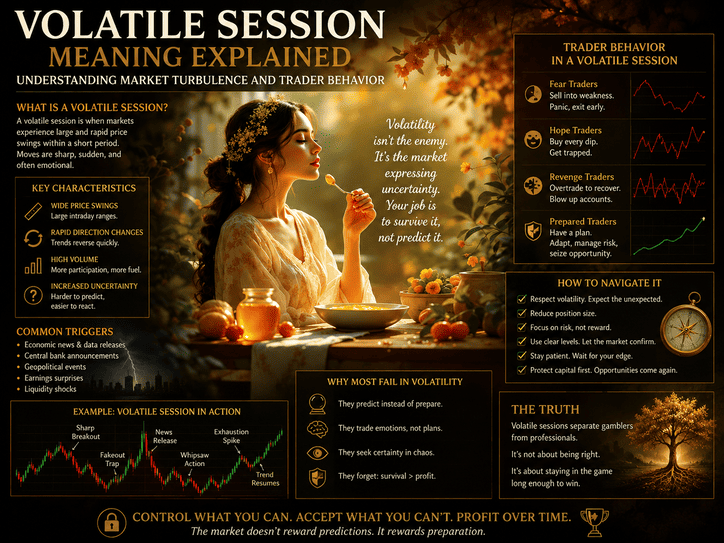
Volatile markets never announce their arrival because they do not need to. They emerge precisely when investors have become most comfortable with the patterns they believe they understand, turning familiar setups into expensive traps and reliable relationships into dangerous assumptions. Most traders fail during these periods not because they lack intelligence or experience but because they mistake expertise for control, forgetting that every successful strategy is conditional upon an environment that may already have begun changing. By the time they recognise the shift, they are no longer adapting to the market. They are defending a framework that has already stopped working.
The investors who survive these moments approach markets differently. They understand that every model is provisional, every trend temporary and every conviction subject to revision the instant new evidence appears. They do not require certainty because they never assumed it existed in the first place. Their advantage lies not in predicting the collapse of the floor but in recognising that the floor was never permanent, allowing them to adjust while others remain committed to structures that have already begun disappearing beneath them.
When Markets Occupy Multiple Realities
Volatility is often described as disorder, yet that definition overlooks what is actually taking place beneath the surface. Extreme price movements are rarely random; they are moments when competing expectations collide with unusual intensity, allowing bullish and bearish interpretations to exist simultaneously until one gradually overwhelms the other. A violent rally may represent institutional accumulation, short covering, speculative excess or all three at once, depending upon who is participating and how they are positioned. The market therefore does not present a single reality waiting to be discovered. It presents multiple probabilities competing for dominance until collective positioning finally determines which narrative survives.
This is where most traders lose their edge because they confuse speed with clarity. They believe acting first automatically creates an advantage, when acting quickly with an outdated framework merely accelerates mistakes. Modern markets are deeply interconnected, allowing a central bank statement, geopolitical event or technological breakthrough to ripple simultaneously through equities, bonds, commodities and currencies in ways that rarely follow a neat chain of cause and effect. Investors searching for simple explanations inevitably find themselves reacting to yesterday’s story while today’s psychological landscape is already changing beneath their feet.
The real edge belongs to those who become comfortable holding competing possibilities without demanding immediate certainty. Instead of forcing every development into a familiar narrative, they watch how expectations evolve, where positioning becomes crowded and which assumptions the market quietly begins rejecting. Long before price confirms a new trend, subtle changes begin appearing in participation, leadership and the market’s response to both good and bad news. Those signals rarely provide certainty, but they often reveal that the question itself has changed, and recognising that shift is frequently more valuable than finding an immediate answer.
The Chemistry of Survival
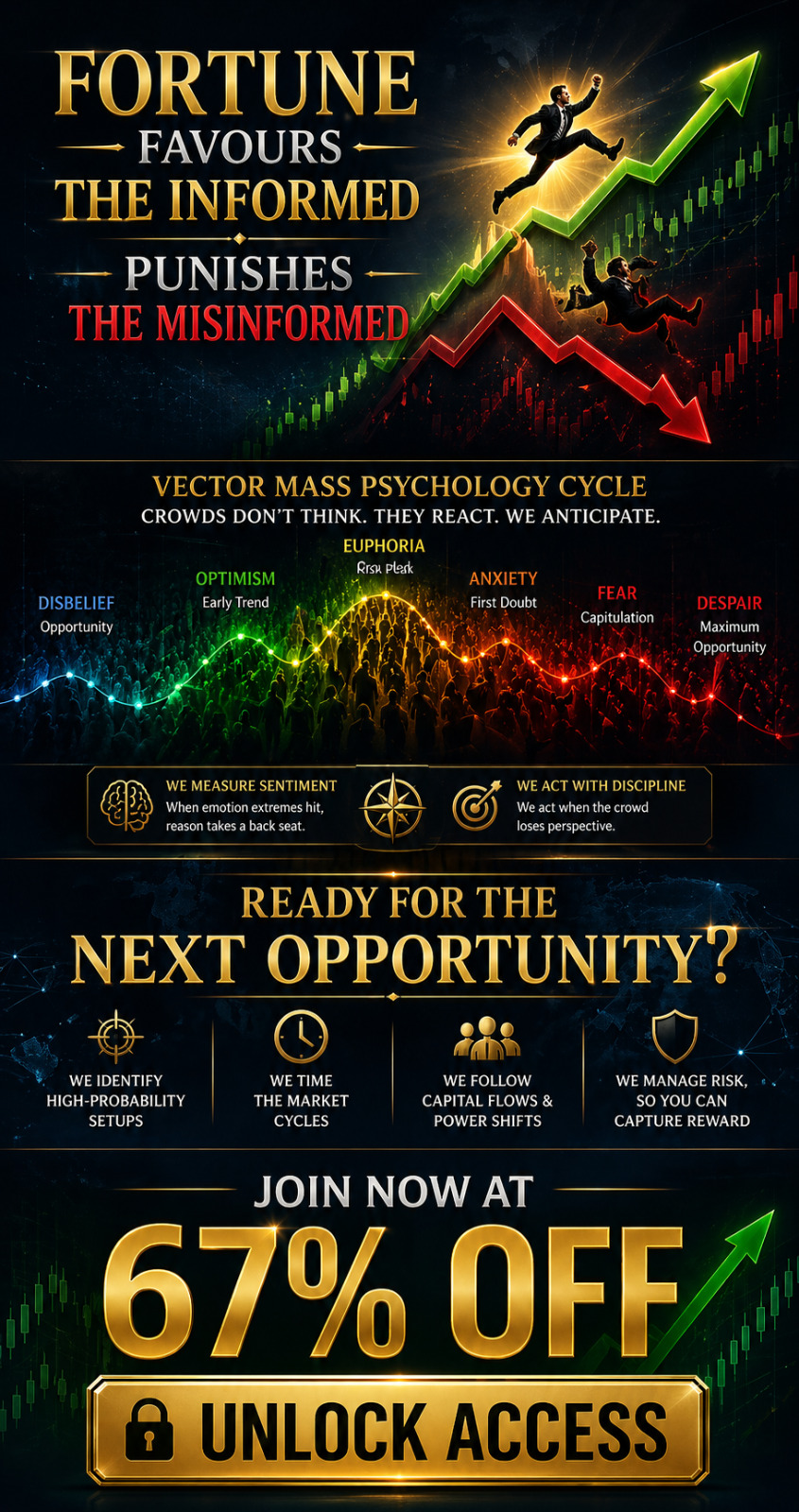
Every volatile market produces fear, making emotional control a far less useful concept than emotional utility. The difference between exceptional investors and everyone else is not the absence of fear but the way fear is interpreted. For most participants it narrows judgement, accelerates decision-making and encourages increasingly emotional behaviour. For disciplined investors it performs the opposite function, sharpening attention, reducing unnecessary activity and forcing every decision through a higher standard of evidence. Fear becomes information rather than instruction.
This explains why the best investors often appear inactive during periods when everyone else feels compelled to trade. They understand that volatility rewards precision rather than movement and that opportunities usually emerge after emotional liquidation has run its course, not while it is still unfolding. Waiting therefore becomes an active decision rather than passive hesitation because preserving both capital and psychological flexibility allows them to exploit opportunities created by the crowd’s emotional exhaustion instead of becoming part of it.
Markets have always rewarded adaptability over certainty. The crowd seeks safety in numbers because agreement creates emotional comfort, yet consensus also creates rigidity, making it increasingly difficult to recognise when the underlying environment has changed. Successful investors accept that every position carries risk and every conviction has an expiry date, understanding that survival depends less upon being consistently right than upon remaining sufficiently flexible to recognise when reality has invalidated yesterday’s assumptions. In the end, the greatest danger is rarely volatility itself. It is the certainty that convinces you the trapdoor could never open beneath your own feet.