

Price Damage Versus Business Damage
July 24, 2026
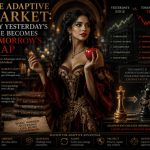
Technically, the chart has suffered meaningful damage, but damaged and structurally broken are very different conditions, and markets routinely confuse the two after expectations unwind. The recent selloff appears far more severe than the deterioration in the underlying business, suggesting the decline has been driven less by collapsing fundamentals than by multiple compression as investors reassessed previously elevated expectations. Heavy volume reinforces that view because it typically reflects forced repositioning, momentum traders exiting and institutions rebalancing exposure rather than the slow, persistent distribution that usually accompanies genuine business deterioration.
When Great Companies Become Expensive Stocks
Investors often forget that exceptional businesses can still become poor investments when valuations discount near-perfect execution. Trading above 40 times earnings, the market had already priced in sustained growth, expanding margins and very little room for operational disappointment, meaning even solid results could trigger selling once expectations drifted beyond reality. This distinction is critical because business quality and valuation are separate variables. A great company does not automatically represent a great buying opportunity if optimism has already been fully reflected in the share price.
Reset or Distribution?
The key question is no longer whether the business remains fundamentally strong but whether the recent decline represents a healthy reset within a longer-term uptrend or the beginning of a broader distribution phase. For now, the evidence favours the former. The company continues to operate in attractive markets characterised by recurring demand, high switching costs and durable customer relationships, while the classic signs of structural deterioration remain largely absent. Unless that picture changes, the recent weakness appears more consistent with expectations resetting than with the business itself entering long-term decline.
| Structural Warning Sign | Current Read |
|---|---|
| Debt levels | Have not exploded uncontrollably |
| Cash flow quality | Has not visibly cracked |
| Accounting quality | Does not appear suspect |
| Industry demand | Has not structurally collapsed |
When Expectations Reset Faster Than Businesses
Large, high-quality franchises rarely unravel overnight unless something fundamental has broken beneath the surface. Markets, however, routinely behave as though they do because price adjusts far faster than business quality. During periods of elevated optimism, investors gradually price in increasingly ambitious assumptions about future growth until expectations become detached from what even an exceptional company can realistically deliver. Once that process reverses, the decline often appears disproportionate because markets are no longer repricing the business; they are repricing the expectations that had accumulated around it. The chart therefore becomes less a reflection of corporate health than a map of changing investor psychology.
The Real Risk: Integration and Multiple Compression
That does not mean the market is irrational. Investors are correctly paying attention to integration risk following larger acquisitions because execution becomes more demanding when valuations already leave little room for disappointment. Even modest operational friction can pressure multiples for several quarters, not because the business has fundamentally weakened, but because institutions begin reassessing how much they are willing to pay for future growth. This is how many outstanding businesses enter prolonged consolidation phases. Earnings continue growing, management executes competently and the competitive position remains intact, yet the share price moves sideways while valuation gradually reconnects with fundamentals.
What the Technical Structure Is Really Saying
From a technical perspective, the recent decline resembles momentum exhaustion followed by a liquidation event rather than structural destruction. The post-earnings reversal, gap-fill pressure and increasingly oversold conditions are consistent with a market flushing excess optimism rather than abandoning the underlying investment thesis. More important than the initial decline is what follows because professionals learn far more from behaviour after panic than from panic itself.
Most investors watch price because price is obvious. Institutional investors watch behaviour because behaviour reveals whether capital is quietly accumulating or continuing to leave. If volatility begins contracting, higher lows emerge and buyers consistently absorb selling pressure while business execution remains intact, confidence is rebuilding beneath the surface long before sentiment turns positive. If every rally fails quickly, rebounds occur on declining volume and institutions repeatedly sell into strength, the market is signalling that distribution rather than accumulation has become the dominant force.
How Institutions Actually Behave
Retail investors often imagine institutions making binary decisions to buy or sell, yet capital rarely moves that way. Large funds cannot liquidate meaningful positions in a few trading sessions without damaging their own execution, so they scale into positions over months and scale out the same way. Early volatility therefore does not necessarily signal institutional abandonment; it frequently reflects portfolio rebalancing after expectations became overheated. Understanding that distinction matters because institutional capital responds primarily to probabilities and risk management, whereas retail capital usually responds to emotion.
That behavioural difference creates one of the market’s recurring patterns. Late momentum buyers enter near the peak after optimism has already become consensus, institutions begin reducing exposure into strength, an earnings report fails to exceed inflated expectations and a sharp correction follows as leveraged traders, momentum funds and emotional investors rush for the exits simultaneously. The crowd experiences the move as catastrophe even though, in many cases, the market is simply resetting expectations to more sustainable levels.
Perception Creates Opportunity
The broader picture still appears considerably healthier than the recent price action suggests. Revenue growth has accelerated, guidance improved and management’s tone remains constructive, all of which argues against a rapidly deteriorating business. The chart may look wounded, but markets routinely confuse emotional damage with structural damage because perception changes far more quickly than underlying economics.
That distinction is where opportunity often emerges. The best entries rarely occur after optimism returns; they develop while perception is still recovering but the underlying business has already stabilised. Markets move on the geometry of expectations rather than the arithmetic of earnings alone, and when expectations contract much faster than business quality, temporary emotional weakness can create the kind of asymmetry that long-term investors spend years waiting to find.