
How Crowd Emotion Drives Cycles and Crashes
Aug 30, 2026
Markets do not move because spreadsheets update. Spreadsheets update because people act. Price is the footprint of human reaction under pressure. Remove the indicators and formulas, and what you see is a sequence of decisions made by a crowd that is uncertain, hurried, and emotionally exposed. That crowd is messy, but it is not random.
Most investors invert the order of cause and effect. They treat markets as rational machines occasionally hijacked by emotion. In reality, emotion runs the engine and reason rides in the back seat. Fear, relief, greed, and denial are not distortions layered on top of price. They are the fuel that produces it.
When commentators talk about supply and demand, they often mean mood and narrative without admitting it. Demand surges when stories feel safe to believe. Supply floods in when those stories break. The numbers follow the feeling, not the other way around. The crowd does not need to be foolish to act irrationally. It only needs to share the same fear at the same time.
What Mass Psychology Actually Controls
Mass psychology studies the shift that occurs when individuals merge into a group. Alone, a person can hesitate, revise, and resist. Inside a crowd, hesitation feels dangerous. People synchronise their reactions to avoid standing out. Responsibility spreads thin, and emotion grows loud.
Markets amplify this effect because feedback is instant. A price rise validates buyers, which attracts more buyers, which lifts the price again. A drop triggers selling, which invites more selling, which accelerates the fall. Reinforcement replaces reflection.
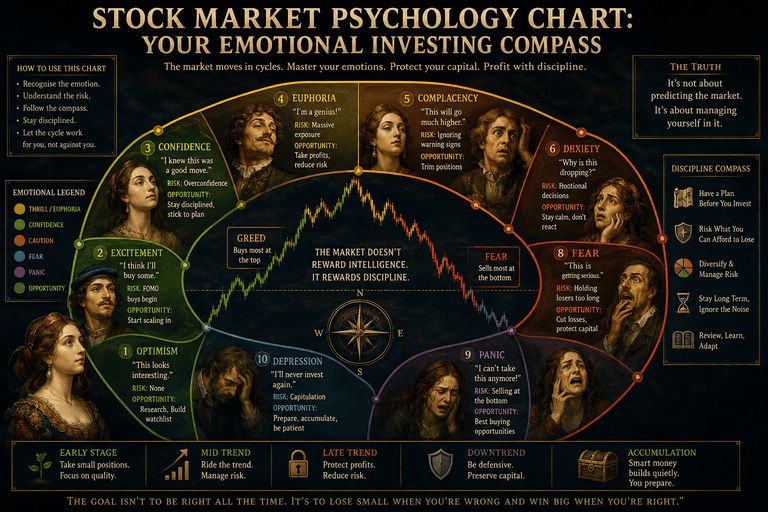
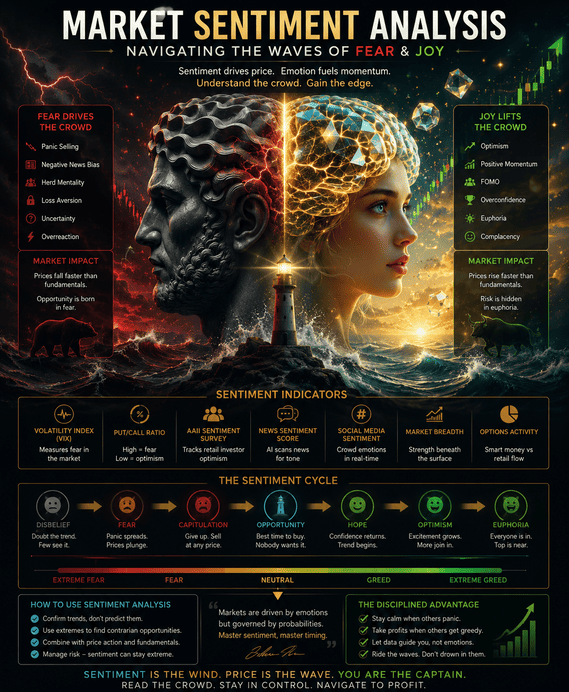
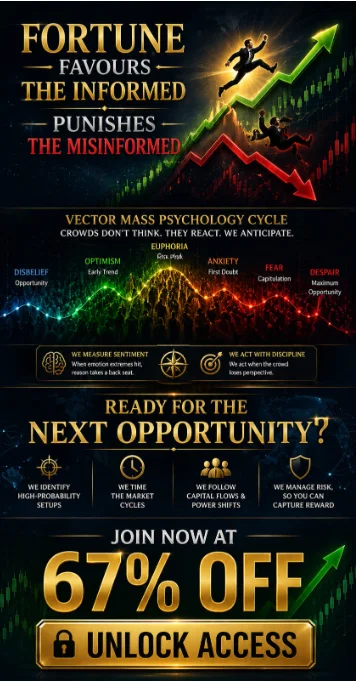
That is why cycles repeat across centuries despite new tools and faster data. The objects change. The pattern does not. Disbelief turns into curiosity, curiosity into confidence, confidence into certainty. Leverage creeps in. Fragility builds quietly. Then the turn arrives, and certainty collapses into panic.
Tulips, railroads, radios, dot coms, housing, crypto, AI. Different assets, same emotional arc. Technology evolves. Instincts remain stubbornly old. Mass psychology is the gap between modern tools and ancient wiring.
Why Markets Obey Emotion Before Logic
If markets were governed by logic, prices would adjust smoothly to new information. They do not. They gap, overshoot, stall, reverse, and accelerate. Information arrives continuously. Reaction arrives in bursts. This happens because emotion moves faster than analysis. Fear triggers before calculation. Greed overrides caution. Relief causes risk-taking. Denial delays response. Panic forces liquidation. Logic usually shows up late, wearing a justification costume.
Fundamentals matter, but mostly after psychology has done the heavy lifting. Valuation does not end bubbles. Exhaustion does. Cheap does not stop crashes. Capitulation does. Prices rarely turn when arguments become convincing. They turn when emotion runs out of fuel.
This is why intelligent people lose money in markets. Intelligence improves argument quality, not emotional timing. In fact, high intelligence often makes things worse. Savvy investors can rationalise holding longer, buying earlier, and ignoring discomfort more eloquently than average ones.
The crowd is not irrational because it lacks information. It is foolish because it processes information emotionally under social pressure.
Belief Builds the Fuel
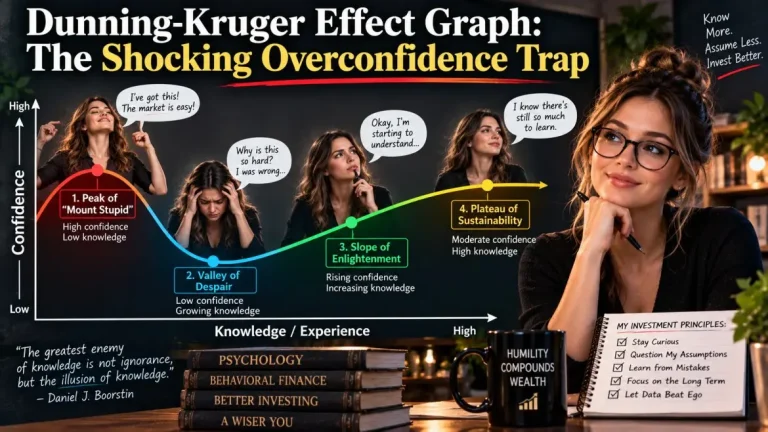
Every bubble begins with people who look slightly foolish. They buy early, speak cautiously, and doubt their own conviction. Rising price then hands them proof, and proof attracts imitators who trust evidence more than instinct. What started as a fringe idea turns into a respectable trade.
Participation widens and the story simplifies. Gains feel earned because the path looks smooth. Sceptics do not disappear; they convert. Each new buyer borrows confidence from the last one’s success. Soon, belief stops asking questions. Valuation becomes trivia because momentum feels like validation. Leverage enters quietly because permanent gains seem logical inside a persistent trend. The market feels safest precisely when fragility reaches its peak.
The shift never announces itself. Buyers hesitate for the first time, and the dip does not bounce on schedule. Liquidity narrows and small declines sting more than expected. Confidence loses its margin for error.
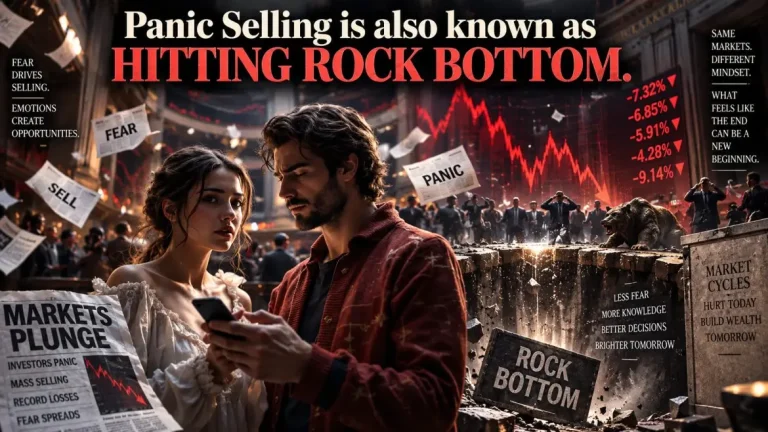
Denial writes longer explanations. Fear shortens them. The same reflex that chased strength now hunts safety. Price falls not because facts suddenly worsened, but because shared belief withdrew its support. Crashes look explosive only in hindsight. In real time, the crowd moves step by step, each decision justified by the last. No one feels reckless inside ascent and no one feels patient inside descent. The bubble does not burst because the truth appears. It bursts because belief exhausts itself and leaves price with nothing solid to lean on.
The Crowd as a Single Mind
Humans trust groups more than solitude. Shared action feels protective even when it is wrong. Consensus spreads responsibility and dulls personal doubt. That instinct turns markets into emotional amplifiers.When everyone moves together, hesitation looks dangerous. Early exits feel like a betrayal of the group. Late entries feel safer than early caution. Belonging replaces judgment.
This pressure compresses time. Once a narrative grips the crowd, action accelerates. Buyers rush not because opportunity improves, but because social proof intensifies. Bubbles rise vertically after long periods of quiet horizontal build.
The same mechanism reverses with brutal efficiency. Watching others sell validates private fear. Selling becomes contagious because each exit confirms the next. Prices cascade before information fully updates.Information rarely leads emotion. During ascent, bad news gets explained away while good news echoes loudly. During decline, the echo chamber flips direction, and optimism sounds naive.
Hindsight then edits the sequence into a single obvious mistake. In reality, the crowd drifted through thousands of small justifications. Each step felt reasonable inside the moment that produced it. The herd does not deceive. It exaggerates. It stretches belief until it snaps, then stretches fear until it empties. Safety always appears at the wrong end of the cycle. Understanding that rhythm matters more than arguing with it.
Story Carries Price Further Than Facts
Price attracts attention, but story directs commitment. Narratives compress complexity into certainty and give participants permission to ignore discomfort. Repetition then turns opinion into accepted truth. Media, analysts, and conversations reinforce the same theme until belief feels self-evident. Evidence becomes optional because alignment feels unanimous. Peaks feel obvious because the story sounds complete.
Tops form when belief outruns behaviour. Optimism stays loud while price loses follow-through. Bottoms form when fear stays loud while selling loses force. The contradiction signals emotional exhaustion. Sentiment measures this crowd’s state but does not command action. Extreme optimism signals fragility, not immediate decline. Extreme fear signals depletion, not instant recovery. Timing emerges from patience, not reaction. Contrarian thinking fails when it confuses disagreement with opportunity. The crowd can remain convinced long after doubt first appears. Opportunity arrives only when conviction saturates and cracks.
Successful opposition needs three conditions. Emotional extremes, structural stress, and the discipline to wait without relief. Most fail at waiting.Narratives break quietly. A dip lingers, a rally stalls, confidence hesitates. Only later does the story rewrite itself around those early fractures. The edge is not predicting headlines. The edge is recognising when belief and behaviour stop agreeing, and letting that tension reveal where risk truly sits.
Discipline Turns Insight Into Position
Psychology explains motion, structure channels it. Emotion builds inside ranges and trends until pressure forces release. Breakouts feel sudden because tension built invisibly beforehand.Ignoring structure invites premature action. Ignoring psychology breeds false certainty. Reading both keeps orientation when the noise grows loud. Trends persist while emotion aligns and fails when fuel fractures.
Markets reward asymmetry, not accuracy. In euphoria, upside crowds and downside hides. In panic, downside exhausts and upside hides. Emotional distortion creates the best risk imbalance.Comfort signals alignment with the crowd. Alignment signals crowding, and crowding signals fragility. The best opportunities rarely feel safe because safety appears near emotional extremes.
Patience creates optionality. Doing nothing while others overreact preserves flexibility. Flexibility acts like leverage without exposure. Most activity destroys that advantage.Discipline means acting before comfort and exiting before consensus turns. It means buying when silence weighs heavily and selling while stories still sound convincing. It requires awareness, not suppression, of emotion.
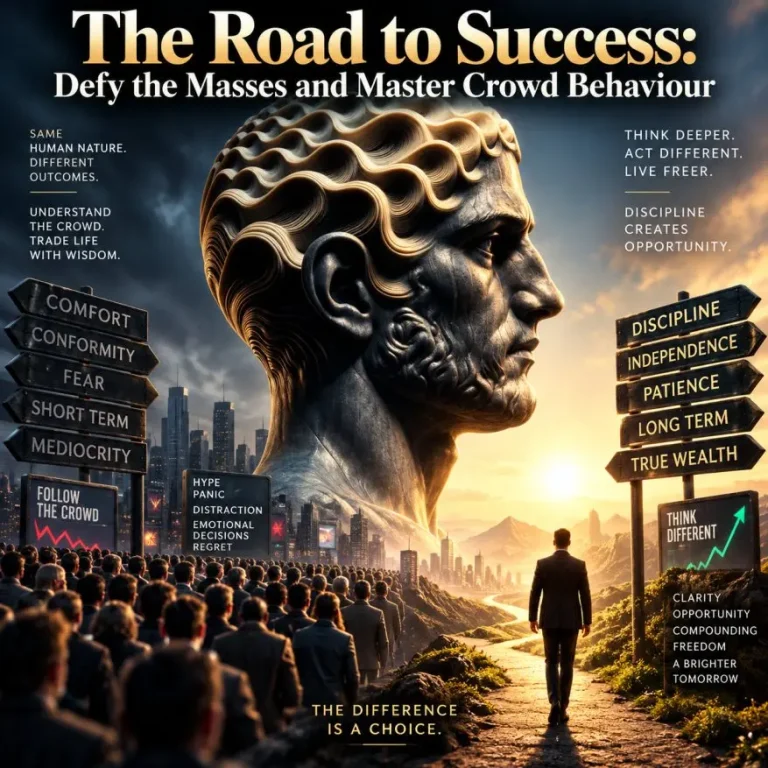
The crowd reacts to feeling. The disciplined respond to the condition. One follows instructions, the other reads pressure.Markets do not reward speed or volume of opinion. They reward those who treat emotion as information, wait for saturation, and move only when belief reaches its edge.