
This Time Is Different: Centuries of Stupidity and Folly
Feb 11, 2025
Introduction: A Phrase That Echoes Through Time
Every generation, the same delusion grips the masses. “This time is different,” they proclaim, convinced that the laws of economics, history, and human nature have somehow been rewritten. It never is. The script remains unchanged: euphoria, speculation, greed, and eventual destruction. The only things that change are the players and the setting.
The song remains the same from the Dutch Tulip Mania to the South Sea Bubble, from the roaring Twenties to the dot-com disaster, and from the housing collapse to the crypto booms and busts. Humans, driven by greed and blinded by hubris, fall into the same traps repeatedly. The phrase “This time is different” has become the battle cry of the financial fool.

The First Bubble: Tulip Mania and the Madness of Crowds
The earliest recorded financial bubble, Tulip Mania of the 1630s, saw Dutch traders pay fortunes for rare tulip bulbs. As prices soared, rationality collapsed. At its peak, a single bulb could buy a house. Then, suddenly, the crash arrived. The same people who had shouted, “This time is different! Tulips will always be valuable!” found themselves bankrupt. Lesson learned? Not quite.
Fast-forward to the South Sea Bubble in the early 1700s, when British investors were promised untold riches from trading with Spanish colonies. The hype reached a fever pitch, with speculators mortgaging homes to buy in. When reality set in and the scheme collapsed, fortunes were lost, and “This time is different” became an epitaph for another generation of financial victims.
The Roaring Twenties and the Great Depression
“Stocks have reached a permanently high plateau,” Yale economist Irving Fisher declared in 1929. Within weeks, the market crashed, ushering in the Great Depression. Once again, greed, leverage, and mass hysteria proved stronger than logic. The party ended in ruin, yet somehow, the masses convinced themselves that “this time was different.”
Sound familiar? Swap out flapper dresses for tech startups, and you have the dot-com bubble of the late 1990s.

The Dot-Com Bubble: The Internet Will Change Everything! (Yes, But Not Like That)
The late 90s saw yet another so-called “revolution.” The internet, we were told, would render traditional financial metrics meaningless. Profits? Outdated. Revenue? Irrelevant. Valuations were based on eyeballs, clicks, and sheer hype. Companies with no revenue—some with barely a business model—were suddenly worth billions.
Enter Pets.com, Webvan, eToys, and a parade of others, all marching toward what was promised to be an era of endless prosperity. “This time is different!” the experts confidently declared. The old rules no longer applied; innovation had rewritten the playbook. High on euphoria, investors blindly piled into anything with a “.com” in its name, convinced that the internet would generate unlimited profits.
But the reality is a brutal teacher. By 2000, the party ended with a spectacular crash, wiping out trillions in paper wealth. Once soaring to dizzying heights, the Nasdaq collapsed by nearly 80%. Companies that were supposedly leading the future disappeared overnight. As it turned out, the internet was revolutionary—but not in the way people had bet their life savings on.
The lesson? Speculation, not innovation, had driven the mania. Once again, the infamous four words—”This time is different”—proved to be the ultimate market death sentence.
The Housing Crisis: When Everyone Became a Real Estate Genius
“Home prices never go down.” This was the mantra of the mid-2000s. Lenders gave mortgages to anyone who could fog a mirror. Wall Street bundled them into toxic assets. The masses dove in, flipping houses like baseball cards. Then, 2008 hit, and “this time is different” turned into “we never saw this coming.” Spoiler: It was obvious to anyone paying attention.
The 2020 Crash and the COVID Investing Frenzy
COVID-19 introduced a new chapter in financial lunacy. As markets crashed in March 2020, the panic was deafening. But while the weak hands were dumping, the smart money was buying. We called it the “Mother of All Buys” (MOAB), yet the masses raged, insisting we were wrong.
Then, the Fed stepped in, money-printing hit overdrive, and the market roared back with a vengeance. What happened next? A speculative frenzy: meme stocks, SPACs, crypto explosions. “This time is different! The Fed will print forever!”
By 2022, the hangover had arrived. Crypto collapsed. Meme stocks crumbled. Reality reasserted itself, as it always does. And yet, people never learn.

The Lemming Effect: Why the Crowd is Always Wrong
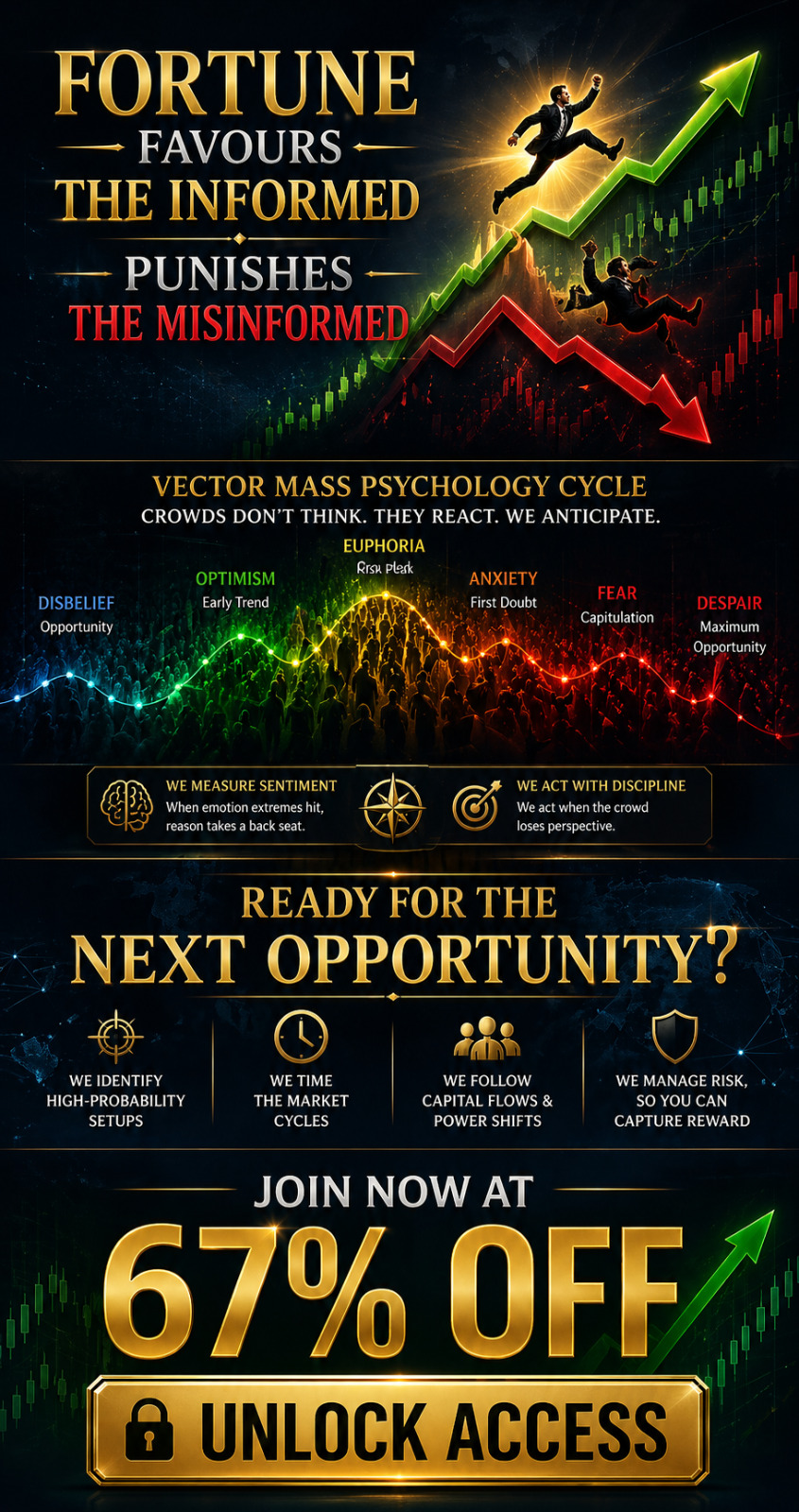
Mass psychology is the real force behind market cycles. Investors act like lemmings, blindly following the crowd off a cliff. When euphoria peaks, they rush in. When fear takes hold, they flee in terror. The result? They buy high and sell low, ensuring perpetual losses.
Want to win? Do the opposite. When the crowd is screaming, “This time is different!” it’s time to exit. When they’re sobbing, convinced the world is ending, it’s time to buy.
Cognitive Bias and the Destruction of Rationality
Humans are wired to deceive themselves. The recency bias makes people believe the current trend will last forever. The bandwagon effect convinces them that safety lies in numbers. Loss aversion makes them cling to losing trades while cashing out winners too soon. These biases fuel market bubbles and crashes, ensuring that the cycle repeats.
H.L. Mencken once said, “No one ever went broke underestimating the intelligence of the American public.” Apply that wisdom to investing, and you’ll understand why the masses always lose.

The Solution: Master Mass Psychology, Exploit the Crowd
The secret to financial success isn’t complex models or insider tips—it’s understanding human nature. The masses will always be ruled by greed and fear. The solution? Use it against them.
- When they panic, you buy.
- When they’re euphoric, you sell.
- When they chant “This time is different!”, you laugh, take profits, and walk away.
A healthy dose of common sense is a trader’s best weapon. Recognizing that mass psychology repeats itself with clockwork precision is the ultimate advantage. The crowd will never change. But you? You don’t have to be part of it.
Conclusion: The Eternal Lie of “This Time Is Different”
Every bubble, crash, mania—it’s all the same script with different actors. The phrase “This time is different” is the financial world’s deadliest lie, whispered seductively into the ears of the unwary, only to lead them to ruin. No matter how advanced our markets become or how radically technology reshapes our world, the underlying drama of human behaviour remains stubbornly constant.
Those who proclaim “This time is different” are often akin to Icarus, flying too close to the sun on wings crafted of hubris and short-lived ambition. They forget that the lessons of history are etched into the very fabric of our collective experience—lessons written in the scars of tulip bulbs, shattered homes, and burnt-out dot-com dreams. Every generation has witnessed the same cycle of euphoria, followed by a catastrophic collapse, and the chorus of “This time is different” only hastens the inevitable downfall.
The truly savvy investor, however, refuses to be swept up in the frenzy. Instead, they master the art of mass psychology—reading the collective mood like a seasoned navigator reading turbulent seas. When the masses are consumed by panic and irrational selling, these contrarians see opportunity; when exuberance blinds the herd into overvaluation, they recognize the perfect moment to secure gains. They understand that every market swing is driven not by new truths but by the timeless forces of fear and greed.
A healthy dose of common sense protects against the seductive call of novelty. Confucius might have wryly observed, “Man who believes in unique exception always finds himself in a crowd of fools,” while H.L. Mencken would have chuckled at the predictable dance of irrationality. The average investor underestimates the power of human nature, while the enlightened trader harnesses it as a tool for strategic advantage.
It is crucial to look beyond the noise and recognize that the patterns of human behavior—our biases, our herd mentality—are the true constants in the market. History teaches us that no amount of technological innovation or regulatory change can alter the fundamental truth: when human emotions run high, rationality is often left behind. By understanding mass psychology, you equip yourself to anticipate these cycles rather than fall victim to them. Every surge of euphoria or plunge into despair is not a sign of a new paradigm but a familiar echo of past follies.
Imagine a market where every investor is attuned to these cycles—a market where the smart money doesn’t simply chase trends but instead uses the predictable irrationality of the crowd as a compass. When the “this time is different” noise fills the air, you can join the herd and get trampled or stand apart, using well-honed contrarian strategies to capitalize on the chaos. The challenge is to remain disciplined, to resist the allure of the moment, and to remember that the only genuine novelty in finance is the recurring nature of human folly.
If you are willing to adopt a mindset rooted in historical wisdom and common sense, you can maximise these cycles. Instead of lamenting the repetition of the past, learn to see it for what it is: a recurring opportunity. The market’s reaction to human psychology is predictable; it is the blind, unthinking reaction of the masses that creates these opportunities. By staying detached, by not succumbing to the siren call of “this time is different,” you can make calculated moves that defy the prevailing sentiment.
So, as you navigate the turbulent waters of investing, let the clamour of “this time is different” be your signal—not to dive in headfirst, but to step back, assess, and plan your next move with deliberate care. The cycle of euphoria and despair may be relentless, but armed with the insights of mass psychology and a steadfast adherence to common sense, you can break free from the predictable cycle of financial folly.
In a world where the allure of novelty blinds the masses time and again, you have the chance to be the exception. Embrace the timeless lessons of history, let rationality guide your decisions, and use the crowd’s inherent irrationality as a tool for your success. While the noise of “this time is different” may continue to echo through the ages, you can choose to listen with a discerning ear—and profit from the inevitable return of order in the chaos.
Remember, the true edge in investing comes not from believing in perpetual novelty but from recognizing that human nature is the ultimate constant in all its irrationality. Stand apart from the crowd, hold fast to the wisdom of the past, and let the immutable laws of human behaviour guide your strategy. In doing so, you’ll not only survive the inevitable cycles of boom and bust—you’ll thrive.