
Polarisation Trends and the Cost of Emotional Alignment
Apr 30, 2026
None of this should surprise anyone who has watched the structure instead of the noise, because the pattern was visible long before it became fashionable to complain about it, and since around 2015 the signal was clear, polarisation was not a side effect but the main driver, and once it gained traction it was never going to fade politely, it was going to expand, harden, and pull more people into its orbit.
The advice was simple then and it remains simple now, do not anchor yourself emotionally to any side, because once you do, your thinking narrows, your reactions speed up, and your ability to evaluate information objectively starts to degrade, not immediately, but steadily, and by the time you notice it, you are already operating inside the very framework you thought you were analysing from the outside.
The Rotation of Faces, Not the Script
What most people miss is that the names change but the structure does not, and if it had not been Barack Obama followed by Joe Biden and then Donald Trump, it would have been someone else stepping into the same cycle, delivering a slightly different tone but operating within the same underlying pressures, because trends do not depend on individuals, they select individuals who fit the phase.
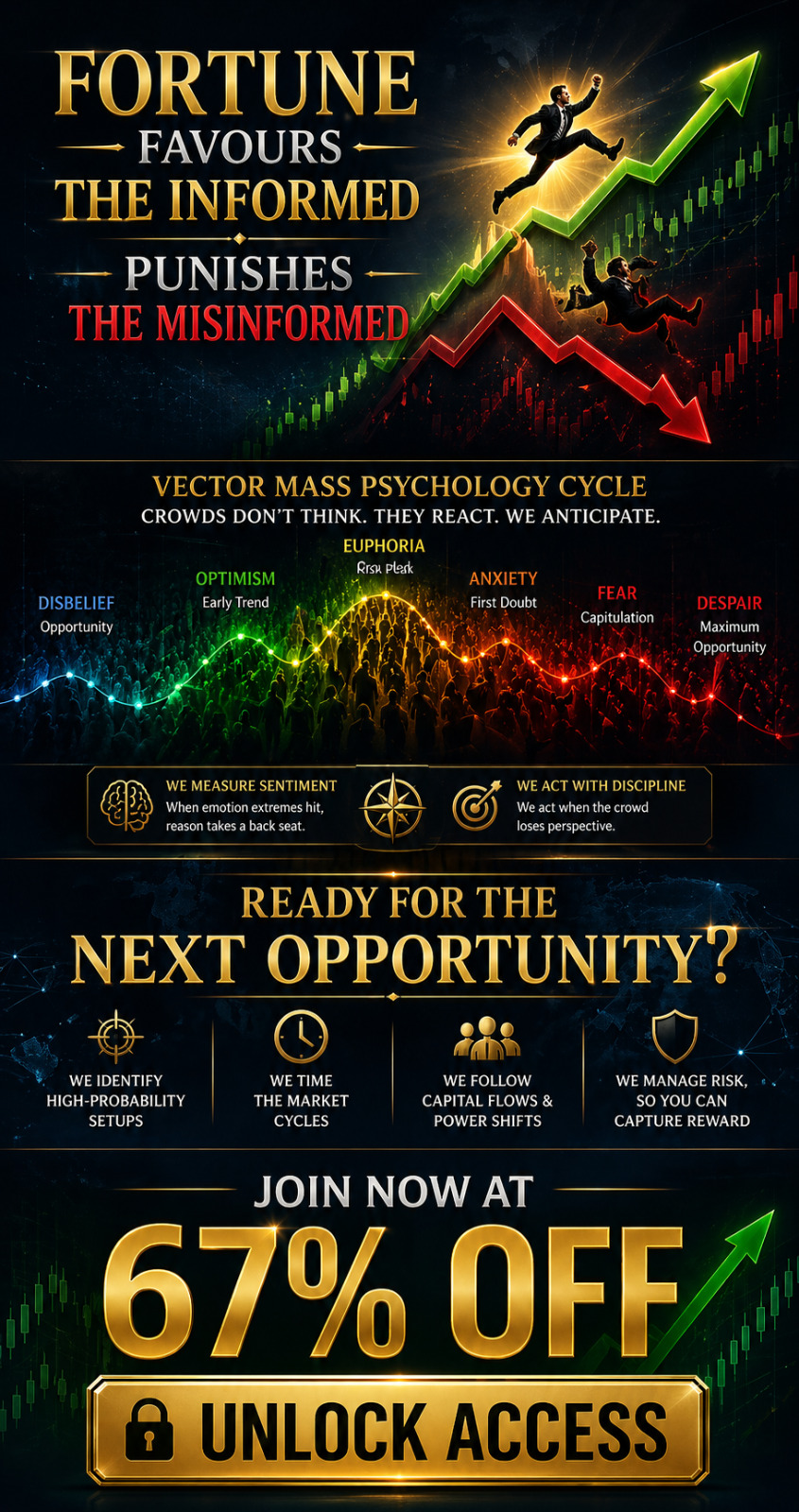
You can see this in the reaction pattern rather than the policy details, enthusiasm at the start, disappointment as reality diverges from expectation, then a swing toward the next candidate framed as the solution, followed by the same cycle repeating with minor variations, and over time the middle ground shrinks while the edges expand, pulling even those who once claimed neutrality into one camp or the other.
That is not coincidence. That is momentum.
Polarisation as a Mechanism, Not a Side Effect
Polarisation works because it simplifies complex systems into binary choices, and once the system is framed that way, participation becomes emotional rather than analytical, which increases engagement but reduces clarity, and that trade-off benefits those who operate above the noise because it allows them to position while others react.
Gustave Le Bon observed that individuals in a crowd do not think independently, they absorb and respond, and Émile Durkheim pointed out that collective states take on a force of their own, shaping behaviour beyond individual control, and when you layer those insights onto modern information systems, the amplification becomes obvious, faster cycles, stronger reactions, shorter memory.
The result is a feedback loop where agitation feeds participation, participation reinforces belief, and belief resists contradiction, which means the trend strengthens not because it is correct, but because it is repeated and emotionally reinforced.
The Western Shift and the Counter-Move
The change across Western systems over the past few decades follows the same logic, gradual tightening framed as necessity, increasing emphasis on compliance, and a noticeable shift in tone from flexibility to enforcement, not in every area, but enough to alter the general environment, while at the same time some traditionally restrictive systems have begun to open in selective ways, not fully, not cleanly, but enough to indicate directional movement.
That contrast looks strange only if you expect linear progress, but cycles rarely move in straight lines, they rotate, and what appears to be regression in one area often coincides with expansion in another, because pressure does not disappear, it redistributes.
The West of 1980 or 1990 is not the West of today, and that should not be surprising, because no system remains static, especially under prolonged economic, political, and social strain.
Why Trends Feel Permanent Until They Break
A trend in motion feels permanent because it shapes perception while it runs, and once enough people accept the current state as normal, alternative outcomes become difficult to imagine, which is why reversals always feel sudden even when the buildup was visible.
The same applies here. Polarisation will not last forever, but while it persists it will continue to intensify, because the incentives supporting it remain in place, and only when those incentives shift will the trend begin to weaken, at which point new figures, new narratives, and new frameworks will emerge to match the next phase.
If Donald Trump had appeared before the conditions were ready, the system would have rejected him early, likely before the primaries, but timing aligned with structure, and structure determines viability far more than individual traits.
The Cost of Emotional Alignment
The real damage does not come from the existence of polarisation itself, but from the way individuals engage with it, because once emotion dominates, information is filtered through identity rather than evaluated on merit, and even informed participants begin to misread signals, not because they lack intelligence, but because their framework has shifted.
That is where most people lose their footing, not at the start, but after they commit, because commitment creates bias, bias narrows perception, and narrowed perception leads to decisions that feel justified in the moment but prove costly over time.
Meanwhile, those who remain detached, or at least less attached, retain flexibility, and flexibility is the only real advantage in an environment where narratives change faster than underlying structures.
Final Position
Trends do not need agreement to continue. They need participation, and participation is sustained through emotion far more effectively than through logic, which is why stepping back, even slightly, provides an edge that most people overlook because it feels uncomfortable and, at times, isolating.
The goal is not to predict the exact moment the trend ends, because that moment is only obvious in hindsight, but to recognise the direction, understand the pressure behind it, and avoid being pulled so deeply into it that you lose the ability to see beyond it.
Because once that happens, you are no longer observing the cycle. You are inside it.