
The Market Never Said That: How Investors Hear What They Want to Hear
July 19, 2026
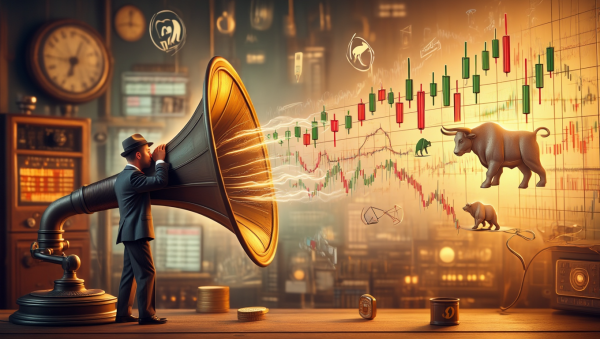
Ever had that moment when you’re half asleep, the fan is humming and you could swear it whispered your name? Or you’re standing in the shower convinced the doorbell just rang, only to discover the house is perfectly quiet? Psychologists call this pareidolia, the brain’s tendency to impose familiar patterns on meaningless noise. Most of the time it is harmless. In financial markets it becomes remarkably expensive because investors constantly hear signals the market never actually sent.
A chief executive pauses during an earnings call and social media interprets the silence as a hidden message about a buyback. A Federal Reserve official repeats the phrase “data dependent,” and traders somehow hear an imminent rate-cutting cycle. Nothing objective has changed, yet millions of dollars move because people are responding not to reality but to the version of reality their expectations have already constructed. Markets rarely speak as clearly as investors imagine; far more often, they act as mirrors reflecting our own hopes, fears and existing positions back at us.
This is not a flaw affecting a small minority of investors. It is one of the operating principles of human cognition. The real question is never whether you will misinterpret information but whether you recognise the distortion before committing capital to it.
The Brain Was Built for Survival, Not Investing
The human brain evolved to detect patterns quickly because, for most of our history, false positives were far less costly than false negatives. Hearing a predator in the bushes when there was only wind wasted a little energy. Ignoring a real predator could end your life. Evolution therefore favoured minds willing to connect incomplete information into coherent stories long before certainty existed.
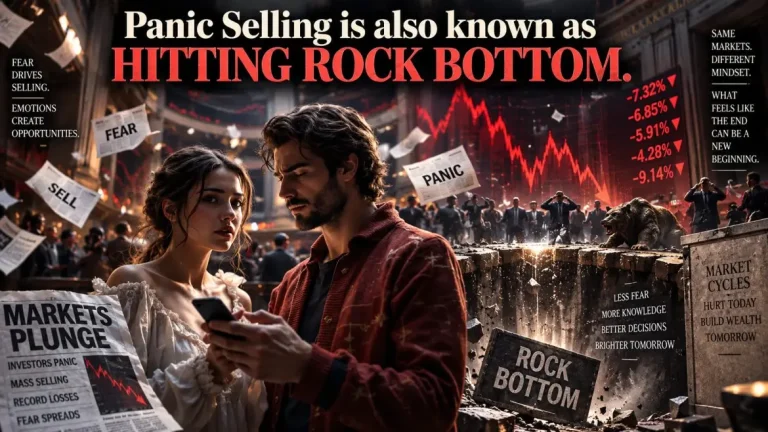
Markets reward almost the opposite behaviour. They demand patience where instinct demands urgency and scepticism where emotion demands conviction. Yet the underlying wiring has not changed. A falling market still feels like immediate danger, while a rapidly rising one creates the illusion of safety precisely when risk is often increasing. Investors therefore spend much of their time reacting to emotional interpretations rather than objective evidence because the brain processes uncertainty through ancient survival mechanisms rather than modern financial logic.
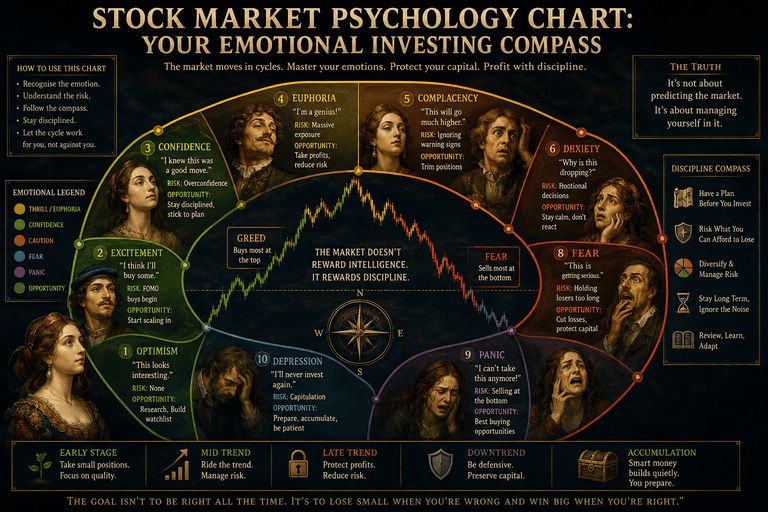
Once money enters the equation, those instincts become even stronger. Hope amplifies bullish information, fear magnifies bearish information and every new headline passes through a filter already shaped by existing positions. Investors are rarely listening to the market itself. More often they are listening to themselves.
Confirmation Bias Is Only the Beginning
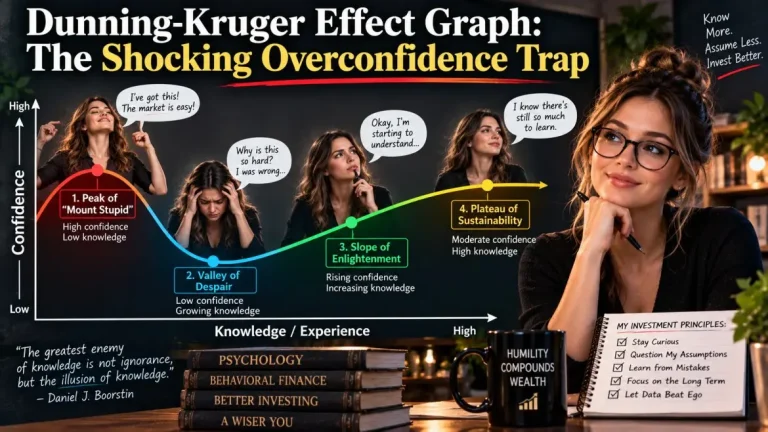
Psychologists describe this tendency as confirmation bias, but the phenomenon runs deeper than simply preferring information that supports existing beliefs. Expectations create perceptual filters that determine what information is noticed, ignored or reinterpreted before conscious analysis even begins. Motivated reasoning then quietly constructs explanations that preserve those beliefs, allowing investors to defend positions long after the original investment thesis has disappeared.
That is why two investors can read the same earnings report and reach completely different conclusions. One sees resilience where another sees deterioration. One hears prudent guidance while another hears hidden optimism. The information is identical. Only the psychological filter differs.
Markets therefore become contests of perception as much as contests of analysis because prices respond to the collective interpretation of information rather than the information itself.
When Individual Bias Becomes Collective Reality
Bias becomes genuinely dangerous once it spreads through the crowd. An isolated misinterpretation is little more than a personal mistake. Shared by millions of investors, it becomes a market force.
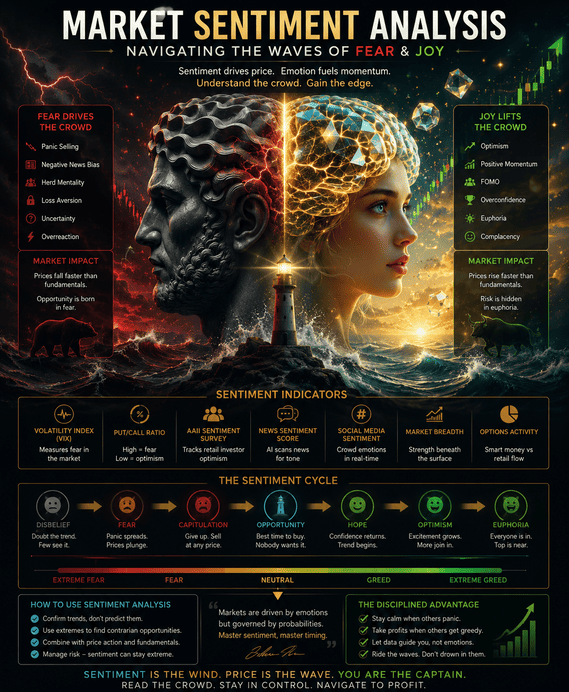
Social media accelerates this process by compressing the distance between individual opinion and collective belief. A persuasive narrative appears, others repeat it because it confirms what they already suspect and repetition gradually replaces verification. The story gains authority simply because it becomes familiar, eventually influencing headlines, analyst commentary and market positioning despite often resting on remarkably weak foundations.
This is how bubbles develop and why crashes frequently appear inevitable only after they occur. The crowd rarely reacts to objective reality. It reacts to a collectively reinforced interpretation of reality, and once enough capital becomes organised around the same narrative, the market grows increasingly fragile because everyone is effectively betting on the same assumptions remaining true.
That is the geometry of mass psychology. Independent opinions gradually converge into collective conviction until diversity of thought disappears, leaving the system increasingly vulnerable to even modest disappointments. The more unanimous the narrative becomes, the less additional buying power remains to sustain it.
Even Charts Can Become Mirrors
Technical analysis is no exception. Price and volume provide valuable information about market behaviour, but charts become surprisingly deceptive when investors use them to validate conclusions they reached before opening the software. Stare at enough charts and almost every pattern begins resembling something familiar because the brain naturally searches for order even where none exists.
The disciplined technician uses technical analysis to measure probability, manage risk and recognise changing behaviour. The biased investor uses exactly the same charts to confirm existing positions. The difference lies not in the methodology but in the observer. Charts reveal market behaviour, yet they cannot prevent investors from projecting their own beliefs onto what they see.
Listen to Behaviour, Not Stories
Markets rarely communicate through headlines. They communicate through behaviour. Price, volume, breadth, volatility, liquidity and positioning reveal where capital is actually moving, often contradicting the stories dominating financial media. Investors who focus primarily on narratives frequently miss those behavioural signals because they continue searching for evidence supporting what they already believe instead of asking whether the market itself has begun behaving differently.
One of the simplest ways to reduce this bias is to separate observation from interpretation. Write your investment thesis before new information arrives, read primary sources rather than commentary, actively seek the strongest arguments against your position and continually ask whether you would interpret the same information differently if you held no financial stake in the outcome. None of these habits eliminate bias, but they prevent it from silently becoming your investment process.
The Cost of Hearing What Was Never Said
Every investor eventually pays tuition to the market, but the largest losses rarely result from a lack of intelligence. They occur because perception quietly replaces observation until investors stop analysing reality and begin defending beliefs. By the time the discrepancy becomes obvious, expectations have already shifted and prices have adjusted accordingly.
Successful investing is therefore less about predicting the future than about recognising when collective perception has drifted away from underlying reality. Markets do not reward those who hear the loudest stories. They reward those who notice when the crowd has begun listening to itself instead of the evidence.
The market never whispered the message most investors believed they heard. They simply mistook their own expectations for its voice, and in investing there are few mistakes more consistently expensive than confusing hope with information.