
Strong Minds and Simple Logic
July 11, 2026
Markets have never rewarded intelligence alone. If they did, every economist would be wealthy and every analyst would outperform the index. Instead, markets reward something far rarer: the ability to think clearly while everyone else is surrendering to emotion. Intelligence identifies opportunity; emotional discipline determines whether you can act on it. The difference between lasting success and repeated failure is rarely knowledge alone but the ability to preserve judgement under pressure.
The greatest losses rarely begin with a market crash. They begin when investors surrender independent thought to emotion, narrative, and consensus. By the time fear appears on the screen, expectations have already drifted beyond reality, conviction has hardened into certainty, and evidence is filtered through existing beliefs instead of objective analysis. Falling prices merely expose a psychological collapse that began much earlier.
Investing is therefore an exercise in psychology rather than prediction. Markets are adaptive systems driven by competing expectations, each acting as a vector that shapes price. As those vectors become increasingly aligned through optimism or fear, stability gives way to fragility because consensus magnifies risk instead of reducing it. The disciplined investor measures the widening gap between perception and reality rather than attempting to predict every headline, recognising that the greatest opportunities emerge when those two forces drift furthest apart.
Strong minds are built through repeated exposure to uncertainty and disciplined reasoning. Simplicity becomes an advantage because complexity often disguises confusion, while clear thinking forces every decision back to first principles. Markets constantly tempt investors to abandon those principles. Long-term success depends on resisting that temptation.
Emotion Distorts Reality Before It Distorts Price
Most investors believe they make rational decisions, yet uncertainty quickly shifts the brain from analysis to survival. Fear narrows perception, greed exaggerates opportunity, and confirmation bias filters evidence until investors defend beliefs instead of testing them. The market changes far less than the investor’s interpretation of it.
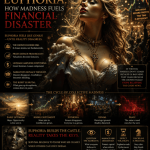
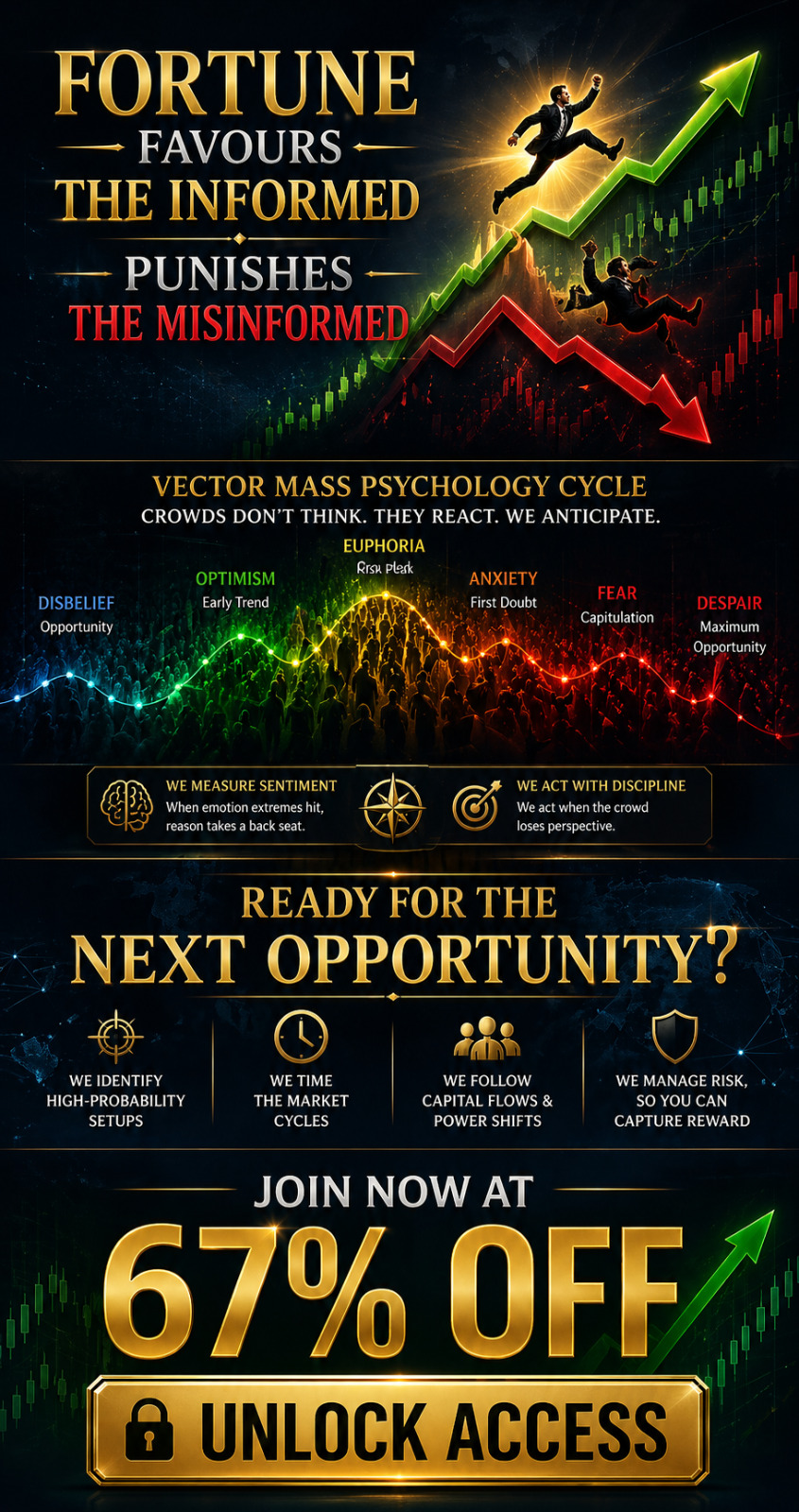
Every speculative cycle follows the same geometry. Optimism attracts participation, participation reinforces confidence, confidence hardens into certainty, and certainty eventually disconnects expectations from reality. The stronger the consensus becomes, the more fragile it grows because even modest disappointment can reverse the emotional vectors supporting higher prices.
The financial crisis of 2008 demonstrated this perfectly. Housing prices collapsed not simply because mortgages deteriorated but because collective belief changed. Once expectations reversed, confidence evaporated faster than fundamentals, triggering forced selling across interconnected markets. The dot-com bubble, cryptocurrency manias, and countless speculative episodes followed the same psychological blueprint. The assets changed. Human behaviour did not.
Understanding this distinction changes the objective. Instead of reacting to headlines, disciplined investors ask what expectations are already embedded in current prices and how vulnerable those expectations are to disappointment. That shift replaces prediction with probability and allows emotional extremes to become opportunities rather than threats.
Simple Logic Usually Defeats Complex Narratives
Despite endless narratives, investment success still rests on ordinary principles: sustainable cash flow, intelligent capital allocation, durable competitive advantages, and reasonable expectations. Everything else is secondary.
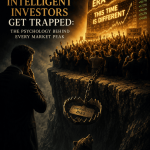
Speculative markets bury these fundamentals beneath exciting stories until investors convince themselves that traditional valuation no longer applies because “this time is different.” Those four words have probably destroyed more wealth than any recession.
Simple logic asks questions excitement prefers to ignore. Is revenue growing sustainably? Is management allocating capital intelligently? Can the business survive economic contraction? Are current valuations already assuming flawless execution? These questions lack glamour, but they consistently expose the weakness hidden beneath fashionable narratives.
Markets also move in cycles rather than straight lines. Valuations expand and contract, optimism gives way to pessimism, and every dominant trend eventually reaches the limits of the expectations supporting it. The objective is not to own exciting companies but exceptional businesses purchased at reasonable expectations. Great companies become poor investments when optimism outruns reality, while neglected businesses become exceptional opportunities when pessimism pushes prices below intrinsic value. The edge lies in recognising that asymmetry before consensus does.
Opportunity Emerges Where Emotion Reaches Extremes
History repeatedly demonstrates that extraordinary opportunities appear when emotional conviction reaches its greatest intensity. Fear feels safest during falling markets and optimism feels safest during rising ones, yet both instincts encourage investors to move with the crowd rather than ahead of it because emotions react to events instead of anticipating them.
Black Monday in 1987 remains one of the clearest examples. As markets collapsed, panic convinced investors that the financial system itself had changed. Those who examined businesses instead of headlines recognised that productive assets had not suddenly lost a quarter of their value; only the emotional valuation attached to them had changed. The divergence between perception and reality created exceptional opportunities for disciplined investors.
The same pattern emerged during the global financial crisis. As fear intensified, selling became indiscriminate and prices detached from long-term value. Investors focused on immediate panic, while disciplined buyers evaluated balance sheets, competitive positions, and future cash flows. Time eventually closed the gap because perception can remain distorted only temporarily.
Markets rarely reverse because everyone suddenly becomes optimistic. They reverse because emotional exhaustion removes the marginal seller. Once fear reaches its limit, selling pressure weakens even while headlines remain overwhelmingly negative, allowing prices to stabilise long before confidence returns. The psychological vectors have already changed direction beneath the surface, even though the crowd has yet to recognise the shift.

Resilience Is Adaptability Under Pressure
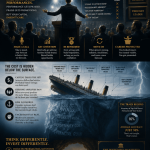
One of the costliest mistakes investors make is confusing conviction with stubbornness. Conviction evolves as evidence changes; stubbornness defends a failing thesis because admitting error feels more painful than accepting a loss. The difference matters only when markets turn. Strong minds do not refuse to change; they refuse to panic.
Every investment begins as a hypothesis about the future. If the competitive position weakens, debt becomes unsustainable, management loses credibility, or the original assumptions no longer hold, disciplined investors adapt without hesitation. If the underlying thesis remains intact, falling prices alone become an insufficient reason to sell. Markets reward accuracy, not ego.
This distinction explains why many investors repeatedly sell future winners while clinging to deteriorating positions. Profitable investments create anxiety because gains might disappear, while losing investments invite denial because selling makes the loss real. The disciplined investor ignores both emotions, continually reassessing businesses instead of anchoring decisions to purchase price or recent performance.
Independent Thinking Creates Asymmetry
Contrarian investing is not about opposing the crowd; it is about thinking independently. Sometimes independent analysis agrees with consensus. Sometimes it does not. The objective is accuracy, not originality.
Markets function through feedback loops. Rising prices reinforce optimism, attracting new buyers whose participation strengthens the trend until expectations outrun reality. Falling prices reverse the process as fear feeds further selling. Most investors mistake these emotional vectors for information, assuming price movement reflects truth when it often reflects changing sentiment.
Independent investors ask a different question: what expectations are already embedded in current prices, and how vulnerable are they to disappointment? Every cycle creates moments when optimism becomes excessive or pessimism becomes irrational. Those extremes generate asymmetry because upside and downside cease moving together. The greatest opportunities emerge when perception drifts furthest from reality.
Patience Is an Active Decision
Patience is not passive; it is disciplined restraint. Financial media encourages constant action, yet most lasting wealth comes from a handful of exceptional decisions rather than endless activity.
Waiting improves probabilities. As expectations stretch beyond sustainable levels, emotional extremes eventually reverse. Investors who preserve liquidity during periods of euphoria gain the flexibility to act when fear dominates and valuations disconnect from fundamentals. Cash is not idle capital; it is optionality.
Volatility therefore becomes a resource rather than a threat. Some declines reflect permanent deterioration, while others represent temporary psychological dislocations. Distinguishing between the two matters far more than predicting the market’s next move. Strong investors understand that unnecessary activity often destroys more wealth than temporary inactivity.
Conclusion: Master the Mind Before the Market
Markets constantly tempt investors to exchange discipline for certainty because certainty feels comfortable even when it is dangerous. Every bubble rests on the belief that risk has disappeared, and every panic on the belief that recovery has become impossible. Both are emotional distortions, not objective realities.
Strong investors recognise that prices reflect competing expectations rather than absolute truth. Their edge comes from identifying when emotional vectors have carried consensus too far, creating a widening gap between perception and reality. They focus on businesses instead of narratives, expectations instead of headlines, and evidence instead of emotion.
In the end, markets reward neither brilliance nor prediction as consistently as they reward psychological stability. Knowledge identifies opportunity, but emotional discipline transforms opportunity into action. Master your reasoning before attempting to master the market, because the greatest investment advantage has never been superior information. It has always been superior judgement.