
Why Markets Chase Headlines While Structure Determines Outcomes
July 16, 2026
Markets rarely react to structural change. They react to perceived change, which is why the first move following a major headline is often driven less by analysis than by collective interpretation. A report suggesting Iran could permit passage through the Strait of Hormuz in exchange for tolls settled in cryptocurrency immediately triggered buying in Bitcoin, Ethereum and Solana while oil prices fell sharply, allowing a familiar narrative to emerge almost instantly. A new payment system, a new geopolitical framework and a new financial order appeared to be taking shape.
The headlines implied transformation but the underlying structure did not.
Nothing fundamental about the Strait of Hormuz had changed. Control remained contested, access remained conditional and the geopolitical risks underpinning global energy markets remained firmly in place. The only meaningful shift occurred in perception, yet perception often moves markets long before reality has an opportunity to catch up because financial markets continuously price expectations rather than facts.
Narratives Travel Faster Than Structure
Markets naturally prefer narratives because they compress complexity into stories the human brain can process quickly. A headline announcing that oil shipments may one day settle through digital assets is easier to understand than the legal, military and logistical realities governing one of the world’s most strategically important shipping lanes. Investors therefore anchor themselves to the visible development while quietly ignoring the invisible constraints still determining how the system functions.
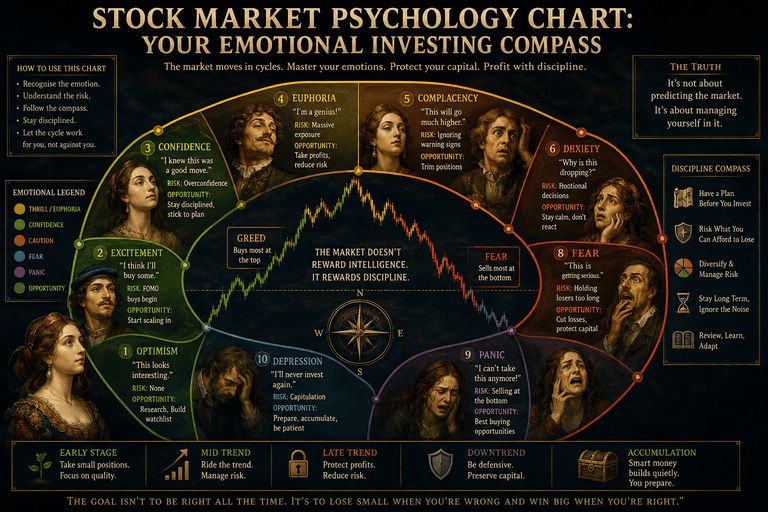
This tendency reflects one of the oldest principles of mass psychology. Crowds respond first to what captures attention and only later, if ever, examine whether the underlying conditions have materially changed. Repetition then amplifies the narrative until familiarity begins masquerading as evidence, encouraging more capital to organise around a story that may still rest upon remarkably fragile assumptions. That is why markets repeatedly overshoot. The crowd mistakes a new narrative for a new structure, even though narratives can change overnight while structures often take years to evolve.
Why Crypto Rose and Oil Fell
The market reaction itself was relatively straightforward. Any suggestion that cryptocurrencies could play a larger role in settling international trade immediately expands their perceived utility, encouraging speculative buying long before meaningful adoption occurs. Traders were not pricing confirmed changes in global payment systems; they were pricing the possibility that the addressable market for digital assets had become slightly larger than previously assumed.
Oil responded for the opposite reason. Reports suggesting reduced disruption encouraged traders to price lower near-term risk premiums, even though the underlying sources of geopolitical tension remained unresolved. Relief, however, should never be confused with stability. Shipping routes do not become secure because diplomatic language softens, insurance costs do not immediately normalise and military leverage does not disappear simply because the narrative becomes temporarily less confrontational.
Markets therefore produced two entirely rational short-term reactions while simultaneously encouraging an irrational long-term conclusion.
Expectation Geometry Matters More Than Headlines
This is where expectation geometry becomes more important than the headlines themselves. Markets do not respond to events in isolation. They respond to the distance between expectations and reality. If investors had already positioned for prolonged disruption, even modest signs of de-escalation were sufficient to trigger profit-taking in energy and renewed speculation elsewhere. The headline became the catalyst, but positioning determined the magnitude of the move.
Understanding that distinction separates reaction from analysis. Most investors assume prices move because news changes reality. More often, prices move because news changes expectations, even when reality remains largely unchanged. Markets therefore oscillate between emotional extremes while underlying structures evolve at a far slower pace.
Where the Opportunity Actually Appeared
The more interesting opportunity existed well before these headlines emerged. When uncertainty surrounding the Strait of Hormuz intensified, tanker security deteriorated and energy markets began pricing worst-case scenarios, fear rather than relief created the asymmetry. Energy producers, shipping-related businesses and selected coal companies traded under the weight of elevated uncertainty despite benefiting from the very conditions investors were trying to avoid.
That is one of the recurring paradoxes of capital markets. Opportunity rarely appears once the narrative becomes comfortable. It emerges when uncertainty reaches levels that discourage participation, forcing prices to discount risks that are unlikely to persist indefinitely. Relief phases tend to redistribute gains already earned rather than create entirely new opportunities because much of the initial repricing has already occurred.
The Crowd Trades Headlines. Professionals Study Behaviour.
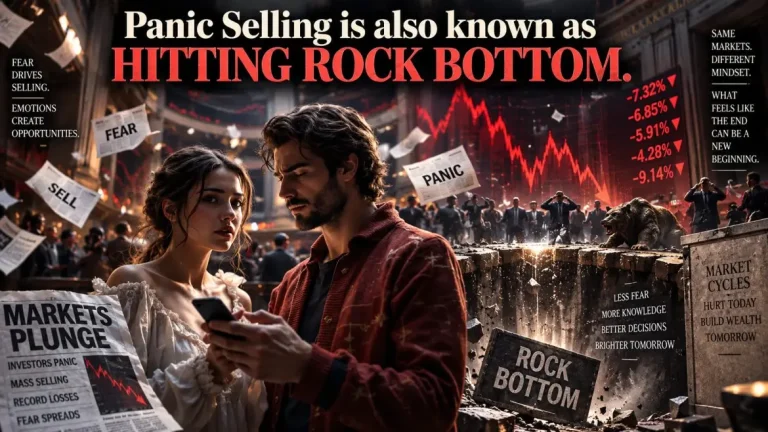
Most investors naturally focus on the loudest signal because attention follows novelty. Crypto rallies become the story. Oil declines become the conclusion. Financial media amplifies both because simple narratives attract far more engagement than structural analysis.
Professional investors approach the situation differently. They ask whether capital is genuinely changing direction or merely rotating temporarily. They examine positioning, capital flows, inventory levels, shipping constraints, insurance markets and long-term supply dynamics rather than assuming a single headline has rewritten the underlying economics. Markets frequently disguise structural continuity beneath dramatic short-term price movements because emotional reactions occur much faster than fundamental change.
The Structure Still Holds
Nothing about these developments suggests the geopolitical structure surrounding global energy markets has fundamentally changed. Access remains conditional, military leverage continues shaping commercial decisions and supply chains still require years rather than days to adapt. Cryptocurrency may eventually assume a larger role within global settlement systems, but one headline does not create a new financial architecture any more than one ceasefire permanently removes geopolitical risk.
Markets, however, rarely wait for certainty. They continuously oscillate between optimism and pessimism, rewarding those who recognise the difference between perception and structure before the crowd does. That is why the real edge seldom comes from reacting to headlines themselves. It comes from identifying which parts of the system have genuinely changed and which merely appear different because collective attention has temporarily shifted elsewhere.