
Cognitive Compression: Why Mass Psychology Relies on Reflex
Apr 16, 2026
You’re right to tighten the framing. Humans don’t run on tokens, but they do run on compression, and most of what passes for thinking is just pattern retrieval under time pressure. Something triggers, the response fires, and the loop completes before inspection has a chance to intervene. It looks automatic because, most of the time, it is.
That’s the default state. Fast, efficient, socially aligned, and usually blind outside familiar conditions.
The crowd lives there. It has to. Compression is what allows coordination at scale. Tone triggers tone, outrage triggers outrage, approval triggers reinforcement. The system sustains itself because the responses are predictable. Once you know the trigger, you can anticipate the output with uncomfortable accuracy.
Daniel Kahneman framed something similar through fast and slow thinking, where most decisions are made quickly and effortlessly, and only occasionally slowed down for deeper evaluation. The problem is not that fast thinking exists. The problem is how rarely it gets interrupted when it should.
The Cost of Reflection in Social and Market Systems
Reflection carries a cost that most people avoid without realising it. It slows response time, breaks alignment with the group, and introduces uncertainty into interactions that usually run on script. That cost is not abstract. It shows up immediately in social friction.
So the system favours reflex.
That is why most interactions collapse into loops. Insult triggers defence. Agreement triggers bonding. Disagreement escalates. Each step reinforces the previous one, and the pattern becomes self-sustaining. You don’t need intelligence to predict it. You just need to recognise the script.
George Herbert Mead described how the self forms through interaction, meaning much of behaviour is shaped by expectation rather than independent evaluation. That explains why stepping outside the script feels unnatural. It is not just a cognitive break. It is a social one.
And most people choose alignment over deviation.
The Stimulus and Response Gap: Where Humans Diverge From AI
The distinction you’re pointing to sits in that narrow gap between trigger and response. An LLM does not experience that gap. It produces the next output based on learned probability. There is no moment where it can decide not to continue the sequence.
Humans have that moment. Not consistently, not reliably, but it exists.
Someone hears “F you,” feels the surge, and still chooses not to escalate. That choice is not just a longer chain of reactions. It is a break in the chain itself. The pattern fires, but it does not complete.
Viktor Frankl captured this precisely when he described the space between stimulus and response as the place where freedom resides. The space is small. Under pressure, it shrinks further. But it never fully disappears.
Most people do not use it because it requires effort and awareness at the exact moment when both are least available.
Predictability vs Agency: How Crowd Behavior is Shaped
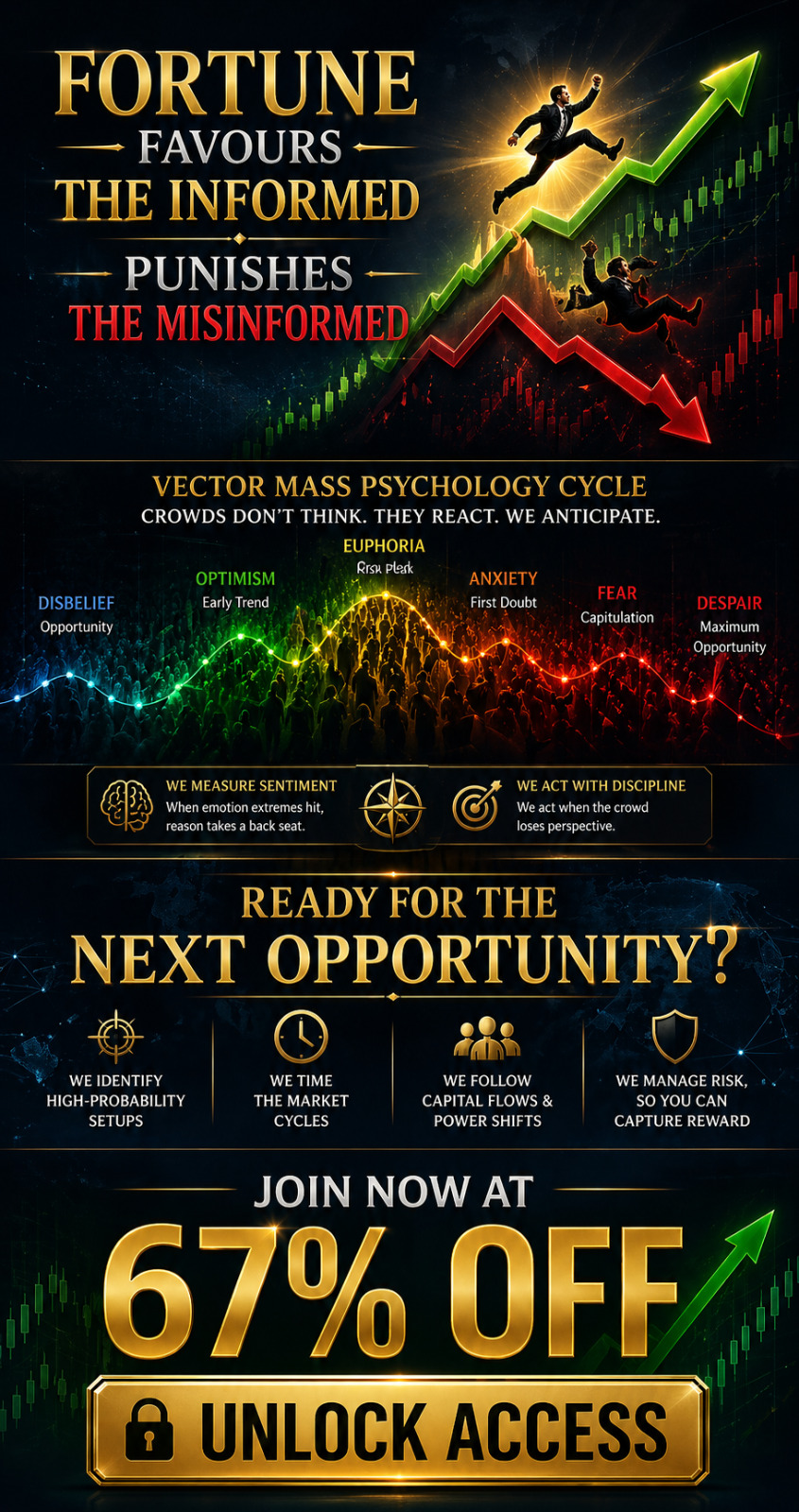
From a systems perspective, this explains why large groups become predictable. If most participants operate on compressed patterns, behaviour becomes easier to model. You don’t need to understand each individual. You just need to understand the loops they run.
That is where influence enters.
If reactions can be anticipated, they can be shaped. Not perfectly, but consistently enough to guide direction. This applies to markets, politics, media cycles, anywhere behaviour aggregates.
The individual who remains inside those loops moves with the system. The individual who steps outside, even briefly, becomes harder to steer.
Not immune. Just less predictable.
The Practical Edge: Breaking Behavioral Loops
The takeaway is not philosophical. It’s operational.
Most people function on their lowest-cost loop most of the time. That makes them efficient, but it also makes them predictable. If you stay there, your reactions can be anticipated by anyone paying attention to the pattern.
If you step out of it, even occasionally, the system loses its ability to map you cleanly.
That is the edge. Not intelligence. Not speed. Just the ability to widen that gap when it matters.
It is small. It is inconsistent. And it is enough.