
Ritualised Investing: Hypnosis Dressed as Discipline?
Oct 13, 2025
Ouspensky warned us: repeated ritual lulls the mind into a trance. Investors aren’t immune. They don’t just check statements or make regular contributions—they submit to liturgy. Contribution day, quarterly reviews, annual reports: these aren’t neutral updates. They’re rites wrapped in formulaic language. “Long-term growth.” “Risk-adjusted returns.” “Market cycles.” These words are hymns, spoken to soothe but rarely to inform. The result? Minds dull, capital stagnates, and wealth erodes while faith in the process deepens.
The genius—and danger—of this hypnosis lies in inversion. Underperformance is reframed as faith. When a fund lags its benchmark, the priest steps in: “Markets are volatile, but history rewards discipline.” Translation: don’t question the church, don’t pull your money, just stay the course. Ritualised investing becomes a crutch. Discipline, once a tool, turns into blind obedience, and the investor who submits to it mistakes stagnation for patience.
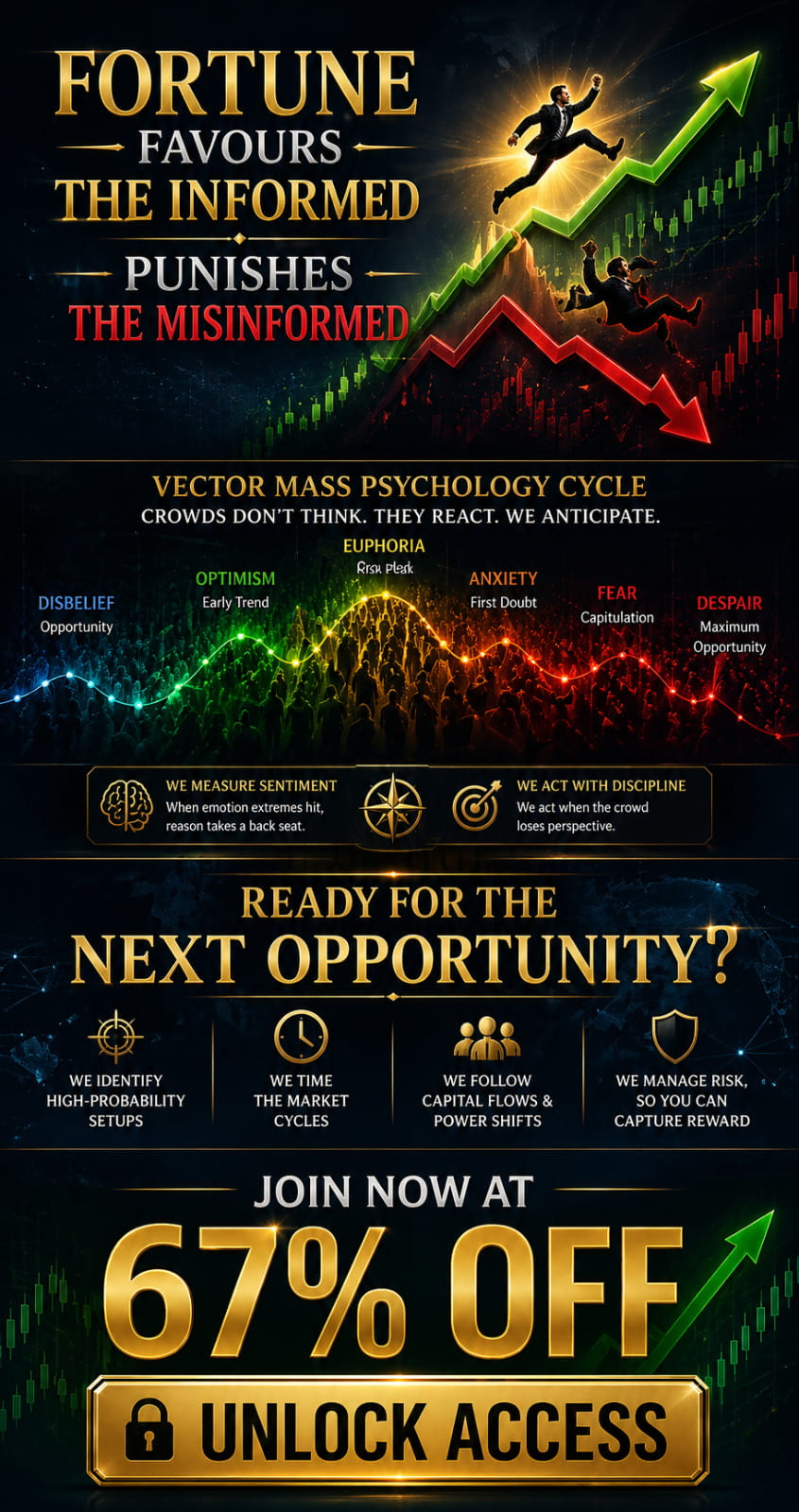
But here’s the twist: markets don’t reward faith. They reward awareness. The crowd doesn’t move on fundamentals—it moves on mimetic contagion, amplified by dopamine loops on screens. Ritualised investing, masked as discipline, is often surrender to the herd. To wake up, you must first see the trance.
The Rituals That Lull
Investing rituals feel safe. Contribution day is a habit. Quarterly reviews are a chore. Annual reports are something you skim to confirm you’re on track. It’s all routine—until the market cracks, and you realize you’ve been asleep at the wheel.
Rituals have power because they reduce uncertainty. They create the illusion of control in an uncontrollable system. But the comfort they provide comes at a cost: critical thinking fades. You assume that sticking to the ritual—checking the box—is equivalent to progress. It isn’t.
Ouspensky would call this a trance: an investor lulled into believing that diligence is discipline, that adherence to routine is strategy. You’re told to “stay the course” even when the course is no longer in your favour. You’re told to trust the process while the process quietly bleeds your capital.
The Paradox of Faith in Investing
Faith in investing is a double-edged sword. On one side, it’s resilience: the ability to hold through volatility, to trust your long-term plan despite short-term noise. On the other side, it’s blindness: the refusal to question, to adjust, to adapt when the environment shifts.
Consider this: in 2000, investors had faith in tech stocks as the future. They held through the dot-com bubble’s collapse because they were told to “think long-term.” By the time the dust settled, many had lost 70–90% of their wealth. In 2008, faith in housing as a “safe” investment led to leveraged bets that crushed portfolios. And in 2021–22, faith in meme stocks and “diamond hands” turned into catastrophic losses for those who mistook crowd euphoria for strategy.
Faith is only useful when paired with awareness. Resilience without awareness is just stubbornness. Ritualised investing feeds the latter, not the former.
Mimetic Contagion: Why the Herd Always Loses
Humans are mimetic creatures. We copy what we see, especially under stress. In markets, this means buying when the tape shows euphoria and selling when fear spikes. Not because fundamentals demand it, but because mimetic contagion spreads across charts, headlines, and platforms.
Social proof drives much of this. If everyone is buying, it must be safe, right? Platforms amplify the illusion. Reddit threads, Twitter trends, and dopamine-fueled trading apps don’t just reflect the herd—they accelerate it. Ritualised investing, with its quarterly rituals and blind faith, often becomes a gateway to this behaviour. You’re primed to follow, not to think.
The result is predictable: investors enter late, exit early, and call it discipline. But it’s not discipline—it’s obedience to noise.
Breaking the Trance: Awareness Over Ritual
Ritualised investing isn’t inherently bad. Routine can be a stabilizer in volatile markets. The problem lies in mistaking ritual for strategy. To break this trance, you need to replace mindless habits with deliberate awareness. Here’s how.
1. Write Prewritten Rules
Strategy lives in rules, not reactions. Before entering any position, write a plan:
– **Thesis:** Why are you buying? One sentence.
– **Disconfirmers:** What would prove you wrong? List three.
– **Entry and Exit:** What price or conditions trigger your entry? Your exit? Time stops included.
– **Size:** How much are you risking? No improvisation.
If you can’t answer these before you trade, you’re not investing—you’re gambling with a hymn playing in the background.
2. Build a Five-Dial Dashboard
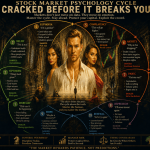
Replace narrative with states. A five-dial dashboard forces you to act on conditions, not stories:
– **Breadth:** Advancers/decliners, up/down volume.
– **Credit:** High-yield spreads, cash-bond tone.
– **USD and Real Yields:** Direction and pace.
– **Volatility Term Structure:** Is the front month clenched or easing?
– **Leadership:** Who holds gains on red days?
Act only when three or more align. Otherwise, wait. Ritualised investing reacts to stories; strategic awareness waits for states.
3. Audit Your Attention
Ritualised investing thrives on passive consumption: quarterly calls, annual reports, generic recommendations. Break the cycle with an attention diet:
– One price screen.
– One credit feed.
– One catalyst list.
Mute opinions that can’t name the dial which would reverse their view. Attention is collateral—guard it like cash.
4. Replace Quarterly Reviews With Risk Audits
Stop asking, “How did my portfolio perform?” Start asking:
– What’s my top-ten concentration?
– How balanced is my sector exposure?
– Are valuations stretched?
– Do my liquidity and tax plans hold through a drawdown?
Quarterly performance reports lull you into complacency. Risk audits force you to think.
Receipts From the Past
2000–02: Passive investors rode the dot-com collapse because they were told to “stay the course.” Equal-weight funds and value strategies hurt less.
2008–09: Blind faith in housing as “safe” led to leveraged bets that wiped out portfolios. Liquidity buffers saved disciplined investors.
2021–22: Meme stock euphoria pushed AMC and GameStop to parabolic highs. “Diamond hands” believers crashed with them while structured traders pocketed volatility premiums.
Every cycle has the same lesson: rituals don’t protect you. Awareness does.
Replace Ritualised Investing With Strategic Discipline
Ritualised investing isn’t about thinking less—it’s about thinking lazily. Discipline isn’t quarterly contributions and blind faith. Discipline is deliberate, active oversight. The market doesn’t care about your rituals. It cares whether you act with clarity when the room shakes.
Here’s what strategic discipline looks like:
– **Prewritten rules:** Entry, exit, size, and time stops defined before emotion hits.
– **State-based decisions:** Act only when the five dials align; otherwise, do nothing.
– **Liquidity plan:** Hold 6–12 months’ expenses in cash or short bills to avoid forced sales in drawdowns.
– **Tax hygiene:** Place bonds in tax-advantaged accounts, equities in taxable, and harvest losses during drawdowns.
– **Post-trade autopsies:** Document what worked, what didn’t, and add one rule to prevent repeat errors.
The Final Loop
Ritualised investing is hypnosis dressed as discipline. It rewards comfort at the expense of awareness, faith at the expense of clarity. Breaking the trance doesn’t mean abandoning routine—it means replacing it with deliberate, strategic habits.
The market doesn’t care about your quarterly rituals. It cares about what you do when cycles turn, when concentration builds, when liquidity disappears. Faith won’t save you then. Awareness will.
Wake up. Write rules. Audit risks. Guard your attention. The crowd will always move on noise. Your job is to move on purpose.