

May 4, 2026
The break came in 2022, and it was not subtle or selective, it was broad and mechanical, the kind of repricing that leaves very little room for interpretation once it begins. Inflation pushed above 8% at its peak, the Federal Reserve responded with the fastest tightening cycle in decades, and the policy rate moved from near zero to above 4% in less than a year, which meant liquidity did not drift away quietly, it was pulled out with intent, and valuations adjusted the way they always do when the discount rate moves that quickly.
The S&P 500 closed the year down roughly 19%, but that number does not capture the path, because from the January high to the October low the drawdown pushed past 25%, while the Nasdaq Composite fell closer to 33% peak to trough, and beneath those index figures the damage was more severe, with high-multiple growth names losing 50% to 80% in many cases, not because their stories suddenly changed, but because the math did.
When rates rise that fast, future cash flows shrink in present value terms, and no narrative survives that compression for long.
Valuation Multiple Compression | Multiples Broke Before Earnings Did
One of the reasons people misread 2022 in real time is that earnings held up better than expected early on, which gave the illusion that the system was stable, but the damage was happening elsewhere, in multiples, in how those earnings were being valued. As the year progressed, rallies began to fail in a pattern that became obvious only after the fact, lower highs, shorter recoveries, and consistent selling into strength.
That is what a real bear market looks like.
You do not need to debate it or interpret it. Price and participation tell you. Correlations rise, leadership disappears, and everything begins to move together because liquidity is the common driver. That is exactly what played out. It was not rotation. It was compression across the board.
2023 Stock Market Concentration | 2023 Looked Strong, But Wasn’t Broad
Then 2023 arrived, and on the surface it looked like recovery. The S&P 500 finished the year up over 20%, which on its own suggests strength, but the structure underneath told a different story, one that most people felt even if they did not articulate it clearly.
At several points during the year, fewer than 30% of stocks traded above their 200-day moving average, and the equal-weight version of the index lagged meaningfully, while small caps, tracked by the Russell 2000, spent much of the year well below prior highs. That is not a broad recovery. That is concentration.
Money flowed into a narrow group of large-cap technology names because they offered something the rest of the market could not at that moment, visibility, balance sheet strength, and the perception that they could operate even in a higher-rate environment. Everything else drifted, some quietly, some persistently, but rarely with conviction to the upside.
If you owned the leaders, the year felt fine. If you owned the average stock, you were still working through the prior damage.
Hidden Market Drawdown | The Second Compression Was Quieter
From July through October, the market gave you another signal, though less dramatic than 2022 and therefore easier to ignore. The S&P 500 dropped around 10%, not enough to trigger panic, but enough to create pressure, while the 10-year Treasury yield pushed toward 5%, tightening financial conditions again and forcing a second round of multiple compression.
This time it did not look like a collapse. It felt like erosion.
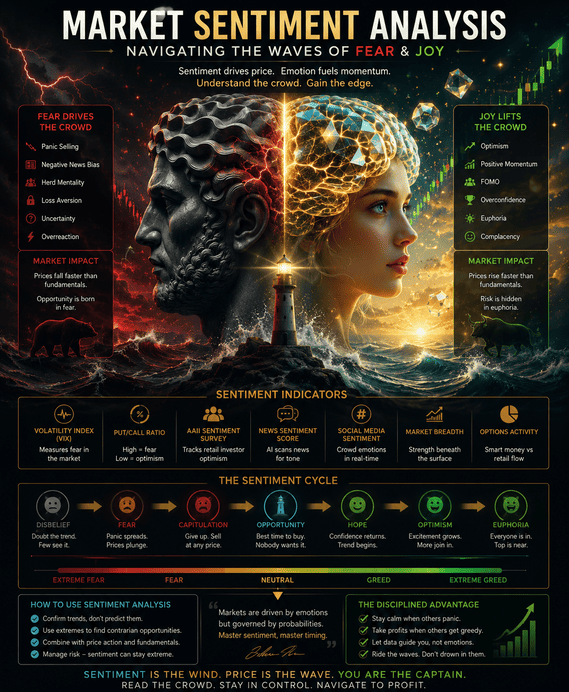
Sentiment deteriorated slowly, rallies lacked follow-through, and selling became persistent rather than explosive. That kind of move is harder to react to because it does not provide a clear emotional signal. There is no spike in fear, just a steady grind that wears down positioning.
This is where perception breaks. In 2022 the damage was obvious. In 2023 it hid behind the index.
Dot-Com Parallel | The Better Comparison Is Dot-Com, Not 2008
It is tempting to compare every decline to a systemic crisis, but that misses the structure. 2008 was about credit failure, frozen markets, and a breakdown in the financial system itself. Nothing in 2022 or 2023 resembled that.
A closer comparison sits with the post-2000 unwind after the dot-com peak.
The Nasdaq Composite collapsed nearly 78% from peak to trough in that cycle, but the more interesting phase came after the initial break, when leadership narrowed, capital rotated into perceived survivors, and the index could stabilize even as most underlying names continued to decline.
That pattern showed up again in 2023, not with the same magnitude, but with a similar structure. A small group of dominant companies carried the index while the broader market lagged. The surface looked stable. Underneath, risk was still being repriced.
Market Valuation Reset | Excess Clears Fast, Then Slowly
Both periods share another feature. The prior excess mattered more than the immediate trigger.
In the late 1990s, valuations stretched on future expectations. In 2021, a different version of the same dynamic appeared, zero rates, abundant liquidity, and speculative appetite pushed valuations across growth assets beyond what the underlying environment could sustain. By 2022, that excess had to clear, and it did, quickly at first, then more gradually.
The difference is pace.
The dot-com unwind stretched over several years. The 2022 adjustment compressed much of that valuation reset into a single year, leaving 2023 as a period of uneven recovery rather than a clean new bull market.
Investor Behavior and Market Cycles | The Only Part That Matters: Behavior
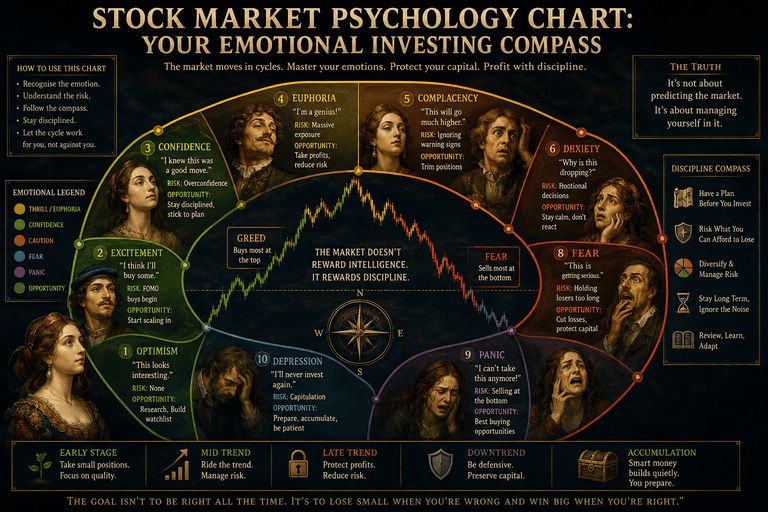
Cycles always offer two windows, and they are rarely open at the same time.
Euphoria gives you the chance to reduce exposure when risk is mispriced and everything feels easy. Panic gives you the chance to add when risk is overpriced and everything feels uncertain. Most participants miss both because they respond to emotion instead of structure.
In 2021, liquidity was abundant, narratives were unchecked, and valuations detached from reality. That was the moment to scale out, not because timing is perfect, but because asymmetry had disappeared. By the time 2022 arrived, that decision created optionality.
When the drawdown reached 25% on the S&P 500 and far more in speculative segments, the opportunity appeared, not cleanly, not comfortably, but clearly enough for those willing to act against the prevailing mood.
By 2023, that broad opportunity had narrowed. What remained required more selectivity, stronger balance sheets, and a willingness to look beyond the index into areas that had not recovered.
Cycle Strategy Takeaway | Final Read
Nothing in this cycle required prediction. It required response.
Scale out when euphoria removes risk from the equation. Scale in when panic distorts it in the opposite direction. Miss the first, and the second feels like a trap. Catch both, and the cycle begins to work for you rather than against you.
That is the part most people never internalize, even after living through it more than once.