

May 12, 2026
Dollar cost averaging is the financial world’s version of “eat your vegetables.” Everyone nods. Everyone recommends it. Almost nobody talks about what happens when the vegetables are rotten.
The pitch is clean and comforting: instead of dumping a lump sum into the market and praying, you drip money in at regular intervals — weekly, monthly, whenever the paycheck hits. When prices fall, you buy more shares. When prices rise, you buy fewer. Over time, your average cost smooths out, your emotions stay quieter, and compounding does the heavy lifting. It’s a beautiful strategy. It’s also the most misused one in retail investing.
Because here’s the question almost no personal-finance blog wants to touch: when do you stop? DCA has an entry ritual, a monthly rhythm, and a comforting story. What it doesn’t have — for most people — is an exit plan. And that’s where perfectly reasonable investors quietly turn into stubborn ones, feeding money into positions that stopped deserving it a long time ago.
Why “Just Keep Buying” Became a Religion
Somewhere between the 2009 recovery and the 2021 meme boom, DCA stopped being a strategy and started being an identity. Social media made it a badge of honor. “I DCA’d through the crash.” “I DCA’d the dip.” “Diamond hands, keep stacking.” It sounds disciplined. Sometimes it is. Often, it’s just a prettier word for not having a plan.
The psychology here is worth unpacking. DCA feels safe because it outsources the hard part — timing — to a schedule. You don’t have to think. You don’t have to decide. The calendar decides for you. And for broad index funds held over decades, that’s genuinely brilliant. But the moment you apply that same autopilot to a single stock, a speculative sector, or a thesis that’s quietly falling apart, DCA stops being a strategy and becomes a ritual. Rituals are comforting. They are not, however, known for producing returns.
The Difference Between DCA’ing an Index and DCA’ing a Story
This is the distinction that costs people the most money, so let’s be blunt about it:
| DCA Into a Broad Index | DCA Into a Single Stock or Theme |
|---|---|
| Diversification built in | Concentrated risk in one outcome |
| Survivorship handled by the index itself | You are the survivorship committee |
| Mean reversion is statistically supported | Companies can — and do — go to zero |
| “Keep buying” is usually fine | “Keep buying” can be catastrophic |
| Passive behavior is rewarded | Passive behavior hides the damage |
An index re-balances itself. Losers fall out. Winners get bigger weightings. You’re basically betting on capitalism as a whole, which has a pretty solid track record. A single stock doesn’t do that for you. If the company’s story breaks, nothing in the DCA mechanism will alert you. You’ll just keep wiring money into a slow-motion accident because that’s what the schedule said to do.
Signs It’s Time to Stop DCA’ing
Here’s where most articles get vague. Let’s not. These are the real signals that your DCA has turned into denial:
- The original thesis is gone. If you bought the stock because of a product, a management team, or a moat — and that thing no longer exists — you’re not averaging down. You’re donating.
- You can’t explain the position to a friend without getting defensive. Conviction sounds calm. Denial sounds like a defense attorney.
- The position now exceeds your intended allocation. DCA is supposed to build exposure, not swallow your portfolio whole. If one name is 40% of your account because you kept “averaging down,” the strategy has hijacked the plan.
- Price action keeps breaking long-term technical support. Charts aren’t magic, but a stock carving lower lows on rising volume for months is trying to tell you something. Ignoring it isn’t patience — it’s willful deafness.
- Insiders are selling while you’re buying. The people who know the company best are exiting, and you’re doubling down on monthly autopay? That’s not contrarian. That’s unsubscribed from reality.
- You’re using capital you can’t afford to lose. DCA only works if the money being added is genuinely discretionary. The moment it starts eating into your emergency fund, the strategy has stopped serving you.
The Crowd Psychology Trap
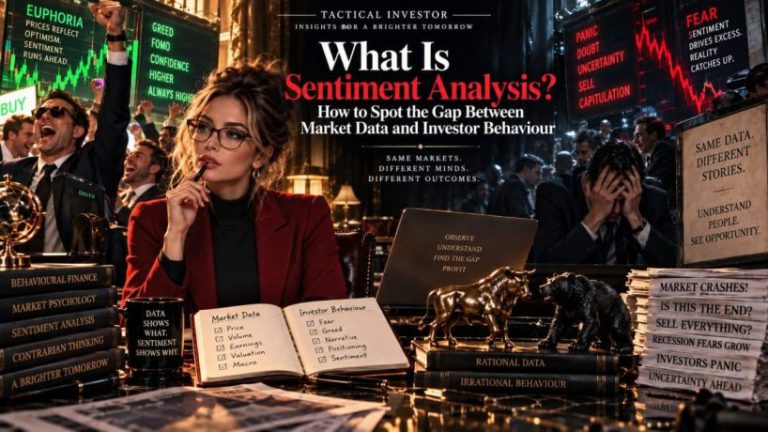
Here’s the uncomfortable part. Most people don’t stop DCA’ing because of logic. They don’t stop because of charts. They stop — or refuse to stop — based on what the crowd around them is doing. If the online community they belong to is still chanting “keep stacking,” they’ll keep stacking. If the vibe turns, they’ll suddenly discover “risk management” they didn’t know they had.
This is group synchronization at work. When everyone you follow is buying the same dip, your brain reads it as confirmation. When they all quietly go silent, your brain reads it as betrayal. Neither feeling is information. Both feel like information. That’s the trap.
The contrarian move here isn’t to do the opposite of the crowd for sport. It’s to make the decision based on the position itself, not the volume of encouragement around it. The crowd will not send you an email when the story breaks. The crowd will just stop talking about it — and start talking about whatever’s hot next week.
A Simple Framework for Knowing When to Stop
If you want something you can actually use, try this three-question check every quarter:
- Would I buy this today if I didn’t already own it? If the answer is no, you’re not investing anymore. You’re coping.
- Has anything material changed since I started? Earnings quality, competitive position, management, macro backdrop — any of these moving meaningfully should trigger a review, not another automatic buy.
- Is my position size still appropriate? DCA has a sneaky way of concentrating portfolios. Check the math, not the feeling.
Three questions. Four minutes. Saves more money than most financial newsletters.
When Stopping Isn’t Selling
One more thing worth saying clearly: stopping DCA is not the same as selling. You can pause new contributions while you think. You can hold what you have while you gather information. You can redirect future cash into something else entirely. The binary of “keep buying forever” versus “panic sell everything” is a false choice. In between is a very adult middle ground where most of the good decisions actually live.
This is where a lot of retail investors get stuck. They treat every decision like a vow — either all in or all out. Markets don’t work that way. Neither do good portfolios. Pausing is a position. So is waiting. So is reallocating slowly. Doing nothing while you think is frequently the smartest trade on the menu.
The Bottom Line
Dollar cost averaging is a fine strategy. It’s also not a personality. The investors who use it well are the ones who remember it’s a tool, not a promise. They know when to keep feeding the machine — and when to step back, reassess, and maybe let the monthly auto-buy take a quiet vacation.
Because in the end, the question isn’t whether DCA works. It’s whether you’re using it to build wealth — or using it to avoid admitting something’s gone wrong. The schedule won’t tell you the difference. Only you can.
And if you’ve been pretending not to know the answer for a while now? That, honestly, is the answer.

Epiphanies and Insights: Articles that Spark Wonder