

Market Cycles and Opportunity: Cycles, Not Catastrophes
We will expand on these points in more detail later, but the response above already gives you the framework if you read it carefully. Everything moves in cycles, and the people who spend their time predicting disaster understand this better than they let on, which is why they isolate one moment within that cycle, magnify it, and present it as the only possible outcome. The reason is not intellectual honesty. It is commercial. Fear sells far better than balance, and a frightened audience is far easier to direct than a calm one.
Notice how this plays out during every decline. A correction becomes a crisis, a crisis becomes a collapse, and before long the narrative escalates into some version of financial Armageddon. What you almost never hear is the other half of the equation, the part that history repeats with tedious consistency, which is that every crash, every panic, and every so-called end of the world has also produced exceptional opportunity for those who were prepared to act when others froze.
The first response, then, is simple. Parts of what they say may be true, but the rest is incomplete to the point of being misleading. A decline is not a one-sided event. It is a transfer mechanism. The outcome depends less on the event itself and more on how you respond to it. Take profits when the crowd is euphoric and willing to pay any price, and deploy capital when that same crowd becomes paralysed by fear. The event does not change. Your positioning does.
Contrarian Investing Mindset | Why All-or-Nothing Thinking Fails
This is why all-or-nothing statements collapse under scrutiny. They depend on isolation, and isolation is where doomsayers do their best work, because once you remove context, almost anything can be made to look catastrophic. Put that same claim back into a broader historical framework, and it begins to unravel.
Take European civilisation as an example. Depending on how you define it, it has existed in some form for roughly 2,500 to 2,800 years. That alone should give you pause before accepting any sweeping claim about its imminent disappearance. A system that has survived wars, plagues, political fragmentation, and repeated economic upheavals does not vanish because of a single cycle or a handful of poor policy decisions.
Will it face stress, adapt, and change? Of course. Every long-lived system does. But change is not the same as extinction, and the two are often confused by those who benefit from amplifying fear.
The same logic applies across markets and economies. The loudest voices tend to frame every downturn as terminal because that framing removes nuance and forces a reaction. Reality, as always, is less dramatic and far more cyclical.
Debunking Economic Collapse Predictions | The Myth of Permanent Collapse
You see the same pattern in arguments about the death of currencies, the collapse of nations, or the end of economic dominance. These claims sound persuasive because they anchor themselves in real problems, debt levels, policy errors, structural imbalances, but then extend those problems into absolute conclusions that history rarely supports.
Take the United Kingdom. It is no longer the dominant global power it once was, yet it remains one of the world’s key financial centres, with London still playing a central role in global capital flows. If decline automatically meant disappearance, Britain would have vanished decades ago. Instead, it adjusted, lost relative influence, and continued to operate within a new framework.
Or consider China, which held a dominant position centuries ago, declined significantly, and then re-emerged as a major economic force. Decline did not equal extinction. It was part of a longer cycle.
Even more extreme cases follow the same pattern. Argentina has endured repeated currency crises, devaluations, inflation spirals, and restructurings across multiple decades, from the early 1980s through the early 2000s and into the recent period. Yet the country still exists, its economy still functions, and its system, while stressed, continues to adapt.
The lesson is not that disasters do not matter. They do. They can be severe, disruptive, and painful. But the leap from disruption to total collapse is rarely justified.
Turning Crashes Into Opportunity | Disaster as Opportunity, Not Endpoint
This is where the conversation returns to markets.
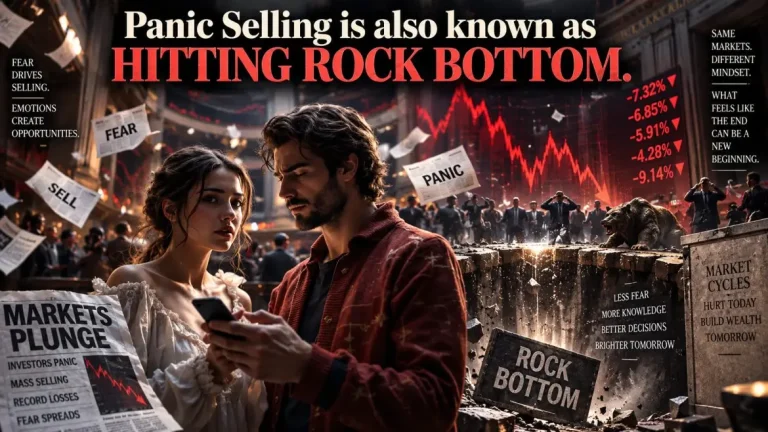
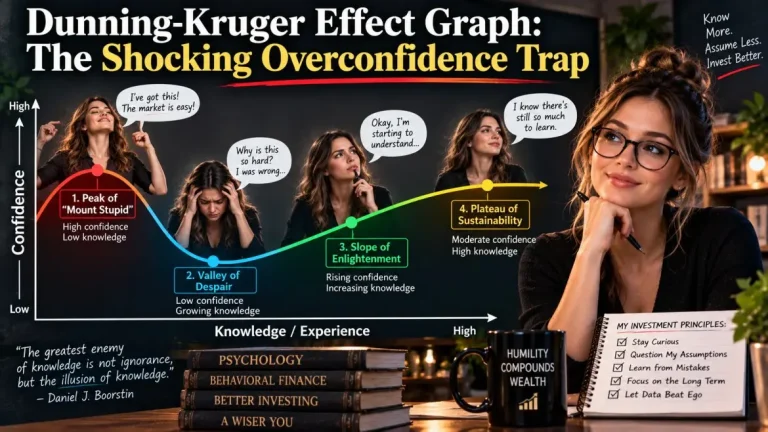
Crashes and corrections are not anomalies. They are part of the cycle. They clear excess, reset expectations, and create the conditions for the next phase. The problem is that most participants encounter them from the wrong position. Fully invested near the top, they experience the decline as loss rather than opportunity, and by the time conditions improve, they are either out of the market or too cautious to re-enter.
That is not a market problem. It is a positioning problem.
Tactical Investor has emphasised this repeatedly. The goal is not to avoid downturns entirely, which is impossible, but to manage exposure so that declines can be used rather than endured. That means scaling out when optimism becomes excessive and retaining enough liquidity to act when fear dominates.
Simple in theory. Difficult in practice.
Because acting against the crowd always feels wrong in real time.
Long-Term Market Resilience | Conclusion
Will Europe go through difficult periods? Almost certainly. Every major civilisation does. Debt cycles, political missteps, demographic pressures, and economic adjustments are part of the process. But the idea that it will simply vanish ignores the depth and resilience built over centuries.
Will the U.S. dollar disappear? No. It may lose relative dominance over time as global structures evolve, but relative decline is not extinction. Reserve currencies shift, influence redistributes, and systems adapt.
Could the United States be overtaken in headline GDP by another nation? Possibly. But a larger number on paper does not equate to collapse. If another economy reaches a higher nominal figure while the U.S. continues to grow in absolute terms, the system has changed in rank, not in existence.
The broader point remains unchanged. Anyone making absolute predictions about the end of a system, while operating within a timeframe that barely registers against the scale of history, should be approached with caution. History does not support clean endings. It supports transitions, adaptations, and cycles that rarely unfold exactly as advertised.
And that brings it back to markets.
Disaster, chaos, and crisis are not final chapters. They are entry points, but only for those willing to look past the noise. If you cannot do that, all you will see is fear, volatility, and loss, and you will respond accordingly. If you can, the same events begin to look very different, less like endings and more like the moments where opportunity quietly takes shape.