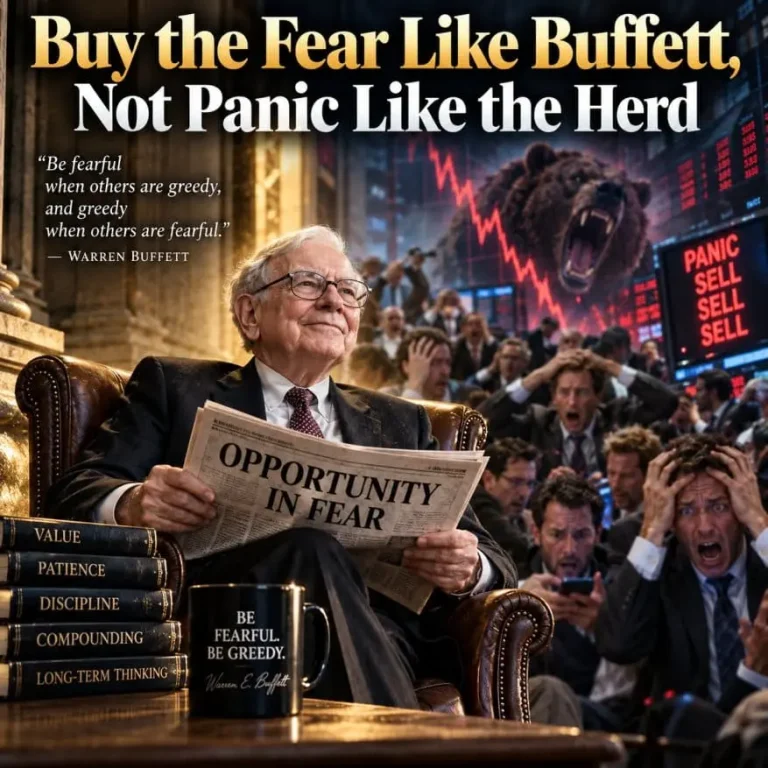

Every few years, the financial world rediscovers fear. Headlines turn red. Pundits sharpen their grimmest faces. Your uncle, who hasn’t checked his 401(k) in a decade, suddenly has thoughts. And somewhere in the middle of all that noise, a quiet thing happens that nobody puts on the front page: stocks go on sale.
That’s the awkward truth about a recession fear buying opportunity. The conditions that make people most afraid to buy are usually the same conditions that produce the best long-term returns. Not always. Not for every stock. But often enough that anyone serious about investing has to make peace with the discomfort — because the discomfort is the price of the discount.
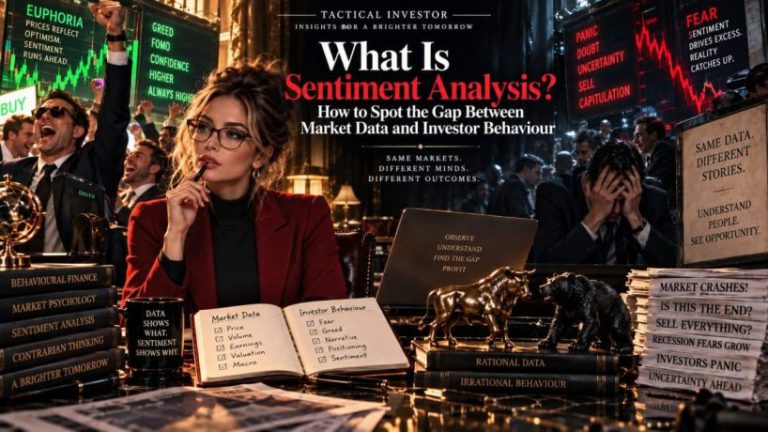
And here in 2026, with the cycle doing what cycles always do, the conversation is back. Recession on the cover of every magazine. Inverted curves making a comeback tour. Retail sentiment somewhere between “cautious” and “hiding under the bed.” Which means it’s a perfect time to talk about how this stuff actually works — emotionally, not just financially.
Why Fear Creates the Setup
Markets aren’t priced by spreadsheets. They’re priced by people, and people get weird when they’re scared. When recession talk dominates the news cycle, three things happen almost mechanically:
- Sellers become motivated. Not because the underlying businesses are broken — but because their owners can’t sleep. Forced selling has nothing to do with value. It has everything to do with anxiety.
- Buyers go on strike. The same people who were happily paying high prices six months ago suddenly need “more clarity.” Translation: they want to feel safer before paying less. That’s not how discounts work.
- Time horizons collapse. A stock that was a “ten-year hold” gets reevaluated based on the next ten weeks. The business didn’t change. The lens did.
Put those together and you get the strange situation where good companies trade at bad prices, while bad companies sometimes trade at even worse prices. Sorting them out is the actual job. Buying a “recession discount” doesn’t mean buying everything that fell. It means buying the right things that fell for the wrong reasons.
The Psychology Working Against You
Here’s the part most articles skip. The strategy is simple. The execution is brutal. Why? Because every instinct in your body will be screaming at you to do the opposite.
| What Your Brain Will Tell You | What’s Actually Happening |
|---|---|
| “Wait until things calm down.” | By the time things calm down, the discount is gone. |
| “This time is different.” | It’s always different. It’s also always the same. |
| “I’ll buy after one more leg down.” | You won’t. You’ll find a new excuse at the new low. |
| “Cash feels safe right now.” | Cash feels safe because it’s losing slowly. That’s still losing. |
| “Nobody else is buying.” | Correct. That’s the entire point. |
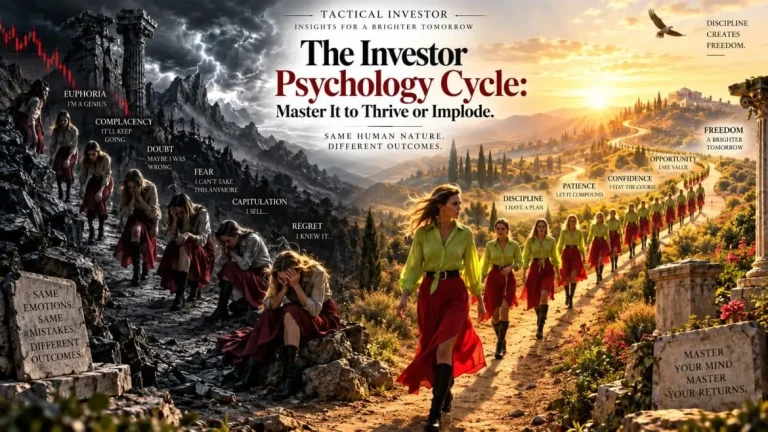
This is where collective blindness kicks in. When everyone around you is convinced the sky is falling, the social cost of buying feels enormous. You’re not just risking money — you’re risking looking foolish in front of people whose opinions you actually care about. That’s a heavier weight than most investors admit.
What History Quietly Teaches
Look back at any major recession scare — 2009, 2011, 2016, 2020, 2022 — and a pattern emerges. The investors who did best weren’t the ones with the best forecasts. They were the ones with the steadiest hands. They didn’t catch the exact bottom. They didn’t need to. They just kept buying quality while everyone else was busy explaining why buying was insane.
The math is unromantic but powerful. A stock that drops 50% needs to gain 100% to get back to even. That sounds terrible — until you realize that if you bought near the lows, that 100% is your gain, not your recovery. The same volatility that ruins the panicked seller rewards the patient buyer. Same chart. Different outcome. The only variable is behavior.
How to Buy a Recession Without Losing Your Mind
You don’t need to be a hero. You just need a plan that survives contact with your emotions. A few rules that tend to work in real life, not just in theory:
- Buy in tranches, not in moments. Nobody calls the bottom. Spreading purchases across weeks or months removes the pressure to be right on any single day.
- Stick to quality during the scare, not after it. The best businesses get marked down alongside the worst ones. That’s the inefficiency you’re paying attention for.
- Pre-commit to your buy levels. Decide in advance what prices you’d be happy to own at. Write them down. When the market gets there, your job is to execute, not to negotiate.
- Ignore the macro experts. They didn’t predict the recession. They won’t predict the recovery. Their job is to sound smart on television, not to make you money.
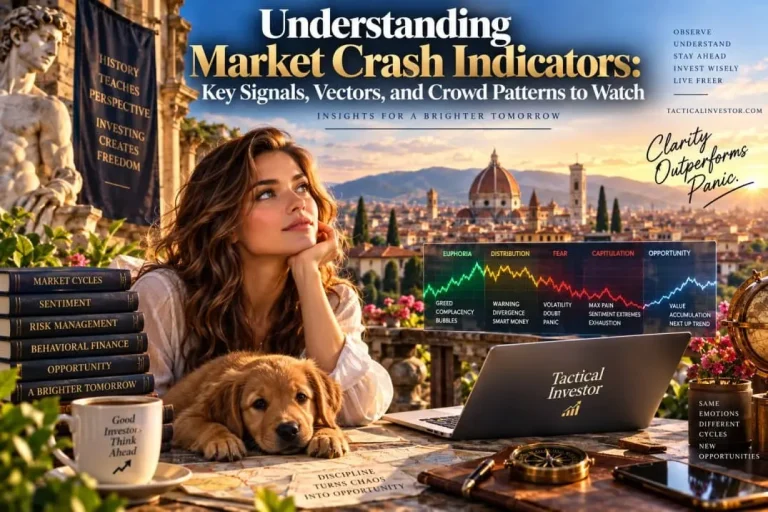
- Use technical levels for timing, not fundamentals. Capitulation candles, volume spikes, breadth thrusts — these are far more useful than another GDP forecast.
- Keep something in reserve. The worst feeling isn’t being early. It’s being early and fully invested with nothing left to deploy at lower prices.
The Contrarian’s Real Edge
Contrarian investing isn’t about being clever. It’s about being calm when everyone else is loud. The edge isn’t intelligence — it’s emotional architecture. While the crowd is busy reacting, the contrarian is busy preparing. While the crowd is selling out of fear, the contrarian is buying out of plan.
And here’s the part that sounds almost unfair: the more painful the headlines feel, the bigger the eventual setup tends to be. Markets don’t pay you for comfort. They pay you for tolerating discomfort better than the next person. That’s the whole game, dressed up in a thousand different costumes.
The Bottom Line
Recession fear isn’t a problem to be avoided. It’s a setup to be respected. The investors who built real wealth over the last fifty years didn’t do it by predicting downturns. They did it by being ready when downturns happened — emotionally, financially, and strategically.
You don’t need to love volatility. You just need to stop confusing it with danger. Volatility is the toll booth on the road to long-term returns. Pay it calmly. Buy quality when others can’t. And remember that every recession scare in history has eventually become someone’s “I wish I had bought back then” story.
The only question is whether the someone is going to be you — or the person you’ll be quoting at the next dinner party.