
Policy Uncertainty and Market Volatility
Mar 30, 2026
Whatever scenario unfolds, the response remains unchanged. We do not chase headlines or try to outguess policy moves in real time. We continue building positions in names that are likely to lead the next upward phase, because markets reward positioning, not prediction.
The recent tariff developments illustrate the point. The court pushes back, the administration signals alternative paths, and suddenly the market is not reacting to tariffs themselves but to the uncertainty surrounding them. That distinction matters. Markets can price policy. They struggle to price indecision. When direction becomes unclear, volatility fills the gap.
At the same time, the broader structural issues remain untouched. The trade deficit continues to expand despite policy attempts to contain it, and without fiscal discipline tariffs become more of a temporary patch than a lasting solution. Debt levels sitting well beyond GDP only add pressure to the system, and continued monetary expansion feeds instability rather than resolving it. None of this is new, but it becomes more relevant when layered on top of policy uncertainty.
Supply Chain Risks, Environmental Instability, and Market Behaviour
The situation in Mexico adds another layer, not because markets react to isolated events, but because they react to the potential for disruption. Supply chains depend on consistency. When that consistency comes into question, even temporarily, businesses adjust behaviour. They hold more inventory, delay decisions, and price in risk that may not even materialise. Markets do not wait for confirmation. They move on probability.
That same behavioural response appears in less obvious areas. Weather, for example, does not drive markets in any direct sense, but it alters how people behave. Stability in the physical environment allows for planning and longer-term thinking. When patterns break, even slightly, behaviour shifts toward shorter time frames. Investors take profits quicker, reduce exposure faster, and become less willing to hold positions through uncertainty. The result is not a change in direction, but a change in tempo.
Put these factors together and the picture becomes clearer. Tariffs create uncertainty at the policy level. Supply chain risks introduce uncertainty at the operational level. Environmental instability affects behaviour at the psychological level. None of these forces need to be decisive on their own. Combined, they increase the likelihood of sharp, reactive moves.
Sentiment Cooling, Joy Indicator, and VPS Signals
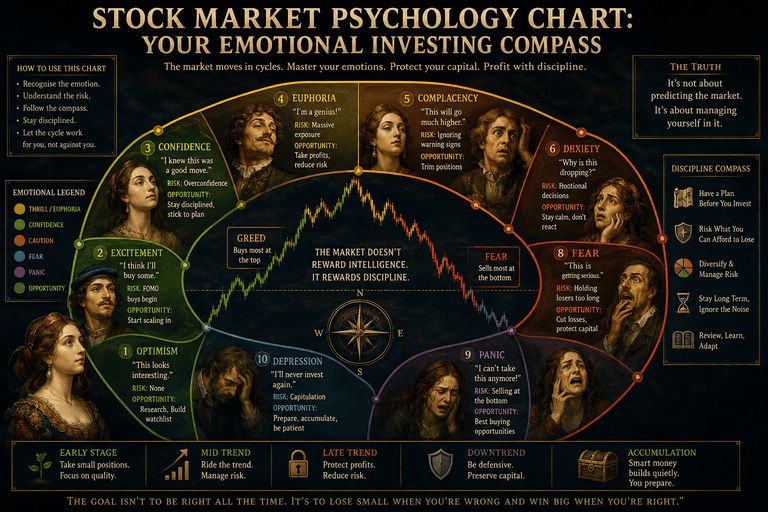
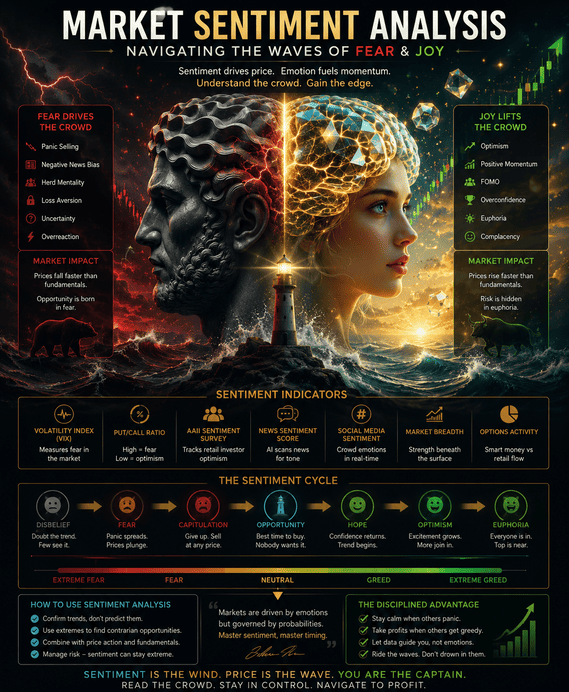
From a sentiment perspective, the environment has already shifted. The so-called Joy indicator, which reflects complacency, has fallen sharply from recent levels, while broader sentiment has cooled below its long-term average. This is not a euphoric market unwinding. It is a selective cooling process, where certain sectors have run ahead while others remain neglected.
The VPS (Vector Mass Psychology System) framework looks for coherence across sentiment indicators, and while that coherence has improved, it has not reached a level that supports a sustained bullish stance. Setups like this rarely resolve cleanly. They tend to produce either a quick shakeout or an extended period of uneven movement that frustrates both sides.
Tactical Positioning in a High-Volatility Market
The response, therefore, remains tactical rather than reactive. We continue scaling out of sectors that have already experienced strong advances and show elevated sentiment, while gradually scaling into areas that remain under-owned and underappreciated. More importantly, we avoid full deployment of capital until the market provides a clearer signal.
This is where most investors lose their edge. They interpret uncertainty as a call to act aggressively when it is often a call to remain measured. Deploying two out of four positions instead of all four may feel inefficient in the short term, but it preserves flexibility when conditions shift.
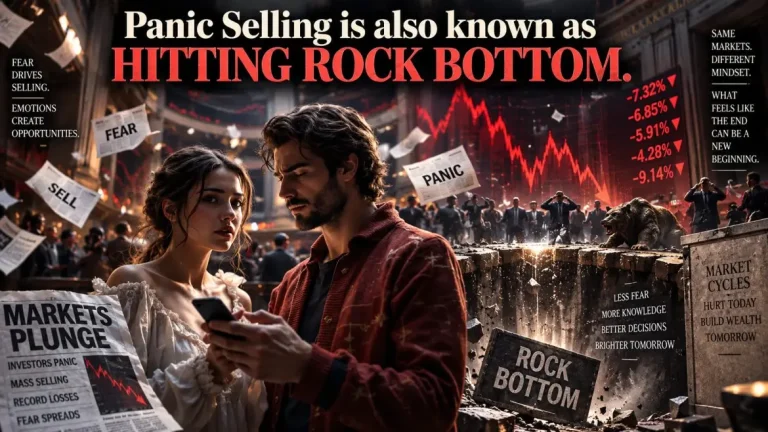
Markets do not require constant action. They require alignment with structure. Right now, that structure points to elevated volatility driven by overlapping layers of uncertainty, not systemic collapse. The difference matters, because one demands panic while the other demands patience.