

Oxford Instruments: The Quiet Enabler of the Next Technological Revolution
July 18, 2026
One of the biggest mistakes investors make is assuming that the biggest winners always produce the finished product. History suggests otherwise. During the California Gold Rush, many prospectors returned home broke, while those selling picks, shovels, denim and supplies quietly built fortunes. The same pattern repeated itself during the internet boom. Countless dot-com companies disappeared, yet businesses supplying networking equipment, semiconductors and enterprise software became some of the largest wealth creators of the following decades.
The lesson is simple. Sometimes the safest way to profit from a technological revolution is not by betting on who wins the race, but by owning the companies that supply every competitor. That is precisely why Oxford Instruments deserves far more attention than it currently receives.
A Modern Picks and Shovels Business
Very few American investors have ever heard of the company, despite the fact that it occupies a remarkably important position within some of the world’s most advanced scientific and industrial ecosystems. Oxford Instruments does not build quantum computers, manufacture advanced chips or develop revolutionary materials. Instead, it produces many of the highly specialised tools that allow those industries to exist in the first place. In many respects, it resembles a modern version of the classic “picks and shovels” business, quietly supplying the infrastructure behind frontier research while receiving only a fraction of the attention directed towards the companies making headlines. That lack of attention may ultimately become one of its greatest strengths.
Diversification Across Strategic Technologies
Oxford Instruments does not depend upon a single technological narrative. Instead, it occupies multiple areas that are likely to remain strategically important for decades, including cryogenics, quantum technologies, semiconductor inspection, advanced microscopy, materials science and precision analytical instruments. These are not speculative markets waiting for commercial adoption but essential technologies already embedded within universities, semiconductor fabs, national laboratories and industrial research centres.
That diversification matters because it creates resilience. If investment in quantum computing slows, semiconductor inspection or materials science continues driving demand. Rather than making one concentrated bet on a single technological revolution, Oxford Instruments has positioned itself across several simultaneously, creating a business whose long-term prospects depend less on any individual breakthrough than on the continued expansion of scientific research itself.
Business Investing Versus Narrative Investing
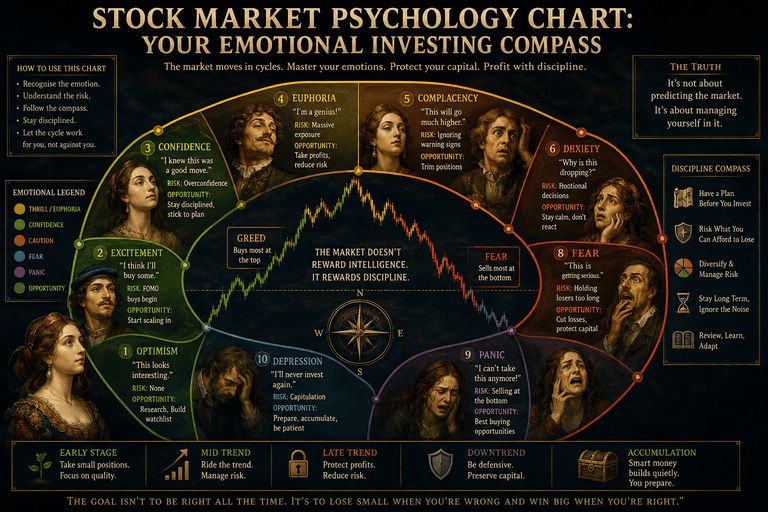
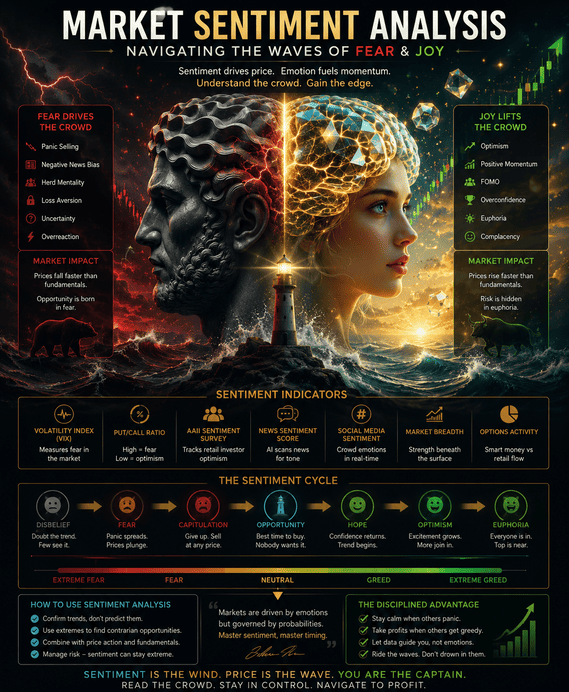
Oxford Instruments also illustrates an increasingly important distinction between narrative investing and business investing. Modern markets efficiently reward companies associated with themes such as artificial intelligence, robotics and quantum computing, but that enthusiasm often pushes valuations to levels where investors are paying today for years of future success.
Oxford Instruments occupies the opposite side of that equation. It does not sell the dream. It supplies the instruments that make the dream possible. Whether researchers are developing quantum computers, discovering new materials or manufacturing advanced semiconductors, progress depends upon increasingly sophisticated measurement, imaging and cryogenic systems. These enabling technologies rarely capture headlines, yet they remain indispensable because scientific progress begins with the ability to observe, measure and test the physical world.
Businesses operating within these ecosystems rarely become market favourites because they are too specialised to fit into simple investment narratives. That complexity, however, often creates opportunity by keeping expectations and valuations more grounded than those attached to fashionable technologies.
Durable Competitive Advantages
High-precision scientific instrumentation is not an industry where competitors emerge overnight. Customers invest heavily in validation, software integration, calibration and staff training, making switching suppliers expensive, disruptive and often unnecessary unless performance improves materially. Once relationships become established, they frequently generate years of recurring demand through upgrades, servicing, replacement systems and complementary products, producing steady cash flows reinforced by high switching costs rather than aggressive pricing.
Oxford Instruments combines those structural advantages with diversified exposure across several expanding research markets, disciplined capital allocation and consistent investment in research and development. It is unlikely to become the fastest-growing company in its sector, but durable compounding rarely depends upon maximising short-term growth. It depends upon preserving technological leadership while steadily increasing intrinsic value over long periods.
The Expectation Gap
Business quality alone rarely determines investment returns, but expectations do. Waters and Danaher are exceptional businesses, and the market knows it. Their premium valuations already reflect decades of operational excellence, leaving little room for disappointment. Oxford Instruments occupies a different position. Despite possessing many of the same characteristics that define high-quality industrial technology companies, it remains relatively overlooked, particularly outside the United Kingdom, creating an expectation gap where business quality appears stronger than investor perception.
That distinction matters because markets reward performance relative to expectations rather than performance alone. A company growing earnings by ten percent can disappoint if investors expected fifteen, while another growing by six percent can outperform simply because expectations had become excessively pessimistic. The underlying business changes little. Expectations change everything.
Viewed through that framework, Waters and Danaher remain outstanding businesses, while Bruker and Repligen continue to offer attractive combinations of quality and underappreciated growth potential. Oxford Instruments deserves to be included in that group because it combines durable competitive advantages, diversified exposure to several structural growth industries and relatively modest expectations, creating a more favourable risk-reward profile than many companies already celebrated as obvious winners.
The Investment Case
The investment case is straightforward. Oxford Instruments is unlikely to dominate financial headlines because it sells the tools rather than the story, yet history repeatedly shows that some of the market’s best compounders are businesses supplying indispensable technologies to industries receiving all the attention. While investors chase narratives, these companies quietly solve difficult engineering problems, deepen customer relationships and compound intrinsic value year after year.
That is precisely the kind of business I prefer owning. Markets often overpay for excitement and underpay for indispensability, creating opportunities where the narrative remains muted but the underlying business continues to strengthen.