

He Says Peace, Prices Chaos
Apr 13, 2026
Watch the sequence, not the words. The language shifts, the direction doesn’t. One moment it leans toward escalation, the next toward negotiation, then back again before anything resolves. Iran denies talks, policy pivots, a tanker gets hit, and the loop resets. That isn’t negotiation finding its way. It’s instability sustaining itself. If a trader operated like that, it would be called manipulation. In policy, it passes as flexibility.
François Rabelais had it right. Nature abhors a vacuum, and markets behave the same way. When clarity disappears, they don’t wait. They fill the space with noise, then extract from anyone reacting to it too late. The cycle becomes mechanical. Headline, reaction, reversal, repeat. Mark Twain would recognise the rhythm immediately. It doesn’t repeat exactly, but it rhymes closely enough to trap the same behaviour.
Energy sits inside that loop, not because of any single event, but because resolution never arrives. Risk doesn’t clear, it resets. That creates a floor under the sector even when prices pull back, because uncertainty itself becomes the driver.
Disaster Is the Entry Point: Trading Geopolitical Risk in Energy Markets
The mistake most make is timing the narrative instead of the pressure. The best time to position is never when the story feels resolved. It is when the situation looks unstable, confusing, and uncomfortable enough that most participants hesitate. That moment already passed once, during the first shocks tied to escalation with Iran, when fear moved faster than analysis and energy names adjusted before the crowd understood the structure.
That is where initial positioning belonged. Now the environment has shifted. The war has stretched past thirty days, events have layered on top of each other, and the system has had time to absorb the first wave of shock. That does not remove opportunity. It changes its shape. Instead of chasing the first move, the focus turns to how the market behaves on pullbacks.
Strong pullbacks in this environment are not signals of weakness. They are part of how pressure resets.
Why Energy Sector Pullbacks Should Be Embraced
Energy systems do not adjust instantly. Supply routes do not rebuild overnight, and production does not respond to headlines in real time. Oil wells cannot be ramped up and down without cost or delay. Infrastructure takes time to respond, and that delay is where price finds support.
So when prices pull back, it is often not because the underlying pressure has disappeared. It is because positioning has become temporarily crowded and needs to unwind.
That distinction matters. A pullback in a structurally tight environment is different from a breakdown in a weakening one. The former resets positioning. The latter signals a shift in trend. Right now, the broader setup still leans toward pressure, not release, which means pullbacks should be evaluated as potential entry zones rather than exit triggers.
Coal Stocks: The Lagging Piece of the Energy Puzzle
Within that structure, coal sits in an interesting position. While parts of the energy complex have already moved, coal equities have not fully reflected the same level of urgency. That divergence matters more than the headline.
Markets rarely move everything at once. Capital rotates. Coal remains tied to the same underlying forces, energy security, supply constraints, and geopolitical friction, but it has not absorbed the same level of speculative attention yet. That creates a gap between sectors that have already reacted and those still being ignored.
That gap is where asymmetry develops. It does not mean coal moves immediately. It means it remains positioned to respond if the broader energy narrative continues to hold.
Mass Psychology: Why the Crowd Misreads Market Volatility
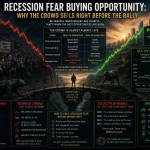
This is where mass psychology becomes useful. The crowd does not act on structure. It reacts to emotion. By the time headlines feel urgent enough to demand action, positioning is already late. That is why entries tend to cluster at peaks and exits at lows.
The material on TacticalInvestor.com has covered this repeatedly. Markets reward those who act when uncertainty is high and punish those who wait for clarity. Clarity usually arrives after the move has already taken place.
The current environment reflects that pattern. Initial fear created opportunity. Early buyers positioned into instability. The crowd is still processing the narrative, moving between panic and relief as headlines shift. That emotional oscillation creates volatility, and volatility creates entry points for those not anchored to the story.
The Sequence Is Broken, But the Market Pattern Remains
What matters now is not whether the next headline signals peace or escalation. The sequence itself is unstable, and once that happens, markets stop relying on words and start pricing movement. Volatility becomes embedded.
That is why chasing spikes becomes dangerous. Spikes are driven by immediate reaction. Pullbacks reveal structure. When prices hesitate, when momentum stalls, when the crowd starts questioning the last move, that is where positioning becomes more controlled.
Some names have already run hard. Others have lagged. The opportunity sits in identifying where pressure has not yet fully expressed itself.
Final Read: Positioning Inside Energy Market Instability
This is not a call for blind aggression. It is a call for disciplined positioning within a volatile structure. The trend in energy does not reverse quickly because the underlying constraints do not resolve quickly. Supply takes time to adjust. Infrastructure takes time to rebuild. Pressure lingers longer than headlines suggest.
So the framework remains simple.
Do not chase noise.
Do not wait for clarity.
Use pullbacks to position where the structure still supports higher prices.
Energy remains inside a system where uncertainty sustains demand. Coal sits as a lagging component within that system. The broader environment continues to reward those willing to act before the narrative feels comfortable. The crowd reacts to what is visible. The opportunity sits in what is still forming.