

High-Risk Crypto Positions and the Breakdown Below Key Levels
Mar 31, 2026
We took small positions in BITO and CRCL as an attempt to capture a rebound, and both were labelled high risk from the outset because the structure no longer supported aggressive exposure. Once Bitcoin broke below 90K and then 75K, the short-term pattern weakened, and with that breakdown came a shift in behaviour that should have been expected. Volatility expands when structure deteriorates, and that is exactly what followed.
Not long ago we banked profits when BTC was trading in the 120K to 125K range, which drew criticism because the dominant narrative at the time pointed toward 200K and beyond. That reaction was predictable. Late-stage optimism always stretches targets further than reality can sustain. When price rises quickly, the crowd stops asking whether it should continue and starts assuming that it must.
Bitcoin Market Cycle Psychology: Why the Crowd Ignores Downside Risk
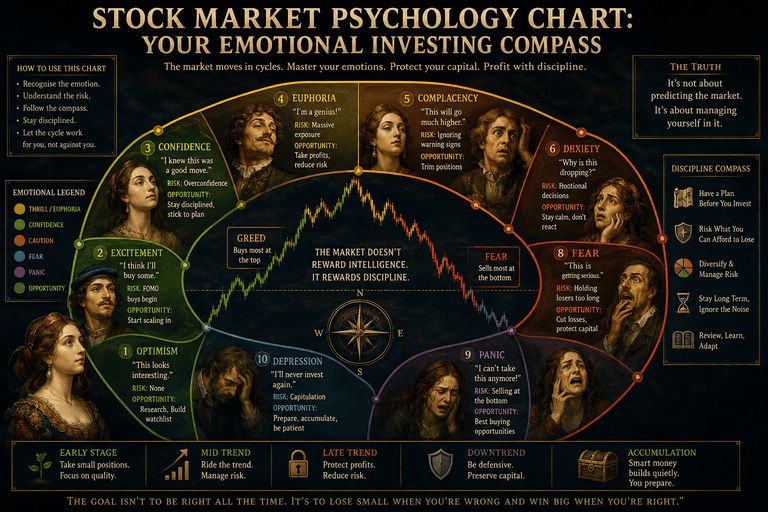
The more interesting observation is not the optimism itself, but the absence of any serious consideration of downside. Bitcoin had already moved from roughly 15K–16K in 2022 to well above 100K, a massive expansion in a relatively short period, yet the prevailing belief was that the move would continue uninterrupted. That is how cycles typically end, not with logic, but with conviction detached from structure.
Michael Saylor’s comment that his company could survive even if BTC dropped to 9K highlights the same disconnect. Survival at that level likely implies additional leverage or capital raising, which assumes investors would absorb that issuance without consequence. It raises a simpler question that most participants ignored during the advance: why prepare for disaster when substantial profits were already available and could have been realised, then redeployed at lower levels under less emotional pressure.
That question rarely gets asked near the top because euphoria suppresses it.
Bitcoin Price Cycle: Selling Euphoria and Buying Fear
When BTC traded above 120K, the crowd extrapolated higher prices and bought aggressively into strength. When it broke below 90K, sentiment shifted, and the same participants who were confident near the highs began reducing exposure. Now, as price trades closer to the 70K range, anxiety has replaced confidence entirely, even though the structure is moving toward levels where opportunity begins to emerge.
This behaviour is not unique to crypto. It is the same cycle that appears in every asset class. Investors chase strength because it feels safe, and they avoid weakness because it feels dangerous, even though the opposite is often closer to reality. The market rewards those who invert that behaviour, not those who follow it.
Our approach remains unchanged. Sell when optimism dominates and buy when fear takes hold. That does not mean attempting to capture exact tops or bottoms, which is an exercise in frustration. It means avoiding overpaying during advances and avoiding forced selling during declines. Over time that alone improves outcomes significantly.
Bitcoin Technical Outlook and Tactical Entry Strategy
From a tactical perspective, BTC could stage a rally toward the 80K–84K range, but the more important signal will come from how it behaves on the next pullback. If selling pressure diminishes and structure stabilises, a base may begin forming. If volatility expands again and support levels fail, further downside remains likely.
For those looking to position, a more rational approach begins lower, in the 55K–60K range, with capital deployed gradually rather than aggressively. Scaling in as price declines reduces risk and preserves flexibility. This is not a strategy for those seeking immediate gratification. It is a framework for those willing to tolerate discomfort in exchange for better positioning.
CRCL, Stablecoin Infrastructure, and Divergence From Bitcoin Price Action
CRCL operates under a different dynamic. Its connection to the stablecoin ecosystem, particularly infrastructure tied to USDC, means its revenue depends more on usage, reserves, and interest earned on backing assets than on Bitcoin’s price alone. Over time that distinction allows it to diverge from pure crypto price action, which makes it a different type of exposure within the same broader space.
The underlying principle remains simple, even if execution is not. If you cannot tolerate volatility, you should not be seeking outsized returns. Markets do not separate risk and reward. They bind them together and then test whether participants understand that relationship.