

Which Best Describes How an Investor Makes Money from an Equity Investment?
Sept 10, 2026
The Simple Answer Most Investors Overcomplicate
Which best describes how an investor makes money from an equity investment? The fundamental answer is straightforward: an investor makes money when the value of the ownership interest increases, when the company distributes cash to shareholders, or through a combination of capital appreciation and distributions such as dividends.
The complication begins after the purchase. An investor can own an excellent company and still achieve poor returns if the entry valuation is excessive, while a temporarily unpopular company can generate exceptional returns when purchased substantially below a reasonable assessment of its underlying value.
This is where investing becomes more than stock picking. Fundamentals determine what you own, valuation determines what you pay, and mass psychology determines how far price can deviate from value.
Equity Means Ownership
When you purchase common stock, you are purchasing an ownership interest in a business. Your return ultimately depends on what happens to the economic value of that ownership interest and the cash that the company distributes to shareholders.
A company can create value by growing revenue, increasing margins, generating free cash flow, expanding its competitive advantage, reducing debt, reinvesting capital productively, or returning excess capital to shareholders. When the market eventually recognizes that improving economic performance, the stock price can rise.
Dividends provide another component of return. A shareholder can therefore benefit even when price appreciation is modest, provided the company continues generating sufficient cash to support its distributions.
The stock market is not fundamentally a casino. It is a mechanism through which ownership in businesses is continuously repriced according to changing expectations about future economic value.
Price Is Not the Same as Value
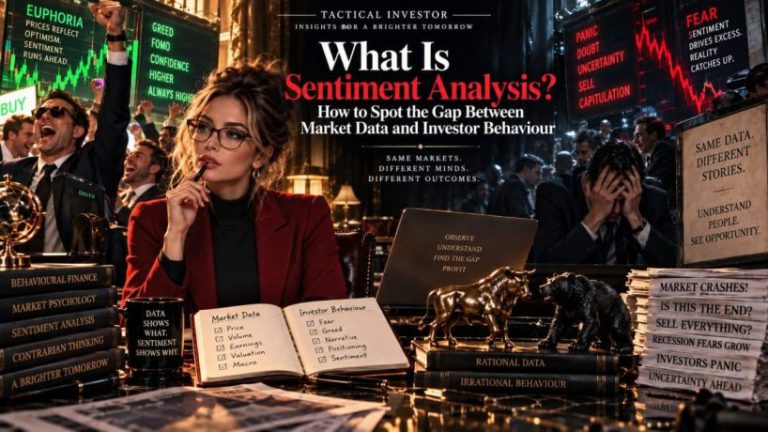
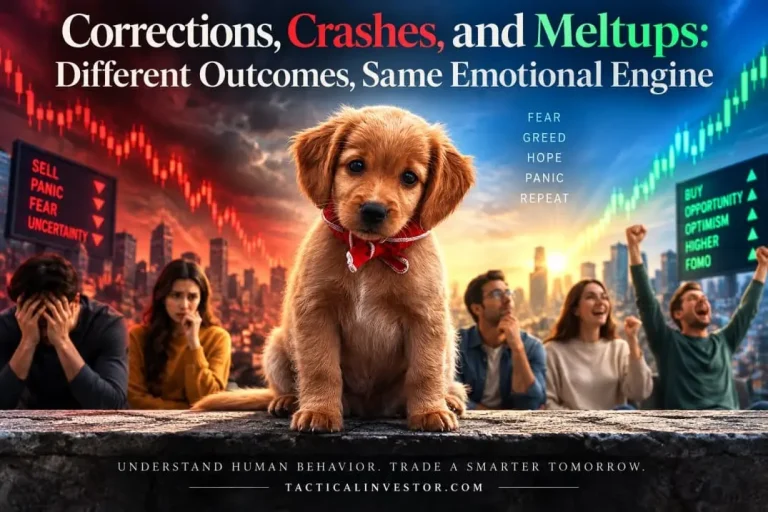
This distinction explains why market psychology matters so much. In the short term, investors can become euphoric about a company and push its shares far above reasonable estimates of future earnings, or they can become so fearful that they sell a sound business at a price that dramatically understates its long-term prospects.
The dot-com bubble provides an obvious example. The internet genuinely transformed the economy, but investors attached extraordinary expectations to companies whose valuations had moved far beyond what their actual businesses could support.
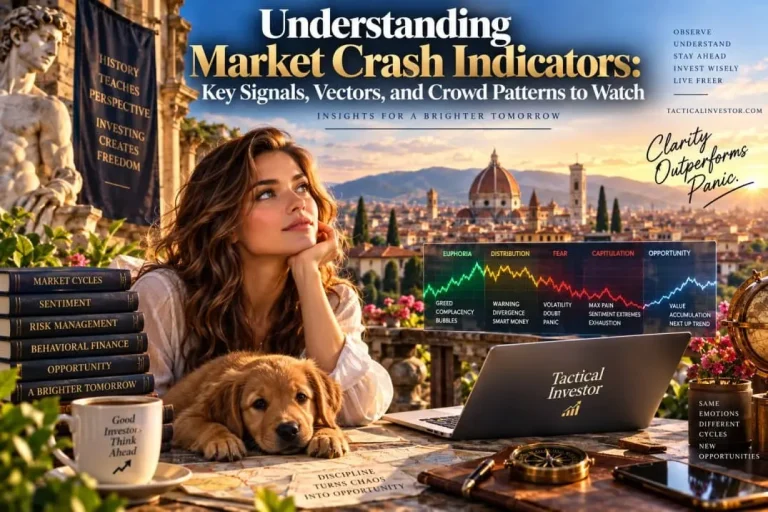
The opposite psychology appeared during major market crises. In 2008 and 2020, fear became so intense that investors sold enormous quantities of assets while uncertainty was at its maximum, creating situations where certain businesses and entire sectors traded at prices that subsequently proved extraordinarily attractive. The lesson is not that the crowd is always wrong. The lesson is that emotional extremes can cause price and value to temporarily separate.
Mass Psychology Creates the Opportunity
Markets are social systems. Investors observe prices, headlines, other investors, analysts, social media, and financial television, and each source can influence the behaviour of the others. Fear creates selling, selling creates lower prices, lower prices generate frightening headlines, and those headlines encourage more selling. The same mechanism operates during euphoria, where rising prices create confidence, confidence attracts capital, and additional capital pushes prices even higher. This is mass psychology, and it explains why markets can move much further than a purely rational valuation model might suggest.
The investor’s opportunity exists because these emotional cycles create temporary distortions. When fear pushes a quality business below a reasonable valuation, the investor can potentially purchase future cash flows at a substantial discount; when euphoria pushes expectations beyond what the business can realistically deliver, the same process can create excessive risk.
Vector Psychology: Follow the Force
Mass psychology explains the crowd, but vector psychology asks what the crowd is actually doing with its capital. A market vector has four useful dimensions: direction, intensity, breadth, and persistence. Direction tells us whether capital is generally moving toward or away from an asset, intensity measures the strength of that movement, breadth reveals whether the behaviour is spreading across securities or sectors, and persistence tells us whether the force survives reversals or begins to weaken.
This allows the investor to distinguish between a normal decline and a genuine psychological breakdown. A stock falling while fundamentals remain intact may simply be experiencing temporary pressure, while a stock falling alongside deteriorating earnings, weakening competitive conditions, and persistent capital outflows may be experiencing genuine fundamental deterioration. The objective is therefore not to buy every decline. It is to identify when the market’s psychological vector has pushed price substantially farther than the underlying economics justify.
Technical Analysis Reveals Behaviour
Technical analysis can add another layer by showing how investors are responding to changing information. Technical and Fundamental Analysis. Support and resistance can reveal areas where large numbers of investors previously changed their behaviour. Moving averages can provide information about the broader trend, while volume can indicate whether participation is expanding or contracting.
Momentum indicators such as RSI and MACD can also help identify situations where price continues moving in one direction while the underlying momentum begins weakening. These signals do not guarantee a reversal, but they can provide evidence that the current vector is losing strength.
Technical analysis is therefore most useful when it is combined with fundamentals and psychology. Fundamentals tell you what may be valuable, while the chart helps reveal what the crowd is doing with that information.
The Investor’s Real Battle Is Psychological
The greatest obstacle to making money from equities is often not a lack of information. It is the inability to act rationally when information becomes emotionally uncomfortable. Loss aversion can cause investors to sell quality companies after sharp declines simply because the pain of seeing an unrealized loss becomes unbearable. Recency bias can convince investors that a recent winner will continue rising indefinitely, while confirmation bias allows investors to ignore information that contradicts their existing position.
Herd behaviour then amplifies all three. When everyone around you is buying, selling can feel irrational, while buying during a panic can feel reckless even when valuation is becoming increasingly attractive.
This is why the investor must learn to separate emotional intensity from economic reality. A frightening headline can be important, but its importance does not automatically justify the price reaction that follows.
What Buffett, Jones, and Druckenmiller Actually Demonstrate
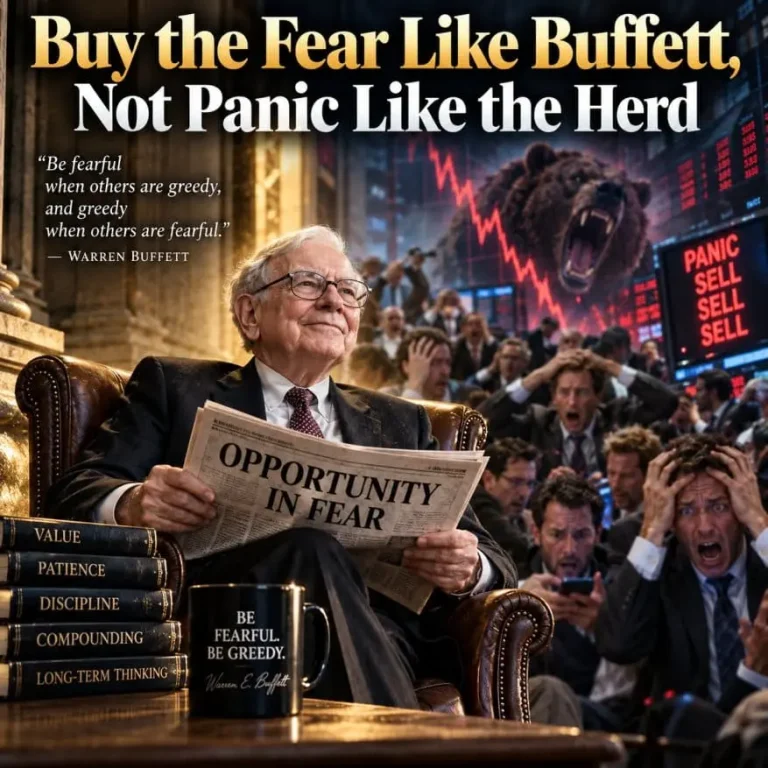
Warren Buffett illustrates the power of valuation, patience, business quality, and psychological independence. His most successful investments have generally involved acquiring ownership in businesses he believed could generate substantial economic value over long periods, often when market sentiment created attractive prices.
Paul Tudor Jones demonstrates a different dimension. His approach places greater emphasis on price behaviour, market structure, momentum, and risk management, showing how technical and macroeconomic signals can be used to navigate changing market conditions.
Stanley Druckenmiller demonstrates another important principle: capital allocation depends on identifying where the largest economic and psychological forces are developing and then sizing exposure appropriately.
Their methods differ considerably. The common denominator is not a secret indicator or universal trading formula. They understand that making money requires both an analytical framework and the psychological discipline to act when the evidence becomes compelling.
Compounding Is the Engine
Once an investor generates a return, the real power comes from allowing capital to compound. A 10% return on $10,000 produces $1,000, but repeatedly reinvesting returns allows future gains to be generated on both the original capital and previous gains.
This is why time can be more important than the size of the initial account. An investor who consistently protects capital and compounds reasonable returns can eventually accumulate meaningful wealth without needing to identify a spectacular multibagger every year.
Compounding also explains why avoiding catastrophic losses matters. Losing 50% requires a subsequent 100% gain merely to return to the original capital, meaning that risk management is not separate from wealth creation. Survival is therefore part of the compounding equation.
The Contrarian Advantage
The contrarian investor understands that the greatest opportunities often appear when psychological pressure is greatest. That does not mean blindly buying during every panic or selling during every euphoric advance; it means investigating whether the market’s expectations have become disconnected from economic reality.
During extreme fear, the investor asks whether the business has actually deteriorated as much as its share price suggests. During extreme optimism, the investor asks whether the company’s future growth can realistically justify the expectations embedded in its valuation.
The hunter does not simply oppose the herd. The hunter studies the herd. He watches where capital is flowing, how intense the movement has become, whether participation is broadening, and whether the dominant vector is strengthening or beginning to exhaust itself.
So How Does an Investor Actually Make Money?
The answer to the original question can therefore be expressed as a sequence:
Buy ownership at a price that provides a reasonable relationship between value and risk. Allow the underlying business to create economic value and, where appropriate, distribute cash to shareholders. Let time and compounding work, while using market psychology and changing vectors to identify periods when price becomes unusually disconnected from value.
That framework is considerably more powerful than simply trying to identify the next hot stock. A great company purchased at an absurd valuation can produce disappointing returns, while an ordinary but financially sound company purchased during severe pessimism can produce exceptional returns if the market’s expectations subsequently normalize. The critical variable is therefore not merely what you buy. It is what you pay, what the business ultimately delivers, and what psychological forces influence the price between those two points.
Conclusion: Own Value, Understand the Crowd
Making money from an equity investment ultimately comes down to ownership, economic value, distributions, and price. The investor buys a claim on a business, and wealth is created when that business produces increasing economic value or returns capital to its owners, particularly when the initial purchase price provides a favourable margin between what is paid and what the investment can reasonably become worth.
Mass psychology determines how efficiently that relationship is reflected in market prices. Fear can create capitulation, greed can create bubbles, and herd behaviour can push valuations far beyond or below reasonable estimates of future value.
Vector psychology adds another dimension by revealing whether those forces are expanding, accelerating, saturating, reversing, panicking, or beginning to lose power. Technical analysis helps document the behaviour, while fundamental analysis determines whether the underlying economic proposition remains attractive.
That is the real answer. Investors make money by owning productive assets, but exceptional investors understand the psychology that determines the price at which those assets can be acquired and sold.
The market does not require you to predict everything. It requires you to understand value, recognize behaviour, manage risk, and remain psychologically independent when the crowd becomes emotionally certain.
The hunted investor asks what everyone else is buying. The hunter asks why they are buying it, what they are assuming, what the price already discounts, and what happens when those assumptions change. That is where the real edge begins.

Expanding Thought











- .