
Corrections, Crashes, Meltups: Different Outcomes, Same Emotional Engine
June 12, 2026
Most people think markets move because of news. News matters, but usually only as a trigger. The real force sits underneath the headlines, and that force is emotion. More specifically, it is the crowd’s inability to deal with uncertainty.
The headlines change. The characters change. One decade it is inflation, another decade it is housing, technology, trade wars, pandemics, tariffs, AI, or geopolitics. The story is always different. The emotional response is almost always the same.
A correction starts when confidence outruns reality. Expectations rise faster than the facts can support them. Investors gradually stop asking what can go wrong because prices keep going up and every setback looks temporary. Then reality interrupts the narrative. Not necessarily because conditions become terrible, but because they fail to become as wonderful as expected. Prices adjust, confidence fades, and what looked obvious only weeks earlier suddenly becomes questionable.
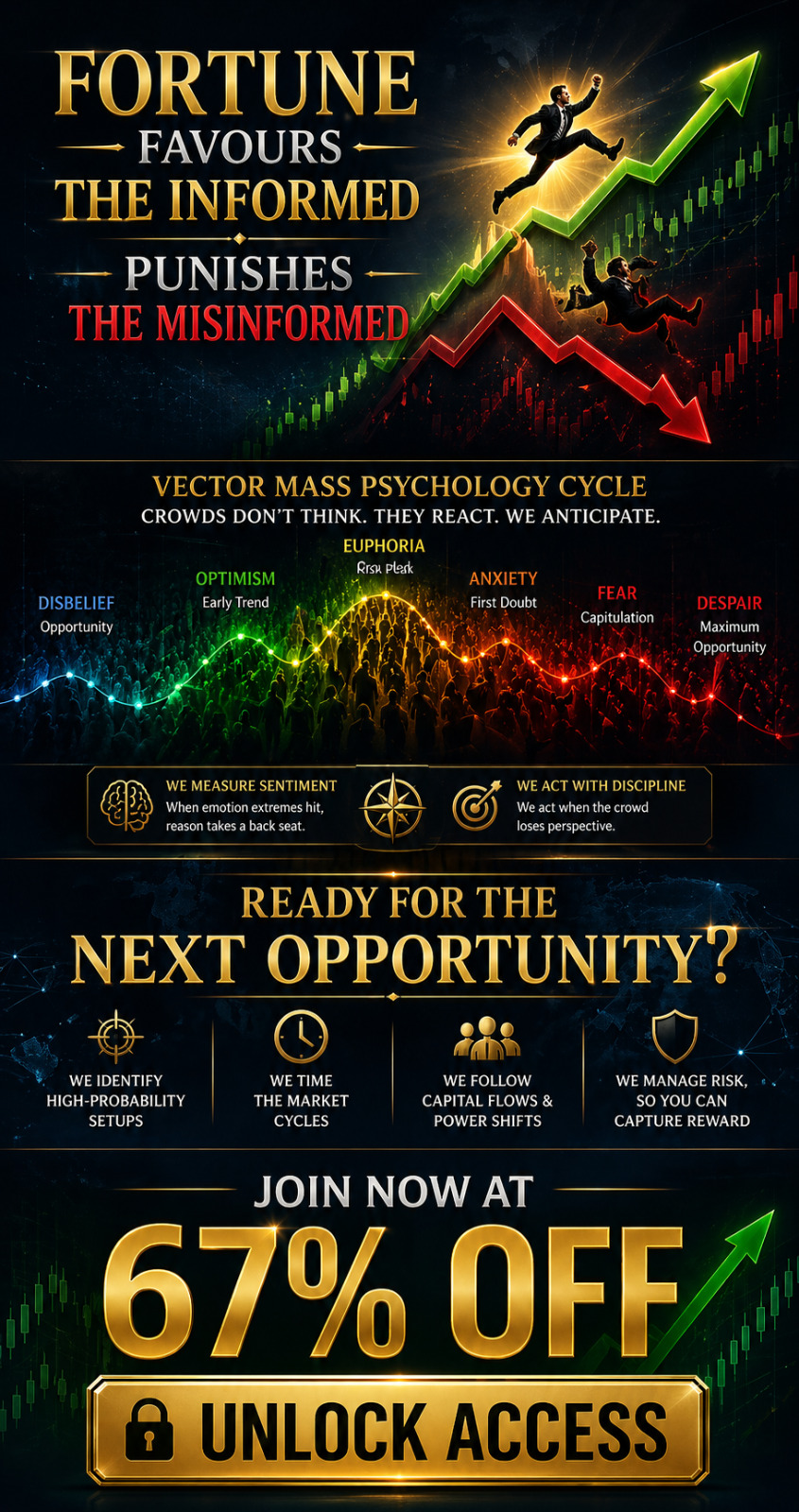
A crash is simply the same process accelerated. Confidence does not slowly erode; it collapses. The crowd suddenly demands certainty from a world that has never offered any. Investors who ignored risk begin seeing it everywhere. The same people who were eager buyers near the highs become desperate sellers near the lows. Nothing fundamentally changed overnight except perception. Fear took control of the steering wheel.
A meltup operates in the opposite direction but is driven by the same emotional weakness. Instead of fearing losses, investors fear being left behind. They watch prices rise, convince themselves they missed the move, wait for a pullback that never comes, and eventually surrender. The fear of missing out becomes stronger than the fear of losing money. As more people reach the same conclusion, rising prices attract new buyers, which pushes prices even higher. The cycle feeds itself until speculation begins replacing analysis.
What makes all three events fascinating is that they are driven by the same emotional engine. The crowd is not really reacting to prices. It is reacting to uncertainty.
During a correction, reducing exposure provides emotional relief. During a crash, selling provides emotional relief. During a meltup, buying provides emotional relief. The action changes, but the motivation remains remarkably consistent. People are not necessarily seeking profit. They are seeking comfort.
That is why crowd psychology matters so much. Markets are often portrayed as rational mechanisms that efficiently process information. Reality is messier. Markets are collections of human beings making decisions under pressure, and pressure amplifies emotion. Once emotion takes control, people begin searching for information that validates how they already feel.
The bull finds reasons to buy, the bear finds reasons to sell, and the crowd finds reasons to justify whatever it already wants to do.
This pattern repeats because human nature changes far more slowly than technology, politics, or economics. The tools evolve. The emotional wiring remains largely intact. Tulips, railroads, radio stocks, dot-com companies, housing, cryptocurrencies, artificial intelligence. Different assets. Same emotional cycle.
This is why trend followers often see things differently. They are less concerned with who is right and more concerned with where money is flowing. The crowd spends enormous amounts of energy arguing over narratives while capital quietly moves in one direction or another. The argument rarely matters as much as the movement.
Being right is overrated. Following the flow is often far more profitable.
That does not mean blindly chasing trends. It means understanding that trends are often driven by mass psychology long before the headlines catch up. By the time the media explains a move, the move itself is usually well underway.
The best investors I’ve known figured this out a long time ago. They stopped wasting energy trying to decide whether the crowd was right or wrong. That’s not the useful question. What they wanted to know was simpler and sharper: what’s actually driving people right now, and where is all that emotion going to push things next?It matters more than most people realize. Look back at almost any real opportunity, and you’ll find it was born out of some emotional extreme.Too much optimism eventually tips into excess.
Fear, given enough time, hands you a bargain.And outright panic? That’s where real value tends to hide.Here’s the difference. The crowd fixates on the event—the headline, the drop, the shock. The seasoned investor barely glances at it. They’re too busy watching how everyone reacts, because the reaction almost always tells you more than the thing everyone’s reacting to.Prices are a record of what already happened.Crowd psychology, if you learn to read it, hints at what’s coming.