
Understanding Market Cycles: Fight the Madness, Focus on the Light
Dec 18, 2025
The madness is not new. It is the pattern.
Civilisations rot from the edges inward—reason thins. Emotion thickens. By the time the centre caves, everyone claims surprise. Markets behave the same way. Booms do not end politely. They swell, intoxicate, then snap. Busts do not knock. They kick the door in. This is not a failure of models. It is the human cycle expressing itself through price.
If you have traded long enough, your body knows the turn before your charts do. The crowd celebrates while your stomach tightens. The crowd panics while your pulse slows. That is not intuition. It is exposure to repeated structure. Gibbon saw it in Rome. Decadence, distraction, moral fatigue. Different costumes, identical arc.
Zoom out and the rhythm clarifies. Fast cycles scream through headlines and algos. Slow cycles grind beneath nations, currencies, institutions. The sequence never changes: build, peak, decay, collapse, reset. Meme stocks explode after excess. Empires stumble after denial. The crowd never feels the rot until the floor gives way.
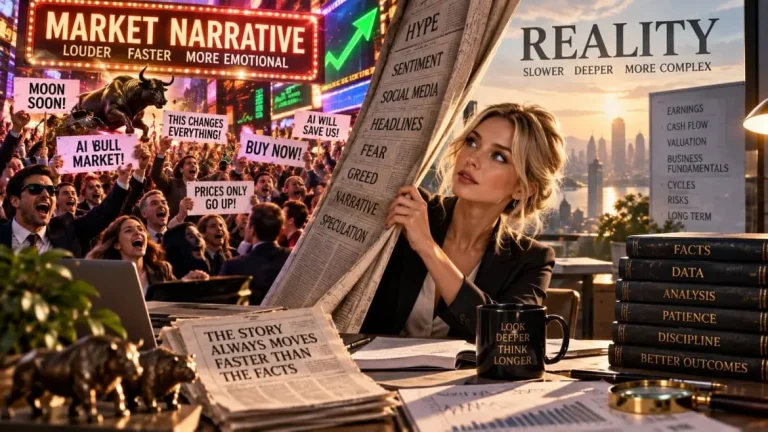
Most traders die by reaction. Every red candle feels terminal. Every green candle feels redemptive. That is emotional whiplash, not analysis. Once you think in vectors, tension replacing prediction, the noise loses power. You stop begging for certainty. You observe pressure building, releasing, and exhausting.
Rage and nostalgia are traps. Anger feels active. Longing feels noble—both freeze judgment. Markets do not care what should be. They only reward those aligned with what is. Step out of the emotional arena. Track flows, not slogans. Cycles move whether you approve or not.
The market exists to expose you to stress. Comfort masquerades as discipline until drawdowns arrive. Then masks fall. The prepared grow quiet. They hold while others dump. They buy when others cannot look. They do not guess bottoms. They adopt a posture.
You do not need prophecy. You need a position. When the wave comes, you either surf it or you explain afterwards why it was unfair.
The Trap of Linear Thinking
Linear thinkers get smoked in a cyclical world. They think in straight lines—“If X happened last time, Y must happen next.” But cycles loop. They evolve. They throw off false signals, shakeouts, and delayed feedback.
We saw this during the meme-stock mania. People assumed a new paradigm. No fundamentals, just vibes. And for a while, it worked. Until it didn’t. Then came the tears, the lessons, and the pivot back to reality.
Or take inflation. People forgot that monetary policy lags. That energy shocks create ripple effects. That sovereign debt has consequences. So they reacted late, or worse, wrong.
Thinking in cycles doesn’t mean you predict the top. It means you recognise when the euphoria smells stale, when the fear gets too thick. When the odds tilt, not because of a headline, but because of behavioural exhaustion.
Every Collapse Has Its Seeds in the Boom
Here’s the cruel joke of every cycle: The worst damage is done during the euphoria phase. The panic reveals it.
When everyone’s high-fiving in the metaverse and trading NFTs on leverage—that’s not progress. That’s the warning.
The collapse doesn’t come from nowhere. It’s planted during the boom, watered by denial, and harvested during the bust. But only those watching the soil see it coming.
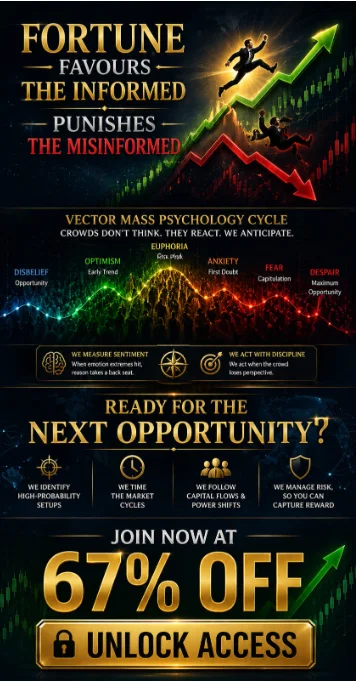
So don’t wait for the news to tell you what phase we’re in. Look at how people feel. How do they behave? How they talk. That’s your leading indicator.
This Is the Cycle: Accept It, Exploit It
This isn’t about doom. It’s about discipline. The cycle isn’t your enemy. It’s your map.
And like any good map, it doesn’t promise outcomes—it shows terrain. Peaks. Valleys. Traps. Turning points.
You can’t stop the recession, the rot, or the reset. But you can move with it. You can bet against the crowd’s timing. You can buy value when everyone’s chasing hype. You can lean in when others unplug.
You can hold steady while others break.
Final Word: Find Your Stillness
Understanding market cycles doesn’t require a PhD. It requires presence. The ability to feel when the noise is getting too loud. When the crowd is leaning too far. When fear is baked in, and opportunity is quietly reloading.
Cycles are natural. The question is—will you flinch every time it turns, or will you learn to ride the curve?
Because in the end, the market doesn’t reward emotion. It rewards posture. Adaptability. Stillness in chaos.
The storm isn’t the enemy. Your reaction to it is.