


Lyn Alden Investment Strategy: Precise on Paper, Late on Sentiment
Updated Feb 10, 2026
In an ecosystem where financial influencers weaponise narratives and play to tribal instinct, Lyn Alden walks in like an engineer at a street brawl. Cold, precise, and unshaken by volatility. Her tools: balance sheets, liquidity charts, fiscal metrics. No theatrics, no meme coins, no breathless calls for hyperinflation or moonshots. She’s the eye of the storm—but is she seeing all the winds that matter?
Precision Over Pandemonium
Alden’s appeal lies in her analytical discipline. In a financial media landscape saturated with dopamine junkies, she resists the noise. Her 2021 call on inflation? Spot‑on. While central banks dismissed the threat as “transitory,” she read the signals in M2 velocity and pandemic‑era supply shocks. Her read on Bitcoin’s 2020–2021 rally centred on institutional flow and monetary expansion, not utopian fantasies. She correctly anticipated the rise in energy stocks after ESG policies distorted supply, and she flagged Treasury market stress in late 2023 before the crowd saw the liquidity cracks.
She’s good. Damn good. But she’s also human, and logic—no matter how sharp—misses trades when sentiment bends the timeline. Markets aren’t laboratories. They’re theatres of emotion, perception, and delusion. That’s where stress forms in Alden’s system.
Where Sentiment Outraced the Signal
The market isn’t a mirror of fundamentals; it’s a kaleidoscope of human behaviour. Alden often nails the macro direction, but timing slips when she underweights the psychology driving the charge.
She missed the AI‑fuelled growth mania of late 2023. Her caution made sense—tech valuations stretched, liquidity tightening, policy risk rising. But the crowd lost interest in nuance. Volume spikes, euphoric sentiment readings, and retail flows going vertical were the tells. Momentum had taken the wheel, and macro logic sat in the backseat.
Her late‑2022 deflation thesis was coherent—rate hikes, slowing velocity, tightening credit. But she misread the emotional hangover from the pandemic. People clung to inflation fear like a security blanket. Real wages chasing lost purchasing power, corporations protecting margins, consumers braced for shortages—the collective mindset resisted deflation long after the data argued for it.
Gold? She favoured it on fundamentals, but sentiment had already ignited the breakout. Fear, FOMO, and compression patterns signalled the move while macro justification lagged behind. By the time the narrative caught up, half the run was gone.

Mass Psychology: The Invisible Variable
Markets suffer fewer math problems than mood swings. Fundamentals shape the story, but emotion dictates tempo. Mass psychology warps every clean vector of logic. Alden’s framework often runs straight, but markets coil, snap, and drift.
Mass psychology tracks the herd, not the spreadsheet. It knows dollar crises begin when belief cracks, not when metrics print red. Oil spikes not only because supply is tight, but because traders fear the narrative of scarcity. Behaviour, not data, serves as the accelerant.
A richer integration of behavioural tools would sharpen Alden’s already strong work. Sentiment oscillators, fear–greed measures, volume exhaustion patterns, short interest flips—these are early signals of crowd inflexion. They don’t challenge macro—they time it.
Technical Analysis: The Compass in the Storm
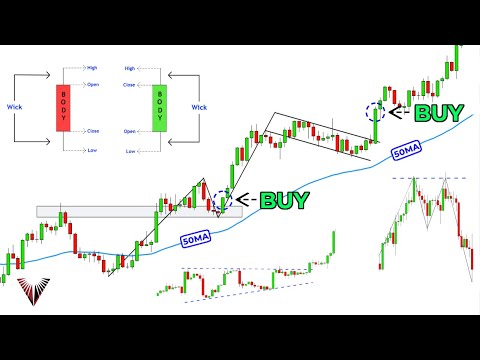
Technical analysis isn’t mysticism. It’s the distilled record of price behaviour. It shows where traders commit risk. Alden often defines the battlefield, but TA reveals where the fighting actually erupts.
She spotted the energy trade early—but RSI divergences and momentum crossovers offered cleaner tactical entries. In Bitcoin, on‑chain metrics and early bullish divergences signalled accumulation before institutional flows confirmed it. In gold, resistance compression and expanding volume flagged the breakout while the macro story lagged behind.
In our terms, TA provides vector confirmation. Alden often has direction right. TA maps the curvature—where pressure coils and where sentiment snaps.
The Map, The Terrain, and the Wind
Alden draws the map. Mass psychology defines the terrain. Technical analysis is the wind shaping the path. Leave one out and you aren’t just lost—you’re exposed.
Imagine entering bullish oil trades in early 2022 purely on fundamentals. Demand strong, supply constrained. Solid. But what if sentiment had already peaked? What if momentum showed cracks? You’d enter a bullish trail just as a bearish gust rolls in. Vector thinking matters—markets move on trajectory, not direction alone.
Mass psychology isn’t vague theory. It’s the pattern of fear cycles, greed surges, and crowd mimicry. Technicals aren’t superstition. They’re memory written in price. Together, they form the early warning system that logic alone can’t provide.
Alden’s Strength: Analytical Discipline
Alden’s value is undeniable. She’s a counterweight to noise. Her work avoids hype, her theses remain consistent, and she refuses to bend her analysis for attention. Her breakdowns cut through ideology. That discipline is rare.
But discipline isn’t completeness. Her model lacks the curvature needed in nonlinear markets. When sentiment shifts ahead of fundamentals, she risks being directionally correct yet tactically late.
What Could Have Been Sharper
- In tech: recognising the retail sentiment boom of 2023 could’ve led to a tactical long even before macro signals aligned.
- In gold: noticing the Q1 2024 breakout structure would’ve turned her cautious optimism into decisive conviction.
- In Bitcoin: combining on‑chain metrics with social sentiment shifts could’ve tightened her already strong directional call.
The Tactical Investor Lens
At Tactical Investor, we don’t trade in straight lines. We trade in inflexion. Volatility isn’t a threat—it’s an edge. Fundamentals matter, but mass psychology is the accelerant, and technical analysis is the steering wheel.
Alden doesn’t need a new foundation, only a wider vector. Add sentiment momentum, behavioural inflexion, and technical pressure, and her precision would stop describing markets and start anticipating them.
Markets move on anticipation, not confirmation. On confidence bursts and narrative fractures. On perception. Those who read the switch early get paid. Those who wait for validation read about the move they missed.
Conclusion: Logic Is Necessary—But Never Sufficient
Lyn Alden is a sniper in a valley of noise. Her logic is clean, her frameworks sharp, her insights grounded. But even the best marksman adjusts for wind—and in markets, that wind is sentiment, momentum, and technical structure.
The market doesn’t reward correctness. It rewards timing. And timing lives in the nonlinear spaces where emotions swell and charts record truth before narratives catch up.
Alden’s strategy is precise. But precision alone doesn’t move with the crowd’s rhythm. Until her framework absorbs the emotional and technical pulse driving that rhythm, it remains what it is—a brilliant map on shifting terrain.
At Tactical Investor, we study that pulse. We track the vector. We time the break. If you’re reading this, you already think differently from the herd. Stay with us—and stay ahead.