


From Oversold to Grid‑Ready: Coal Plant Upgrades, Positive Divergence, and How the Next Leg Starts
Feb 25, 2026
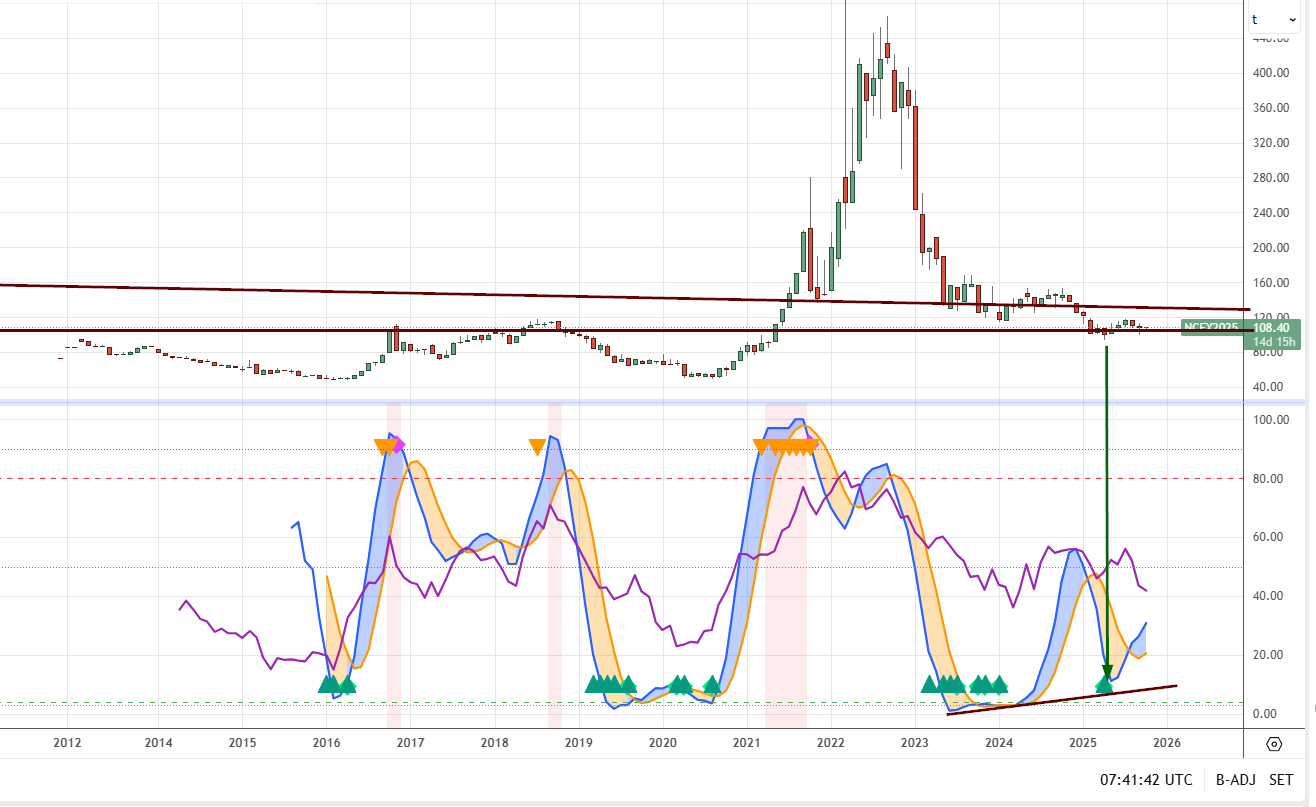
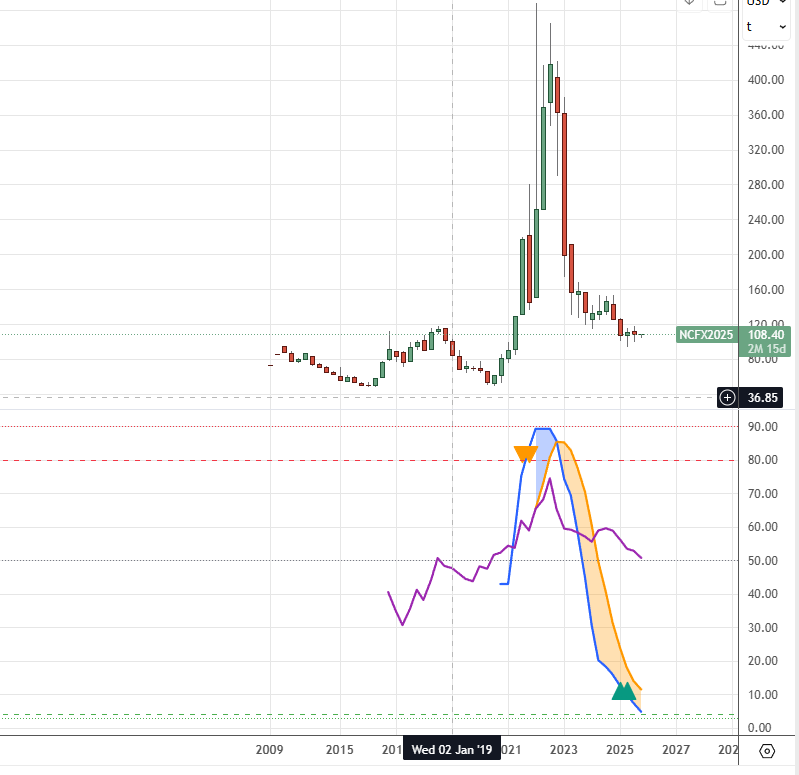
The quarterly and monthly pictures say the same thing in different accents: oversold, flattening, coiling. Newcastle Coal sits in an extreme zone on both timeframes, while several coal equities behave as if they’ve already read the next chapter. That divergence is not decoration; it’s a habit in commodity cycles. Producers feel tightness first, then the benchmark admits it. If you want a clean frame: patience over excitement, pending orders over hot takes. A monthly close in the 132–136 band turns the key; from there, 160–165 opens, 180 is an overshoot, and the later path points to 216–225—with turbulence between floors.
Positive divergence on the monthly (momentum troughs rising while price retests) is your first receipt. Layer it with a simple set of triggers: On‑Balance Volume rising on down weeks; coal miner breadth thrust—at least 70% of your coal and power basket closing above the 20‑day average with expanding volume; and a capitulation day in the benchmark of −7–10% on two to three times average volume while equities hold flat or green. Two triggers mean prepare and three mean act.
Quarterly chart
Monthly Chart
Microstructure: Where Tightness First Appears
Commodity markets reveal stress long before headlines do. Coal is bulky, politically constrained, and dependent on shipping networks that cannot expand overnight. The futures curve often provides the earliest signal. When front-month Newcastle contracts flatten into the back of the curve, supply is tightening. Sustained backwardation suggests immediate scarcity rather than distant concern.
The signal strengthens when API2 and API4 benchmarks diverge alongside rising freight costs. If seaborne prices climb while the Baltic Dry Index accelerates, transport rather than production is becoming the constraint. Import volumes from China and India, port inventories, and utility stockpiles complete the picture. None of these indicators matter in isolation, but together they reveal structural pressure long before sentiment catches up.
AI’s Constraint Isn’t Compute. It’s Power.
The AI narrative remains focused on larger models and ever-expanding data centres, yet the real bottleneck is electricity. Compute can scale only as fast as reliable generation. More efficient architectures will improve performance per watt, but efficiency rarely reduces total consumption. Historically, greater efficiency lowers costs, expands adoption, and ultimately increases aggregate demand.
The grid therefore needs dispatchable generation long before it needs another generation of language models. That reality shifts coal plant modernisation from political inconvenience to practical necessity.
Upgrading the Existing Grid
The fastest way to increase reliable capacity is not to build entirely new infrastructure but to modernise what already exists. Coal plant upgrades generally follow three paths.
Modernising boilers, turbines, and control systems typically increases output by 10–20% while requiring months rather than years. Coal-gas hybridisation improves efficiency, lowers emissions, and provides greater operational flexibility with relatively modest modifications. Full repowering preserves transmission infrastructure while replacing coal systems with combined-cycle gas technology, delivering substantial efficiency gains without starting from an empty field.
These projects exploit assets already in place: transmission lines, cooling systems, permits, rights-of-way, and established workforces. They deliver dispatchable capacity far faster than greenfield generation, making them one of the few realistic solutions capable of closing the near-term gap between electricity demand and available supply. Perfect solutions rarely arrive on schedule. Practical ones usually do.
Positioning Before Sentiment Turns
Technical analysis should define execution rather than conviction. The 132–136 range on Newcastle remains the primary pivot. A sustained monthly close above 136 would indicate that sentiment has shifted from accumulation to acceptance, opening a move towards 160–165 with the potential for momentum-driven overshoots into the 175–185 region. If supply remains constrained, Asian demand strengthens, and freight markets stay firm, the longer-term objective extends towards 216–225.
Treat the position as two separate portfolios. The core reflects the structural thesis that dispatchable power remains underpriced. The campaign position remains tactical, adding during confirmed weakness and trimming into strength while the broader thesis remains intact. Monitor volume, OBV, freight markets, and the futures curve rather than headlines. The thesis fails only if supply expands materially, policy permanently destroys demand, or transport economics deteriorate enough to erode producer margins.
Risk Never Disappears
Policy remains the largest uncertainty. Export restrictions, environmental regulation, carbon pricing, and permitting delays can rapidly alter economics regardless of underlying demand. Freight costs, currency movements, weather disruptions, strikes, and operational failures add further volatility.
The solution is portfolio construction rather than prediction. Limit single-name exposure, diversify where appropriate, maintain liquidity, and deploy additional capital only after confirmation rather than emotion.
Conclusion: Markets Eventually Price Reality
The investment case for coal is not ideological. It is infrastructural. AI requires electricity, electricity requires dispatchable generation, and the fastest path to additional capacity is often upgrading assets already connected to the grid. Markets routinely dismiss unpopular industries until physical constraints overwhelm prevailing narratives. By the time consensus recognises the imbalance, much of the opportunity has already disappeared.
Successful investing rarely begins with headlines. It begins when physical reality quietly diverges from popular belief. Markets eventually close that gap. The patient investor simply arrives first.