
Stock Market Sentiment: The Dirty Secret Behind Smart Moves and Stupid Losses
Nov 25, 2025
Market history whispers the same insult over and over: the crowd only wakes up at tops and bottoms when it is already too late. Decades of work from outfits like AAII, Ned Davis Research, and options-based sentiment studies show that major turning points cluster around emotional extremes, yet virtually no retail investors track sentiment in any disciplined way. (Reuters)
That neglect is your opening. If you can read mass psychology while everyone else worships price targets and fairy-tale narratives, you are not playing the same game they are.
The Sentiment Paradox: Your Edge in a Crowded Market
Stock market sentiment is the collective emotional state of investors compressed into price. It is fear, greed, boredom, and delusion, all converted into orders. Fundamentals tell you what a business is. Technicals show where capital has been. Sentiment explains why people are doing stupid or brilliant things at that exact moment.
When Buffett says, “Be fearful when others are greedy and greedy when others are fearful,” he is not delivering a motivational poster. He is describing a structural edge: the market misprices risk most violently when the herd feels most certain. The same emotional wiring that drove tulip bulbs to insane valuations in the 1600s now pumps meme coins and AI narratives four centuries later. The costumes change. The brain chemistry does not.
Here is the paradox that pays you: sentiment becomes least trustworthy exactly when it feels most convincing. The louder the consensus, the more likely the price has overshot. That is not philosophy. It is evolutionary baggage. We are social animals wired to seek safety in crowds. Markets punish that wiring every cycle and will keep doing so long after you and I are gone.

The Sentiment Spectrum: Where Extremes Pay, and Comfort Kills
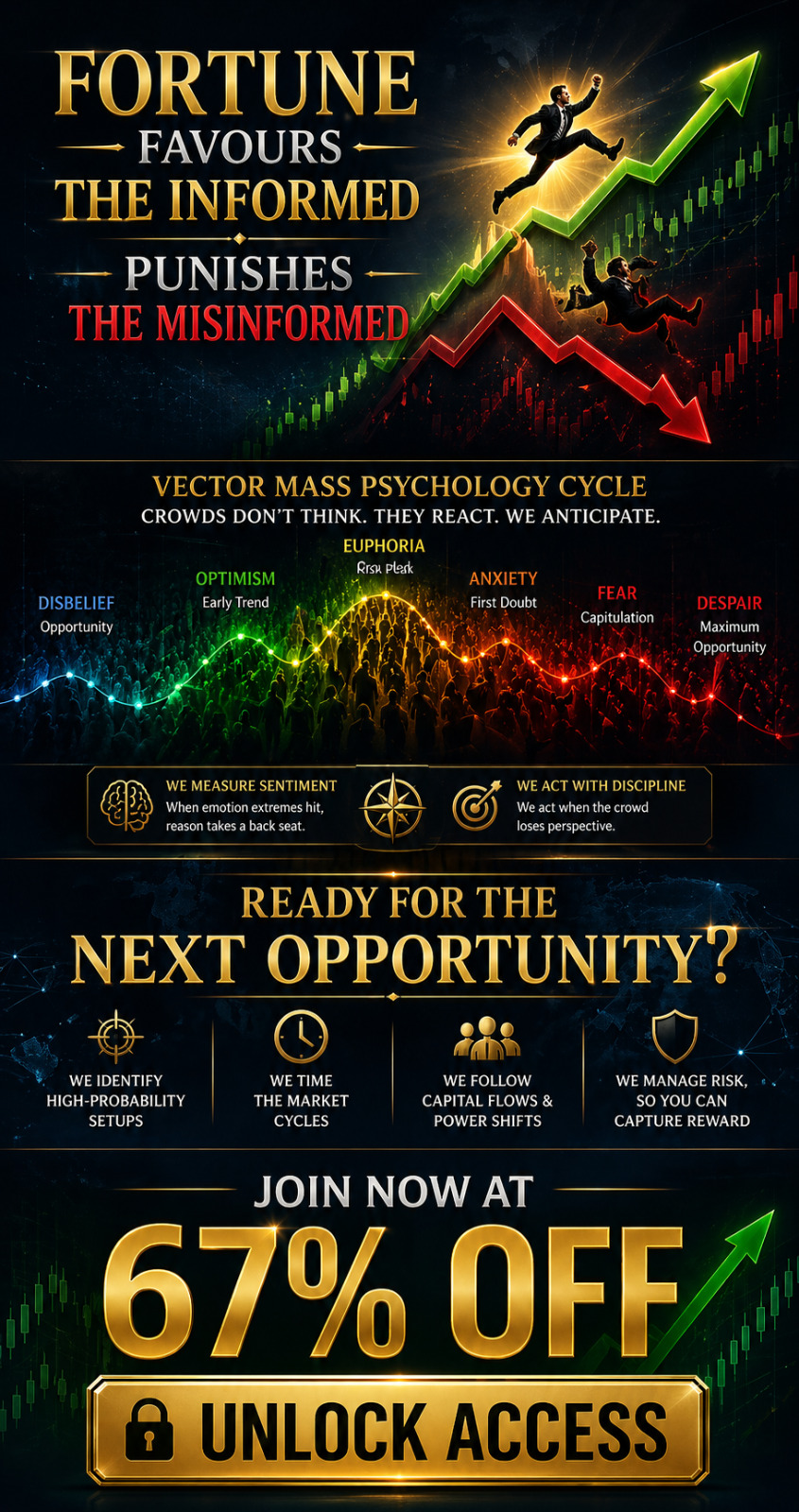
Sentiment runs on a spectrum from apocalyptic despair to manic euphoria. Your job is not to mood-read every minor wobble. Your job is to recognize the extremes where probability flips in your favor.
- Maximum fear: Headlines scream “crisis,” volatility explodes, put buying spikes, and everyone suddenly becomes a macro prophet of doom.
- Peak euphoria: Valuations are “different this time,” risk is redefined as “opportunity,” and people with no business owning options are day trading them on their phone.
The COVID crash of March 2020 is the cleanest live-fire test. CNN’s Fear & Greed Index collapsed to a reading of 2 out of 100 as stocks went into free fall. Fear was not just high. It was atomic. At the same time, the VIX, the so-called fear gauge, closed at a record 82.69. Anyone buying then did not feel brave. They felt slightly insane. Which is usually what buying near true bottoms feels like.
Fast-forward to late 2020 and early 2021. Retail call buying hit records, zero-commission apps turned speculation into a social activity, and new traders explained valuation to professionals. Sentiment indicators flipped to extreme greed, margin debt surged, and pockets of the market behaved like a casino on cheap stimulants. The result was not permanent collapse, but vicious rotations and brutal corrections that punished those who confused mania with safety.
Sentiment extremes do not ring a bell, but they do leave fingerprints. If you train yourself to see those prints, you stop playing the victim.
Turning Emotion into Numbers: The Quantitative Sentiment Edge
Serious sentiment work does not rely on vibes. It runs on data. Several indicators capture different slices of mass psychology:
- Put/Call Ratio: When put volume overwhelms call volume, fear dominates. Research and practitioner work show that extreme spikes in equity put/call ratios often appear near short-term lows, as investors rush for protection at exactly the wrong time. (EBC Financial Group)
- AAII Bull/Bear Spread: When American Association of Individual Investors survey bears heavily outnumber bulls, subsequent 6–12 month returns tend to beat average outcomes. (Reuters) That is code for “retail panic usually marks opportunity.”
- CNN Fear & Greed Index: A composite of seven indicators, it plunged to 2 in March 2020 and has hit “extreme greed” readings near local peaks. (Investopedia) It is not magic, but as a temperature gauge, it is brutally honest about how hysterical the market has become.
- VIX (Volatility Index): When the VIX spikes above 40, history shows markets often bottom within weeks. In March 2020, it hit an 82.69 close, and the S&P 500 more than doubled in the subsequent rally. (Macroption)
- Institutional “smart money” vs retail “dumb money” positioning: Several services track this spread. When institutions lean heavily in one direction while retail is leaning the other way, major turning points often follow.
Academic work on news and option-implied sentiment adds even more weight. Studies using millions of Reuters articles and implied volatility skews show that extreme sentiment signals often precede reversals and deliver economically meaningful trading results. (Econstor)
This is where the edge gets real: you can code thresholds, define rules, and act when specific readings hit historical extremes. No “gut feel,” no TV noise, just structured exploitation of emotional errors.
Media as Sentiment Echo Chamber: When Headlines Become Contra-Signals
Financial media does not lead sentiment. It reflects and amplifies it. That makes it a powerful contrarian tell.
In March 2009, some of the most doom-laden covers and headlines hit just as the market bottomed from the financial crisis. Extended features on “The Death of Equities” and depression-era analogies were everywhere. Anyone reading only those narratives would have stayed sidelined while one of the strongest bull markets in history started under their feet. Similar patterns cropped up in early 2003 and again in 2020.
On the other side, media canonisation is just as toxic. Amazon’s coronation and the tech worship in late 1999 mirrored peak Nasdaq insanity; the bust arrived months later. The same script replayed during the more recent AI and meme cycles, with breathless coverage serving as the soundtrack for late-stage crowd behaviour.
The rule is simple: when the narrative becomes unanimous, sentiment is already extreme. The media is not your teacher. It is your Doppler radar. You trade against its loudest moments, not with them.
Insiders and Institutions: When the Adults in the Room Tip Their Hand
Corporate insiders and large institutions are not omniscient, but their behavior at extremes is rarely random.
During the late-2018 selloff, insider buying surged to the highest levels in years as indexes sank. The market bottomed in December and rallied hard through 2019. In March 2020, insider buying again spiked to the strongest pace since the financial crisis, at precisely the point retail was dumping in panic. (avidianwealth.com)
Studies of the AAII survey compared with institutional flows show a recurring divergence: when retail capitulates, institutions quietly accumulate. When retail is euphoric, institutions tap into that joy. Sentiment work gets sharper when you do not just look at what people say, but at which groups are acting. Executives buying their own stock while the crowd pukes it out is not a subtle signal. It is a flare.
The Sentiment Calendar: Predictable Mood Swings in Price of Clothing
Human psychology has a calendar. Markets mirror it.
- September weakness: Since 1950, September has delivered the worst average monthly return for the S&P 500, around -0.5 to -0.7 per cent, making it the only month with consistently negative average performance over that span. That seasonal drag reflects repositioning, tax considerations, and a recurring bout of late-year anxiety.
- Pre-holiday strength: Studies show that trading days immediately before major holidays post returns many times higher than average days, driven by lighter volume, reduced shorting, and a mild “good mood” effect.
- January small-cap effect: Historical work from Wachtel and later studies found small caps often outperform in early January, driven by tax-loss selling in December and reinvestment flows at the start of the year
These are not clockwork rules. They are behavioural tendencies. The point is not to worship them, but to recognise when seasonal sentiment tailwinds or headwinds line up with other extremes. When you have panic, seasonality, and positioning all pointing the same way, probability is no longer neutral.
The Sentiment Playbook: How to Weaponise Crowd Emotion
Knowing the theory is useless if you still panic at bottoms and chase late-stage rips. You need a ruleset.
- Build a sentiment dashboard
Pick 5–7 indicators: put/call ratio, VIX, AAII bull-bear spread, a composite like Fear & Greed, insider buying activity, maybe a smart-money vs dumb-money positioning gauge. Define explicit thresholds for “extreme fear” and “extreme greed” based on history, not feelings. - Demand confirmation across indicators
One indicator can misfire. Three or four screaming in the same direction is signal. For example, VIX above 40, AAII deeply bearish, and insider buying spiking together is not random noise. - Use technicals to time entries inside sentiment windows
Sentiment tells you where the rubber band is stretched. Technicals tell you when it starts to snap back. You look for oversold readings, bullish reversals, or breakouts as triggers once sentiment hits your predefined extremes. - Scale, do not lunge
You add exposure as extremes deepen, not all at once. Markets can stay terrified longer than is comfortable. You phase in buys and widen stops as the emotional fog lifts. - Automate what you can
Even the best framework breaks when you are tired, angry, or euphoric. Pre-commit to actions when thresholds hit. If Fear & Greed is under 10, VIX above 40, and AAII spread deeply negative, you already know the playbook: scale in, not debate Twitter.
You do not eliminate emotion. You build a cage around it.
Case Study: 2020, The Sentiment Bloodbath
March 2020 is where theory met live ammo.
Within weeks:
- VIX closed at 82.69, its highest level on record.
- CNN Fear & Greed Index hit 2, one of the lowest readings ever recorded.
- Retail surveys like AAII showed bears crushing bulls.
Fundamentals offered no comfort. Earnings forecasts blew up. Macro data was a horror show. Yet sentiment said: the crowd has already moved from fear into raw despair.
Investors who trusted that framework and bought quality names or broad indexes while volatility screamed were not “brave” in some romantic sense. They were simply following a contrarian rulebook. The subsequent rally, the fastest recovery from a 30 per cent decline in modern market history, rewarded them because they acted where most could not.
By late 2020, sentiment had flipped. Optimism surged on vaccine headlines, liquidity, and recovery narratives. Risk appetite went from zero to full send. Options activity, margin balances, and bullish surveys all screamed “complacency.” What followed was not an immediate crash, but nasty rotations and volatility spikes that punished anyone who arrived late to the party.
The entire year was a sentiment textbook written in real time.
Sentiment Traps: How Smart People Still Get Played
Even with all this, you can still screw it up.
- Mistaking high for extreme: A VIX reading in the low 30s feels scary, but historically, it has not reliably indicated panic. Same for a mildly negative AAII spread. You need percentile context, not vibes.
- Acting too early: Extremes can persist. Fear can grind on for weeks. You phase in; you do not bet the house when the first indicator flashes red.
- Ignoring sectors: Market-wide sentiment can obscure local madness. Tech can be in full bubble mode while boring defensives remain saner. If you only look at index sentiment, you miss these pockets.
- Falling for narratives: “This time is different” will always sound intelligent when aligned with the latest technology or crisis. Sometimes there is a kernel of truth. That does not stop sentiment extremes from mattering.
The market does not need you drunk on optimism or paralysed by fear. It just requires you to be slightly off balance consistently.
The Ultimate Edge: Building a Sentiment Spine
The real edge is not the indicators. Anyone can pull those up. The edge is having the psychological spine to act against the crowd when every cell in your body is screaming to join it.
The best operators, from Buffett to Templeton to Marks, share that trait. They buy when everyone else is selling and sell when everyone else is bragging. Their secret is not mystical. It is structural: they treat sentiment as a signal, not a mirror.
You build that capacity by:
- Defining your sentiment rules in calm periods.
- Writing them down as non-negotiable triggers.
- Reviewing past cycles to hardwire the pattern that a real opportunity feels awful in real time.
In markets, the majority must be wrong at turning points. They cannot all exit at the top or enter at the bottom. Sentiment analysis is just the discipline of identifying when that mathematical necessity is about to express itself in price.
Everyone else will keep obsessing over forecasts and “expert takes.” You will be watching the crowd’s emotional vital signs, waiting for the moment they swing too far, then stepping in while they either scream or cheer.
That is stock market sentiment in its real form: not a soft concept, but a weapon. Use it properly, and you stop being part of the crowd the market feeds on, and start becoming the quiet presence that feeds on the crowd.