When Markets Crash, Buy Strength: Why Panic Creates the Greatest Investment Opportunities
July 24, 2026
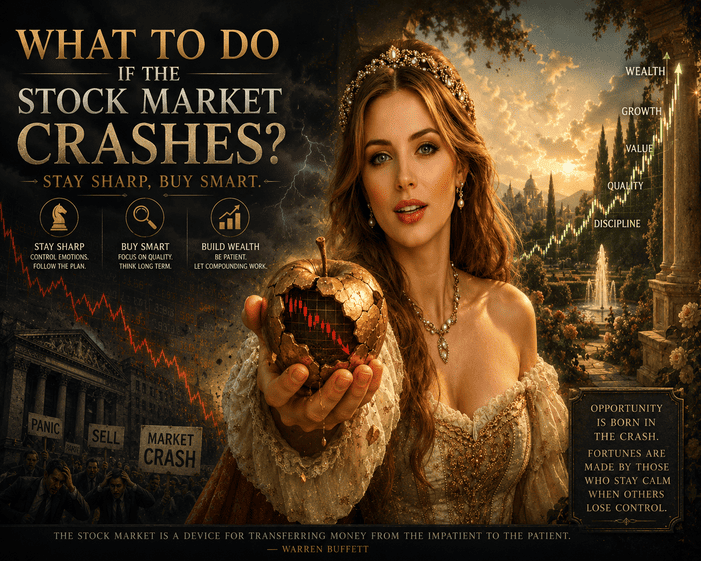
The Market Doesn’t Collapse. Confidence Does.
Every market crash feels unprecedented while it is unfolding. Headlines predict financial ruin, commentators explain why this time is different, and investors who spent years insisting they would buy during the next correction suddenly discover that conviction evaporates precisely when prices become attractive. Markets rarely destroy wealth because businesses suddenly lose all their intrinsic value overnight. They destroy wealth because confidence breaks first, changing perception long before it changes reality and convincing otherwise rational investors that selling is safer than thinking.
The market itself is merely the mechanism through which this psychological shift becomes visible. Prices do not collapse in isolation. They reflect millions of individual decisions made under increasing uncertainty, where fear gradually replaces analysis as the dominant force shaping behaviour. Once confidence begins deteriorating, investors stop asking what a business is worth and begin asking how much further it might fall. That subtle shift transforms investing from a process of valuation into one of emotional survival.
For disciplined investors, however, a market crash is not simply a crisis to endure. It is a condition to understand. Corrections do not eliminate opportunity; they compress it into a narrow window where exceptional businesses can often be acquired at prices that periods of optimism would never permit.
Fear Creates the Discount
Most investors assume bargains appear because companies suddenly become cheap. In reality, bargains usually emerge because investors become emotionally exhausted. The business itself often changes very little while the crowd’s willingness to own it changes dramatically. As confidence deteriorates, investors begin selling whatever they can rather than what they should, creating indiscriminate declines that temporarily disconnect price from underlying value.
This pattern repeats throughout market history. During periods of widespread panic, businesses with dominant market positions, fortress balance sheets and durable competitive advantages frequently decline alongside companies with weak economics and questionable futures. Fear rarely distinguishes between quality and fragility because its objective is not careful valuation but immediate emotional relief. Markets eventually correct this imbalance, yet only after selling pressure exhausts itself and perception gradually reconnects with reality.
That is why the greatest investment opportunities rarely feel comfortable. If buying during a crash feels easy, genuine capitulation has probably not yet arrived.
The Primitive Isn’t the Crash. It’s Confidence.
Every market cycle is organised around a single primitive that quietly governs everything else. Bull markets are sustained not by optimism alone but by confidence that tomorrow will resemble today. Investors borrow because they believe financing will remain available. Institutions allocate capital because they believe markets will remain liquid. Consumers spend because they believe employment will remain secure. Confidence silently supports thousands of financial decisions that most participants rarely notice until it begins disappearing.
A market crash therefore represents far more than falling prices. It represents the rapid deterioration of the confidence supporting those assumptions. Liquidity begins tightening, uncertainty expands and investors gradually abandon the belief that risk will continue being rewarded. The decline becomes self-reinforcing because every wave of selling weakens confidence further, encouraging still more selling. Markets rarely collapse because everyone suddenly discovers new information. They collapse because confidence, once fractured, spreads fear through the financial system faster than facts can restore it.
The Crowd Always Sells at the Wrong Time
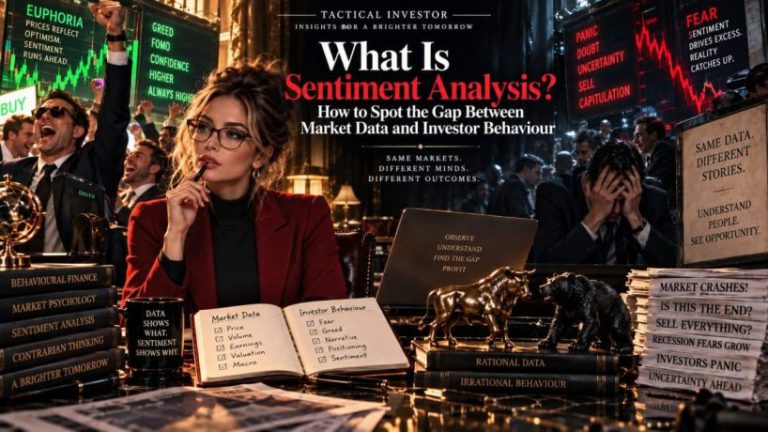
Charles Mackay famously observed that people go mad together and recover their senses one by one. Financial history has repeatedly validated that observation because investors consistently become most optimistic near important market peaks and most pessimistic near significant market bottoms. Mass psychology does not merely participate in market cycles; it amplifies them.
During every major decline, the narrative changes with remarkable speed. Businesses celebrated only months earlier suddenly become uninvestable. Analysts reduce price targets after prices have already collapsed. Financial media shifts from discussing growth to discussing survival, reinforcing the belief that selling is the only rational response. Investors mistake widespread agreement for objective truth when, in reality, markets have often already incorporated much of that pessimism into prices.
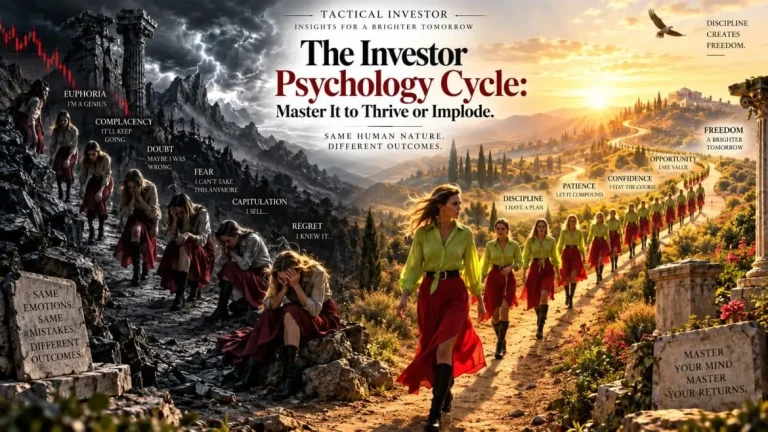
By the time fear becomes universal, much of the downside has frequently occurred while much of the future recovery remains invisible because emotion compresses every decision into the next alarming headline. The disciplined investor understands that the crowd rarely provides useful timing signals. Its greatest confidence usually appears near market tops, while its deepest despair often accompanies the birth of the next bull market.
Technical Analysis Reveals Behaviour, Not Certainty
One of the greatest misconceptions surrounding technical analysis is that its purpose is predicting the future. It cannot, nor should it be expected to. Its real value lies in revealing how investors behave under changing emotional conditions. Charts measure behaviour long before they explain it.
During major corrections, technical indicators become particularly valuable because they help identify when selling pressure is beginning to weaken rather than merely showing how far prices have already fallen. Oversold readings, bullish divergences, improving market breadth, expanding upside volume and unusually high capitulation volume frequently suggest that emotional selling is becoming exhausted even while headlines remain overwhelmingly negative.
None of these signals identifies the exact market bottom, and attempting to buy the precise low remains one of the least productive objectives in investing. Markets rarely reward perfection. They reward discipline. Technical analysis should therefore function as a behavioural framework rather than a forecasting tool. It helps identify changing psychology, not predetermined price targets.
Buy Businesses, Not Falling Prices
One of the most expensive mistakes investors make during market declines is confusing a falling share price with genuine value. A declining stock alone creates no opportunity if the underlying business continues deteriorating. The objective is not to purchase whatever has fallen the furthest but to acquire businesses capable of emerging stronger once conditions normalise.
Companies possessing durable competitive advantages, healthy balance sheets, consistent cash generation, disciplined management and dominant industry positions frequently recover far more rapidly because temporary market panic does not permanently damage their underlying economics. Weak businesses become cheaper because their problems often worsen during economic stress. Strong businesses become temporarily mispriced because fear rarely distinguishes between resilience and fragility.
Understanding that difference determines whether a correction becomes a long-term opportunity or a permanent destruction of capital.
Capital Allocation Matters More Than Courage
Investors often speak about bravery during market crashes, but courage without discipline frequently becomes expensive. Successful investing during periods of panic depends less on emotional boldness than on intelligent capital allocation. The objective is not to invest every available dollar after the first sharp decline because markets often fall further than even experienced investors expect.
A more effective approach is gradual accumulation through predetermined position sizing, allowing exposure to increase as pessimism deepens while preserving sufficient liquidity should conditions deteriorate further. Scaling into positions removes the impossible burden of identifying the exact bottom while ensuring that progressively more attractive valuations receive progressively larger allocations.
Patience is therefore not passive. It is an active form of risk management that allows investors to remain flexible while others become increasingly emotional.
The Indicators That Matter
During periods of extreme volatility, prices alone reveal surprisingly little because they simply reflect the latest transaction. Behavioural indicators provide far greater insight because they measure the emotional condition of market participants rather than the market itself. The VIX, put-call ratios, market breadth, insider buying, institutional positioning and investor sentiment surveys collectively reveal whether fear has reached levels historically associated with important market turning points.
No individual indicator should ever be treated as definitive. Together, however, they help identify periods when perception has become significantly detached from underlying fundamentals. The objective is not to predict tomorrow’s price movement but to recognise when emotional extremes have created unusually favourable long-term probabilities. Markets become most attractive precisely when fear appears most convincing.
The Psychological Advantage
Every investor has access to earnings reports, financial statements, analyst opinions and economic data within seconds. Information has become abundant, eliminating much of the traditional advantage once associated with possessing superior facts. Emotional discipline, however, remains remarkably scarce. That scarcity continues creating one of the few durable investment advantages that technology has never eliminated.
Investors capable of remaining calm while others become emotionally synchronised consistently place themselves in situations where probability works in their favour. Their advantage has relatively little to do with intelligence and almost everything to do with behaviour. Markets reward those capable of thinking independently while others mistake emotion for information. The greatest fortunes are rarely built by predicting every market movement correctly. They are built by remaining rational while everyone else becomes captive to collective psychology.
Conclusion: Crashes Transfer Wealth, Not Opportunity
Every major correction presents investors with the same decision. One group sees falling prices and concludes that risk has become unacceptable. Another sees those same prices and recognises that expected future returns have improved because high-quality businesses are now available at substantial discounts. Both groups observe identical information. What separates them is interpretation rather than intelligence.
Market crashes do not create opportunity from nothing. They reveal opportunities that optimism had previously concealed beneath inflated prices. Fear simply removes the premium that confidence once demanded. The disciplined investor therefore prepares long before the crisis arrives by maintaining liquidity, studying behaviour rather than headlines, accumulating exceptional businesses instead of speculative rebounds and accepting that buying during periods of maximum pessimism will always feel uncomfortable because discomfort is the price paid for exceptional long-term returns.
History has never consistently rewarded those who followed panic to its logical conclusion. It has rewarded those who recognised that while markets fluctuate with emotion, value eventually reasserts itself. Every crash redraws the financial landscape, transferring assets from emotional participants to disciplined ones. Capital changes hands, weak assumptions collapse and future market leaders quietly emerge from the wreckage. The market does not reward fear. It rewards preparation, patience and the ability to remain rational when confidence disappears. The greatest investment opportunities rarely appear when the future becomes certain. They appear when fear convinces almost everyone else that certainty will never return.

Curious Findings