Herd Mentality Stock Market Losses: The Crowd Feels Safe. Until It Isn’t.
August 21, 2026
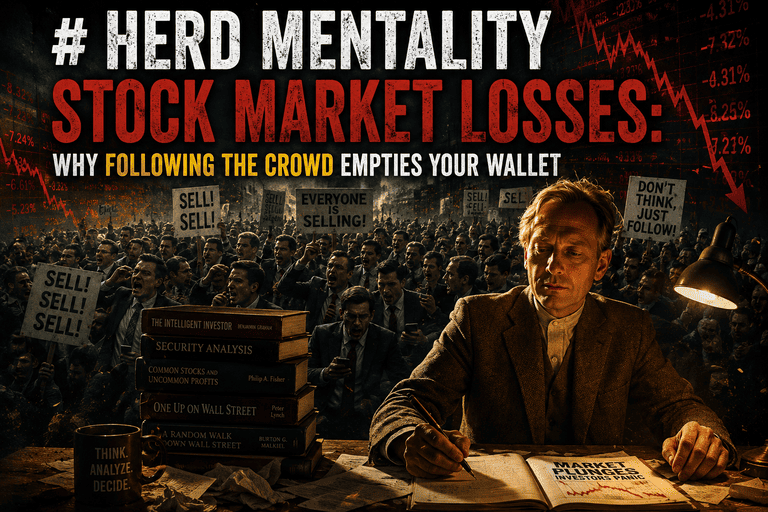
The crowd rarely feels dangerous while you are standing inside it. That is precisely why herd mentality remains one of the most persistent causes of stock market losses: people do not usually abandon independent judgement because they are irrational, but because agreement feels like confirmation, and when thousands of investors appear to be moving in the same direction, standing apart can feel considerably more dangerous than making the same mistake together.
Markets repeatedly exploit this weakness. Investors chase rising prices because participation appears safer once everyone else is participating, then abandon falling assets because the collective decision to sell appears to confirm that danger is real. The result is a recurring transfer of wealth from those reacting to the emotional vector of the crowd to those capable of separating price movement from collective behaviour.
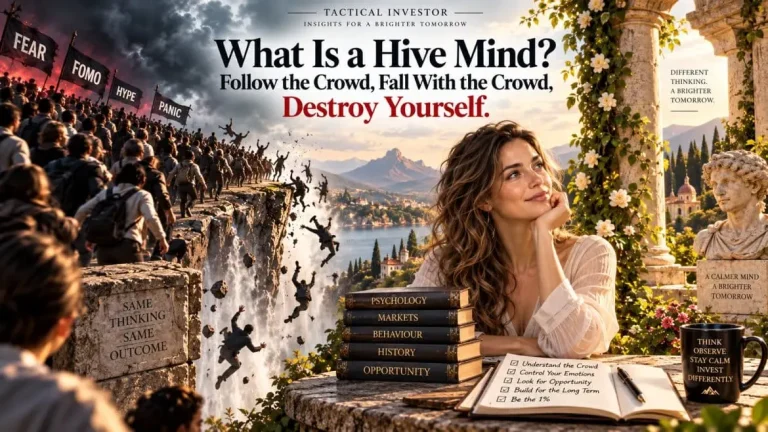
What Is Herd Mentality?
Herd mentality is the tendency to substitute collective behaviour for independent judgement. The individual may still believe that a decision is rational, but the crowd increasingly becomes the source of confirmation, particularly when uncertainty is high and the consequences of standing apart appear greater than the consequences of being wrong with everyone else.
In financial markets, this mechanism creates a powerful feedback loop. Rising prices attract attention, attention attracts new buyers, and those buyers interpret the continuing rise as evidence that the original decision was correct, while falling prices produce the opposite sequence as selling creates fear, fear attracts further selling, and the decline itself becomes the justification for abandoning assets that may have become increasingly attractive.
The danger is not simply that investors follow the crowd. It is that once herd behaviour takes hold, the crowd begins to mistake its own movement for information, allowing collective emotion to influence price and then using that altered price as evidence that the emotion was justified.
The Psychology Behind the Stampede
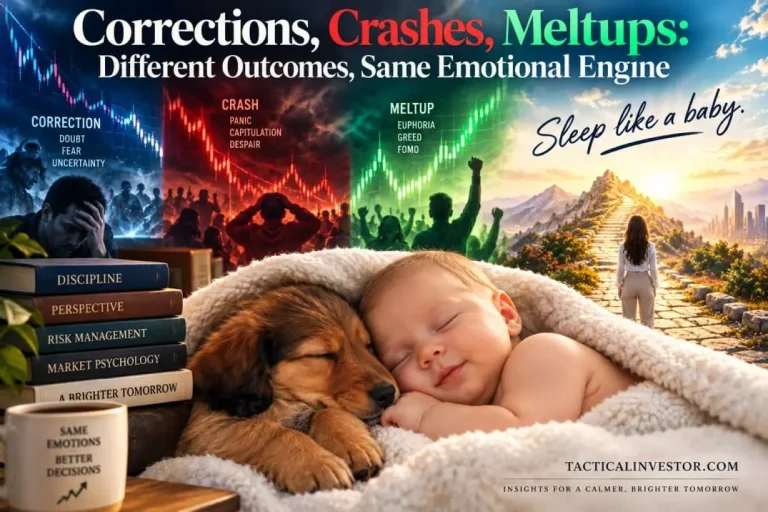
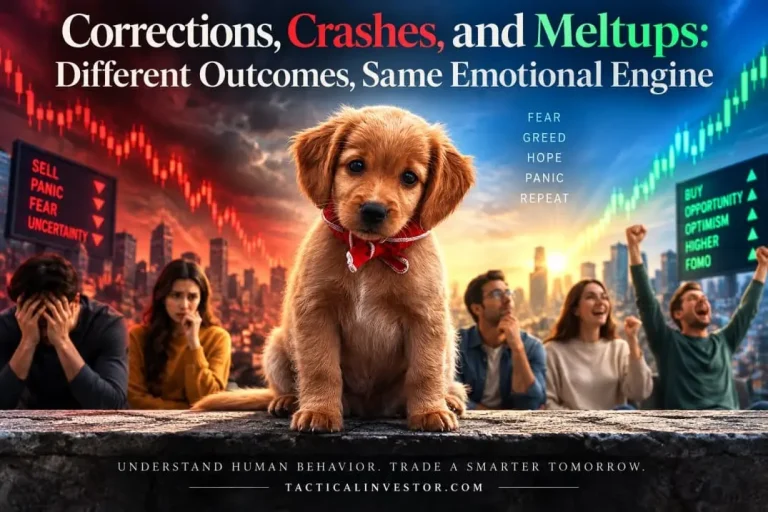
Fear and greed are only the visible expressions of a deeper mechanism: the human preference for social confirmation when uncertainty becomes uncomfortable. During a powerful rally, investors begin measuring the cost of remaining cautious against the apparent success of those already participating, while during a sharp decline, the fear of further losses gradually overwhelms the original reasons for owning the asset.
This creates synchronisation. Investors who would make different decisions in isolation begin responding to the same headlines, price movements and emotional signals, causing the market to move with an intensity that often exceeds what the underlying fundamentals alone would justify. The crowd does not need a leader because price itself becomes the organising force.
That is how bubbles inflate and panics accelerate. The individual sees the crowd moving and assumes that the movement must contain information, while everyone else is often making precisely the same assumption, creating a self-reinforcing loop in which nobody needs to know where the herd is going for everyone to continue following it.
Real Examples of Herd-Driven Losses
History is generous with examples. Let’s look at a few:
| Event | What the Herd Did | The Damage |
|---|---|---|
| Dot-com Bubble (2000) | Bought any stock with “.com” in the name | Nasdaq dropped about 78% |
| 2008 Financial Crisis | Panic-sold near the bottom | S&P 500 fell roughly 57% |
| GameStop Frenzy (2021) | Late buyers chased a meme | Many lost 80%+ from the peak |
| Crypto Mania (2021-2022) | FOMO buying near all-time highs | Bitcoin dropped over 75% from peak |
Notice the pattern? In every case, the crowd was loudest right before the cliff. By the time your barber, your Uber driver, and your dentist are giving you stock tips, the smart money has already left the building.
Collective Blindness: The Crowd’s Favorite Disease
Here’s something strange. When everyone believes the same thing, no one questions it. Economists call this collective blindness. In 2007, almost nobody believed housing could fall nationally. In 2021, almost nobody believed crypto could collapse. The herd doesn’t just walk together. It also goes blind together.
The danger is that being part of the herd feels comfortable. You’re surrounded by people agreeing with you. Your social media feed reinforces every opinion you already hold. Your favorite finance influencer says the same thing as the next one. It feels like consensus, but it’s really just an echo chamber wearing a suit.
Why Smart People Still Fall for It
You might think herd mentality is a problem only for beginners. Wrong. Doctors, lawyers, engineers, and even fund managers fall for it constantly. Why? Because intelligence does not protect you from emotion. In fact, smart people are often better at convincing themselves that this time really is different.
There’s also social pressure. If a fund manager bets against the crowd and is wrong, he gets fired. If he bets with the crowd and is wrong, well, everyone else was wrong too. Career risk pushes professionals to follow the herd, even when their gut says otherwise. This is why so many “experts” sound the same on TV. Standing out is dangerous. Blending in is safe, even if it’s wrong.
Technical Analysis: Spotting the Herd Before It Tramples You
Technical analysis won’t make you psychic, but it can show you when the herd is getting reckless. A few simple signals to watch:
- Volume spikes at price tops: Everyone piling in at once. Usually a warning.
- RSI above 70 for weeks: The crowd is overbought, and gravity is real.
- Extreme bullish sentiment readings: When 90% of investors are bullish, the room is too crowded.
- Parabolic price moves: Straight lines up never end well.
Charts won’t tell you the future, but they will tell you when the herd is sprinting. That’s often your cue to slow down and check your shoelaces.
How to Avoid Becoming Herd Roadkill
Avoiding herd mentality is simple in theory, hard in practice. Here are a few habits that help:
1. Have a written plan. If you know what you’ll buy, when you’ll buy it, and when you’ll sell it, the crowd’s mood matters less. Plans beat panic.
2. Use dollar cost averaging. When you’ve DCA’d into solid assets over time, you stop trying to time the herd. You just keep buying at fixed intervals, and the crowd’s drama becomes background noise.
3. Turn down the volume. Mute the loudest voices. Financial Twitter, cable news, and group chats are designed to make you feel things, not think clearly.
4. Ask “who’s left to buy?” If everyone you know already owns it, the rally is probably tired. Bull markets need new buyers. When the buyers run out, the herd turns.
5. Embrace boredom. The best investors look boring. They hold quality, ignore noise, and let time do the heavy lifting. Excitement is usually expensive.
The Contrarian Edge
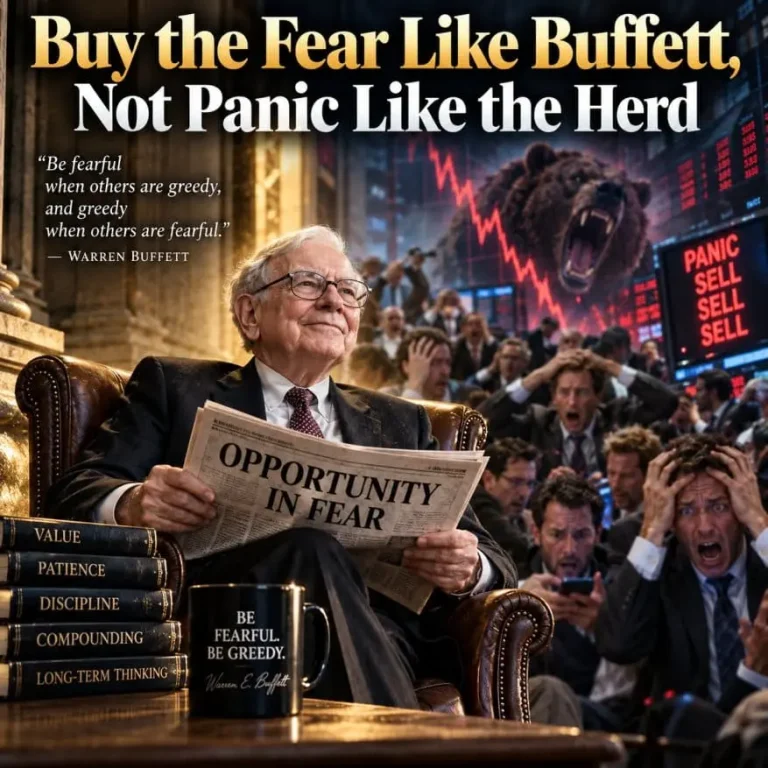
The truly successful investors throughout history, from Buffett to Templeton to Lynch, all share one trait: they were willing to look stupid for a while. They bought when others were terrified and trimmed when others were euphoric. It’s not about being a permanent contrarian. It’s about being a thoughtful one. Crowds are often right in the middle of a trend and almost always wrong at the extremes.
The next time you feel that urgent pull to do what everyone else is doing, pause. Take a breath. Ask yourself: am I making this decision because the analysis supports it, or because I’m afraid of being left out? That single question, asked honestly, can save you more money than any stock tip ever will.
Final Thought
Markets reward patience, discipline, and a strong stomach. They punish urgency, emotion, and the comforting warmth of the crowd. Herd mentality stock market losses aren’t really about the market. They’re about us, our wiring, our fears, and our deep human need to belong. The investors who learn to step away from the herd, even just a little, often find the path to building real wealth. The rest will keep running, together, off the same cliff their grandparents ran off in 1929.
Stay calm. Think for yourself. And remember, in markets, the loneliest seat is usually the most profitable one.