
Political Polarization and Market Volatility
Apr 30, 2026
Too many people are stuck reacting to personalities instead of patterns, and whether it shows up as hostility or admiration toward Donald Trump, the effect is the same because once emotion takes over, analysis takes a back seat, and what looked like independent thinking turns into predictable behaviour that can be anticipated, guided, and ultimately exploited.
We have said for years that polarisation would intensify, and it has, to the point where what passed for extreme only a few years ago now looks almost mild, which tells you the direction is not stabilising but accelerating, and acceleration matters because it shortens reaction time while increasing conviction, a combination that rarely ends well for those caught inside it.
The Illusion of Awareness
Many assume that recognising polarisation protects them, but awareness without control changes very little, because the real test is not whether you see the pattern, it is whether you can remain outside of it when it matters, and the easiest way to check that is simple, if a name, an event, or a headline consistently triggers a strong emotional response, then you are already inside the system you believe you are observing.
It does not matter which side you lean toward, because both reactions operate on the same mechanism, one pulls through anger, the other through admiration, but both narrow perception and reduce flexibility, and once that happens, your ability to evaluate information objectively begins to fade, often without you noticing it in real time.
The Framing Game Most People Miss
The structure is straightforward once you step back far enough, offer multiple narratives that appear distinct but sit inside the same boundary, one to oppose, one to support, and one that appears neutral but keeps engagement active, and no matter which path is chosen, the participant remains inside the same framework, which means the outcome is constrained before the decision is even made.
This is not new. Gustave Le Bon described how crowds absorb ideas rather than analyse them, and Mark Twain reduced it more bluntly, repeat something often enough and it begins to pass for truth, and when you combine repetition with emotional charge, the effect compounds quickly.
How This Shows Up in Markets
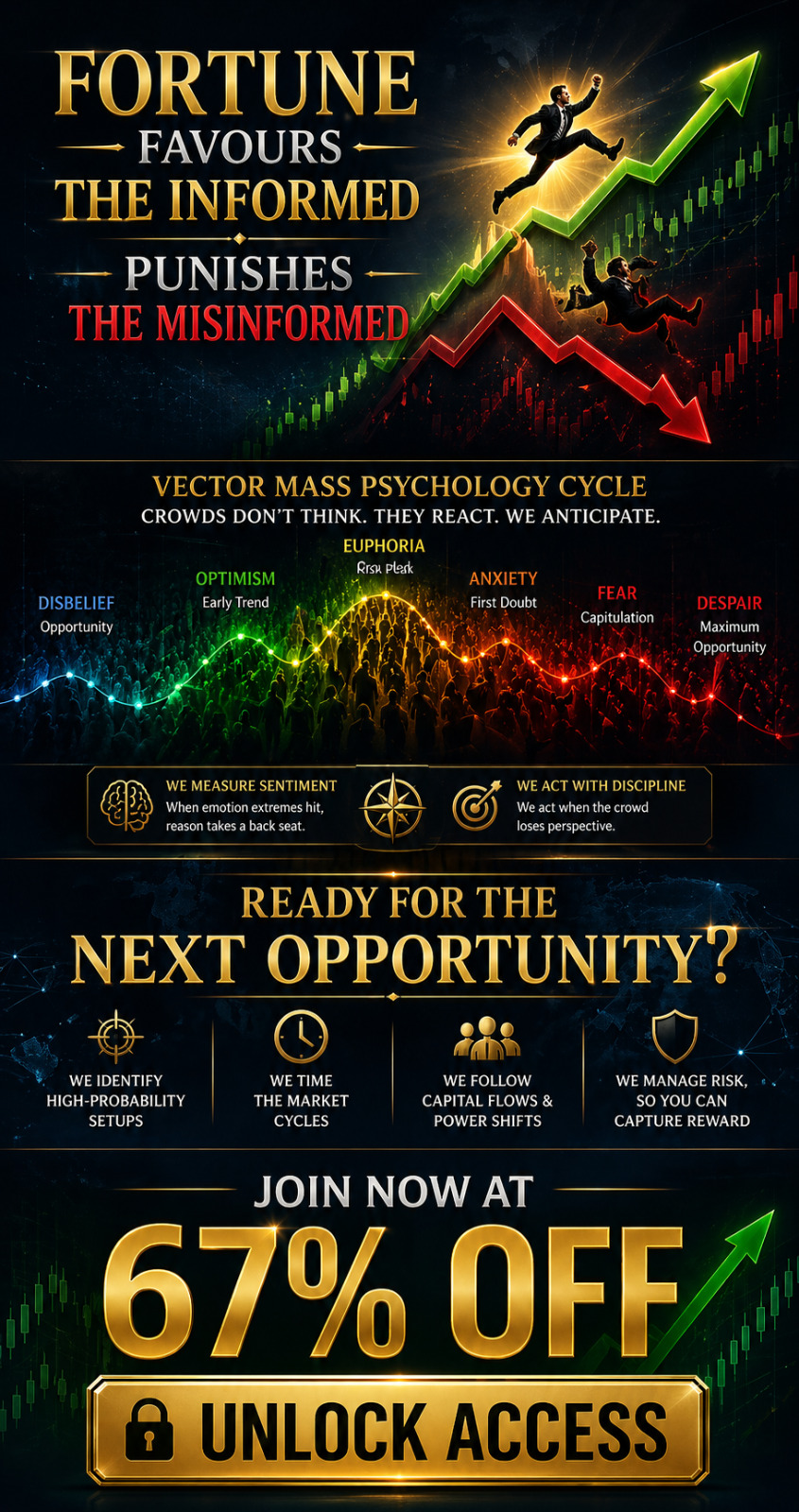
Once you strip away the personalities, the pattern becomes easier to see, negative rhetoric appears, markets react, fear builds, positions unwind, then the tone shifts, positive signals emerge, and a sharp rebound follows, drawing participants back in, and this sequence repeats often enough that it stops looking like coincidence and starts looking like structure.
You do not need to assume intent to recognise the effect, because the outcome is visible, volatility increases, participation becomes reactive, and those who move on impulse provide liquidity for those who move on preparation, and that transfer of positioning is where money is made quietly while attention stays fixed on the surface narrative.
The important point is not whether every move is engineered, but that reactions are predictable, and predictability creates opportunity for those who remain detached enough to observe it.
Why Stepping Back Changes the Game
The only practical way around this is not to choose a side within the presented options, but to step outside them entirely, because once you refuse the frame, your field of vision expands, and what looked like isolated events begins to form a sequence, with emotional swings, narrative shifts, and price reactions all lining up in a way that can be studied rather than reacted to.
This does not mean ignoring events or pretending they do not matter, it means separating observation from identification, so that information is processed without being filtered through immediate emotional response, which preserves clarity and, more importantly, timing.
Timing is where most participants fail, not because they lack information, but because they act at the wrong moment, usually when emotion is strongest and pricing is least favourable.
The Cost of Staying Inside the Frame
Once you are pulled into the cycle, whether through anger or admiration, you become easier to move, because your reactions align with the broader crowd, and when large groups respond in similar ways, the market adjusts quickly, often before individuals realise what has happened.
At that point, decisions feel urgent, positions feel threatened, and the tendency is to act in order to relieve discomfort, not to improve outcome, which is why so many end up buying strength and selling weakness, even though they understand, at least intellectually, that the opposite approach tends to work better.
Understanding without discipline does not protect you. It only makes the mistake more frustrating.
Bottom Line
Polarisation is not slowing down, it is building, and as it builds, the gap between perception and reality widens, creating both risk and opportunity depending on how you engage with it, and the simplest edge available remains the one most people ignore, the ability to step back, observe without immediate reaction, and act only when the structure, not the noise, supports the move.
Ask yourself one question before getting pulled in, what do you actually gain from the reaction, does it improve your decisions, does it improve your positioning, and if the answer is no, then the reaction is not serving you, it is placing you exactly where the system expects you to be.
Step outside the play, and the pattern becomes visible.
Stay inside it, and you become part of it.