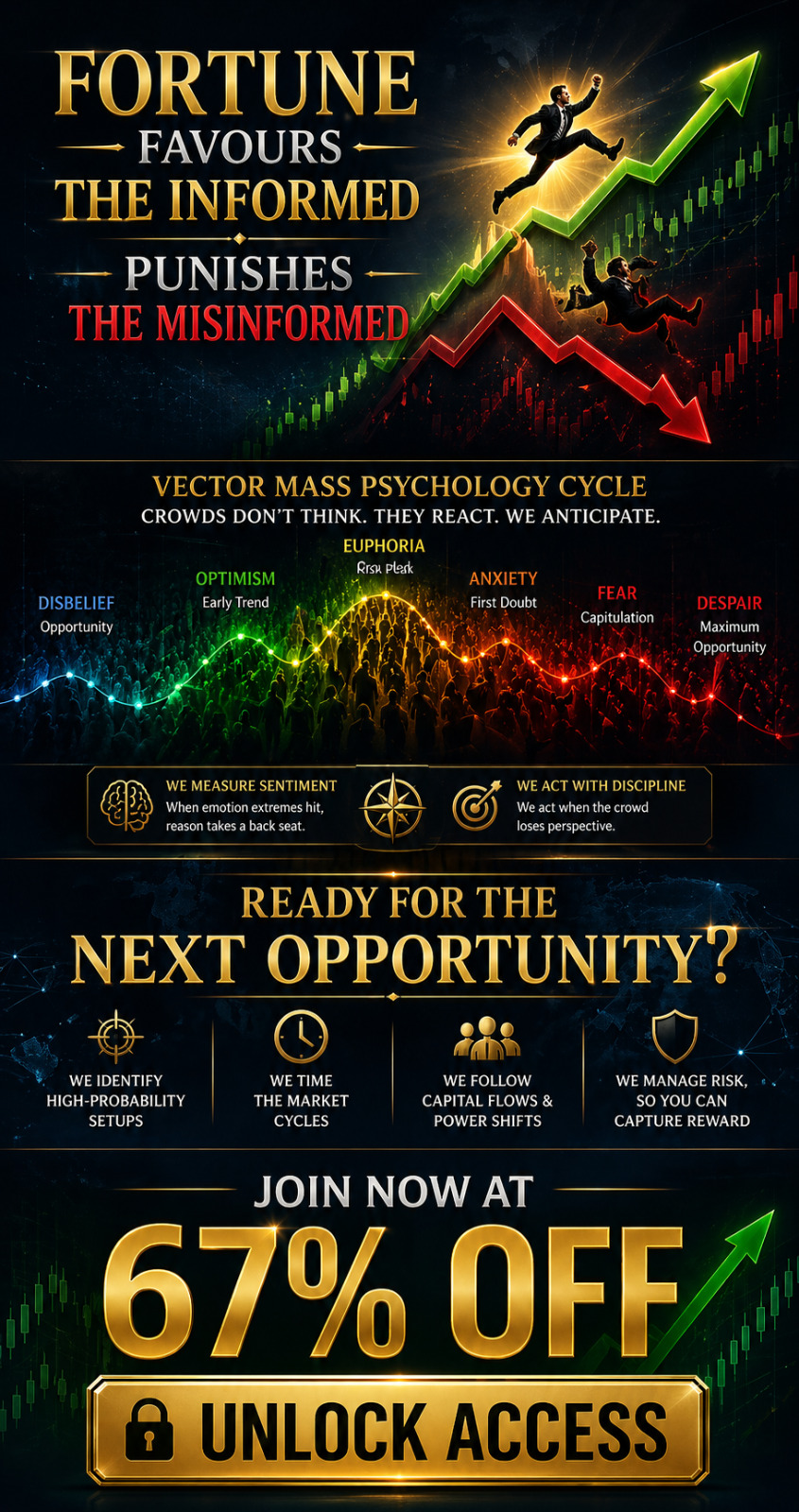


Mass Psychology and Crowd Behavior: Agitation First, Clarity Never Arrives
Apr 17, 2026
The crowd does not move on clarity. It moves on agitation, and once that state takes hold, direction becomes easy because attention flows toward what feels urgent rather than what has been examined. What appears spontaneous is usually structured through repetition, where ideas gain weight not because they are tested, but because they are repeated often enough to feel familiar. Jonathan Swift would have recognised the absurdity in how calmly this unfolds, while Mark Twain would have reduced it to something simpler, that belief often follows repetition, not evidence.
The Historical Roots of Crowd Behavior and Imitation
This is not a modern development. The mechanism was mapped long ago. Gustave Le Bon observed that individuals inside a crowd stop evaluating and start absorbing, reacting to suggestion rather than reasoning through it. Gabriel Tarde approached the same process through imitation, noting that ideas spread because they are copied, not because they are proven. Émile Durkheim extended it further, showing how collective states develop their own force, shaping behaviour in ways individuals would resist if left on their own. When you layer those observations together, the structure becomes difficult to ignore. Agitation spreads first, imitation reinforces it, and collective emotion sustains it long after the original trigger fades.
The Cycle Resets, the Structure Holds: Predictable Social Patterns
Each cycle arrives with the promise of change and leaves with continuity. A new group presents itself as the corrective force, positions itself against what came before, and then gradually settles into the same incentives it replaced. The language evolves, the faces rotate, but the underlying structure remains intact. It plays out with a kind of quiet predictability, not because the participants are identical, but because the behaviour is.
The comparison to Groundhog Day holds because the repetition is not accidental. The setup resets, reactions follow familiar paths, and the outcome aligns with the same underlying incentives. What changes is the narrative used to explain it, which gives the impression of progress while preserving the system that produced the previous outcome.
Meanwhile, the system continues extracting value, not through overt force, but through timing and behaviour. Attention is directed, reactions are amplified, and the reset is presented as resolution. The crowd participates again, often with the same enthusiasm that contributed to the previous cycle, because the connection between cause and outcome is obscured by the pace of events and the volume of information.
Participation Is the Lever: Stepping Outside the Illusion of Change
What has changed is not the mechanism, but the scale. What once operated in fragments now moves with greater coordination, not necessarily through central control, but through alignment of incentives and amplification of signals. The loop tightens. Reactions become faster, memory becomes shorter, and the cycle compresses.
This is where the leverage begins to shift.
The system depends less on force than on participation, and participation depends on not seeing the pattern clearly enough to step outside it. Once the structure becomes visible, the automatic response weakens. Agitation loses some of its grip. Repetition becomes easier to recognise. The cycle does not stop, but the individual’s relationship to it changes.
That shift does not require withdrawal from the system. It requires distance from the reaction. Because the crowd moves as one only when it does not realise it is moving at all.