

Stock Market Predictions for 2026: Volatile, Bloody or?
Updated Feb 11, 2026
Intro: Welcome to the Whipsaw
This market rewards extremes—and most traders only recognise them once the damage is already done. Last year’s stampede into TSLA, AMD, TSM, QCOM, AMAT, and ASML was a perfect example. Valuations went vertical as AI euphoria drowned out common sense. Many believed the rally had no ceiling, as if the laws of financial gravity could be suspended indefinitely.
But the market never forgets balance sheets. Every parabola finds its axis eventually.
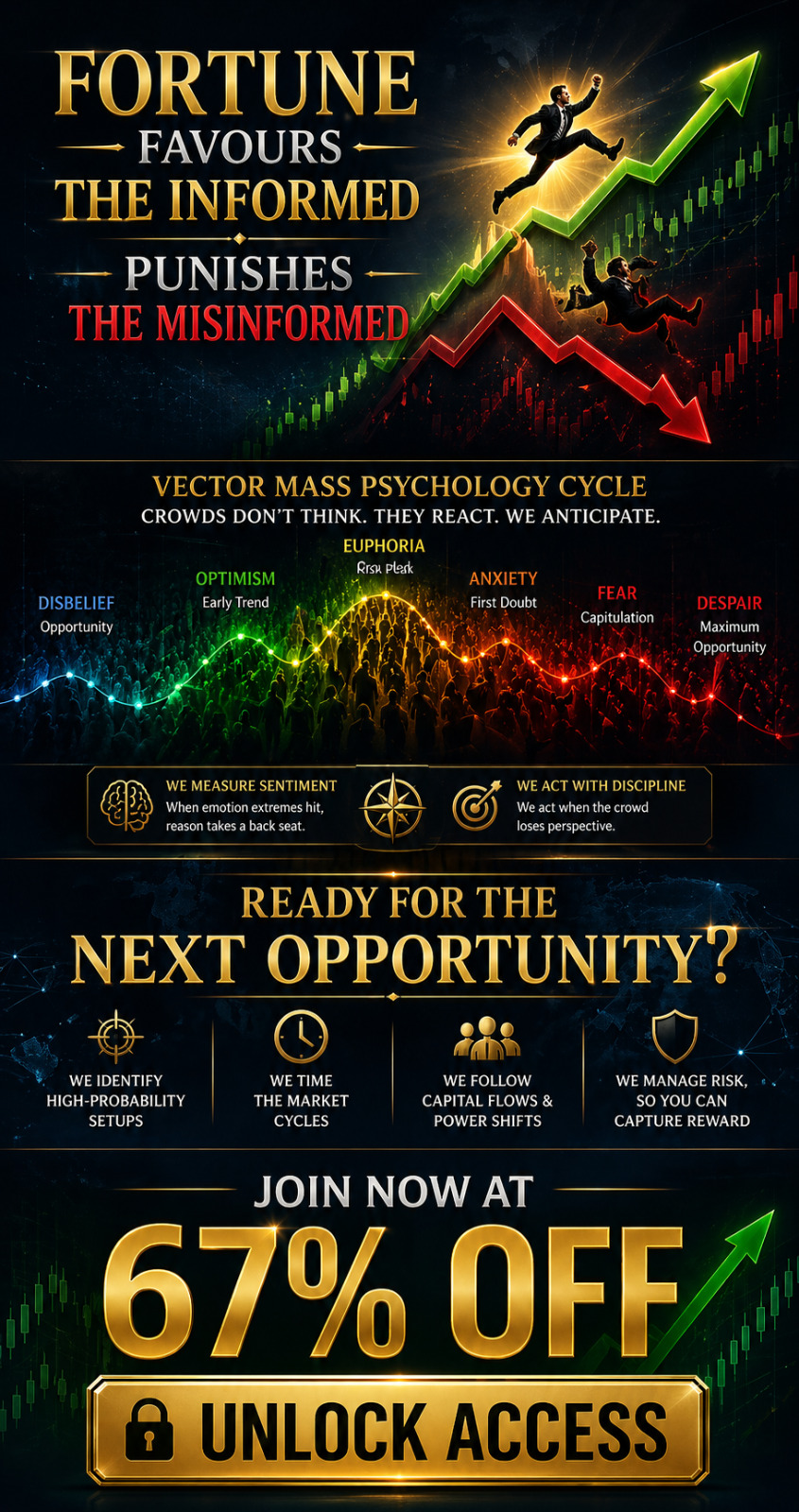
As soon as the illusion of limitless upside cracked—and by early 2026, it had—the narratives flipped. The same traders who chased at the top began unloading at the bottom. Recency bias morphed into fatalism, loss aversion into panic, and the herd turned its bullish frenzy into a selling stampede. Retail never rings the bell at the bottom. They simply panic past it.
Fear doesn’t signal more downside. It clears the runway for the next advance.
And right now? The runway is clearing.
Strategy Over Predictions: How Real Winners Think
Short-term predictions are theatre. Most “experts” are just guessing in nicer clothes. The only thing that matters is understanding the trend, reading the macro backdrop, and recognising where sentiment is on its cycle. That’s the real edge: emotional distance combined with a plan.
The VIX isn’t merely a barometer of volatility; it measures fear. When it surges, opportunity often sits right behind it—waiting for someone patient enough to step in.
Benjamin Graham said it best: you’re either investing or gambling. The gambler guesses. The investor waits.
Contrarians Hunt Alone
Chaos isn’t danger. It’s information.
Sentiment surveys show roughly 60% bearishness. At the same time, heavy up‑volume days hint that buyers are quietly positioning for a rebound while headlines scream collapse. That disconnect is the signal.
When the herd dumps quality out of emotion, the real opportunity isn’t in hiding—it’s in taking the other side. You want to be the one executing calmly while the rest of the market spirals.
Markets don’t fall apart because people are afraid. They fall apart when people are certain. When everyone agrees the bull is dead, you should start asking whether the bear is already staggering.
Heraclitus was blunt: “Change is the only constant.” In markets, you surf that change—or you get crushed beneath it.
Power Stocks: The War Chest
Ignore media hype and viral stock tips. Build a portfolio like a strategist preparing for a long campaign:
- Sectors with structural winds at their back: AI, defence, rare metals, energy—places where geopolitics and technology collide.
- Financial fortresses: companies with solid cash reserves and minimal debt that can survive chaos and acquire weaker rivals.
- Moats the crowd underestimates: patents, dominant brands, network effects—assets with staying power.
- Valuations that can ignite: P/E, P/B, and DCF setups waiting for a sentiment reversal.
- Technical formations that matter: MACD shifts, tightening ranges, long-term moving average retests.
The crowd misses these windows. Their panic creates them.
Strategy Over Predictions: How Real Winners Think
Short-term forecasts are weather reports pretending to be prophecy. Most analysts are rolling dice. Ignore them.
Instead:
- Follow sentiment cycles—they move faster than fundamentals.
- Build decisions around macro forces—not intraday noise.
- Treat VIX spikes like signals that fear has overpriced risk.
Graham’s line endures because it’s true: the patient investor survives; the guessing gambler doesn’t. One exits with profits. The other exits with excuses.
4. Long-Term Chart Mastery: Where Giants Place Their Bets
Pull up a 12‑ to 20‑year chart. That’s where real capital makes its moves. When price touches those long-term trendlines, hesitation is the enemy.
Markets eventually return to their historical paths. When they stretch too far, the snap‑back creates asymmetric opportunity—small risk, large payoff.
When sentiment pushes above 55%, trim positions. When fear pulls sentiment underwater, that’s your entry zone. Long-term charts don’t lie; they whisper. Listen closely.

Conclusion: Mass Delusion, Whiplash, and the False Signal of Fear
Markets rarely collapse because people are scared. They collapse because people become convinced they’re invincible.
The real crash begins when retail traders believe they understand monetary policy better than the Fed, and TikTok gurus proclaim they’ve cracked the game. That’s the top—not the panic, but the arrogance.
Look back at the COVID crash. Fear hit its peak. Headlines predicted global ruin. And yet, the market reversed hard and fast. Why? Because fear is not predictive—it’s delayed.
When fear becomes a meme, the worst is already priced in. Bottoms aren’t rational events; they’re emotional reversals. Tops aren’t exuberant; they’re smug.
AI may make downturns smoother—more controlled, more orderly. But cycles still draw blood. They always do.
So what now?
Every pullback you’re seeing today? That’s opportunity. The crisis people keep warning about? It already happened. And those shouting the loudest about collapse?
They’re not seeing the future. They’re providing liquidity for those who can.