Revenge Investing
Oct 16, 2025
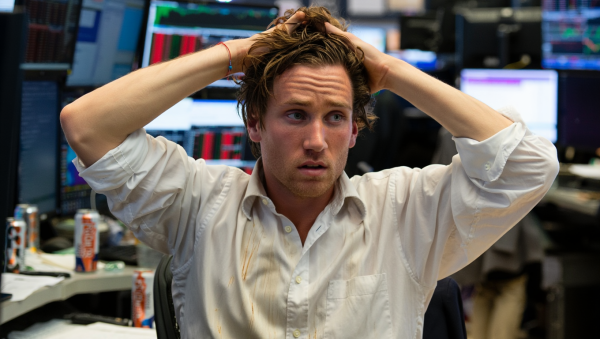
Rage trading behavior isn’t just a bad habit—it’s a trap. You lost money. You want it back. So you double down. Congrats—you just bought a worse position with worse logic. One more trade to “even it out,” you tell yourself. And suddenly, the market doesn’t care about your pride, your ego, or your late-night vows to be smarter next time. It only takes what you offer: more risk, more loss, more blood in the account.
This is revenge investing—a loop that feeds on emotional debt disguised as strategy. Loss → anger → bigger trade → bigger loss. The pattern is ancient, psychological, and brutally effective at making you fail faster than you ever imagined.
What Is Revenge Investing?
Rage trading behavior is the urge to chase losses with emotional intensity rather than reason. You’ve seen it happen on trading floors, in quiet bedrooms lit by computer screens, and even in historical meltdowns. During Black Monday in 1987, traders doubled down to “win it back,” wiping out entire desks. Your brokerage statement is just a quiet echo of that theater.
Freud would call it the compulsion to repeat trauma. The market isn’t a therapist, and every trade you place to “fix” your last loss is another chance to relive it. You think it’s rational, but it’s pure ego trying to regain control over chaos that isn’t yours to command.
Every time you think, “Just one more trade, and I’ll get even,” your shadow ego, as Carl Jung would frame it, takes the wheel. That’s the part of you that refuses to admit defeat, that lashes out through overreaction, and that convinces you emotional retribution equals market insight.
Why Revenge Investing Is Psychologically Addictive
Losses are personal. The brain doesn’t want reason—it wants resolution. Rage trading behavior hijacks decision-making by converting emotional pain into a supposedly “strategic” action. You’re no longer trading the market; you’re trading your need to feel better, your need to be right, your need to erase the sting of failure.
Taleb’s lessons on fragility apply here: the market isn’t broken; you are. It doesn’t owe you a bounce-back, and randomness doesn’t self-correct. You only expose yourself to escalation and deeper losses. Every trade meant to recover feels urgent, feels smart, but it is feeding the machine with your own blood and fear.
The Market Doesn’t Care What You Lost
There is no cosmic justice in trading. No fairness. No “this is your turn to win back what you lost.” That’s a comforting fantasy, one that keeps rage traders glued to screens long past rational limits. The market is indifferent. It punishes fragility, rewards patience, and doesn’t negotiate with ego. Fighting to recover your losses only amplifies exposure, magnifies risk, and burns your emotional fuel faster.
Historical echoes abound. LTCM’s traders in 1998, caught in their own recursive logic, chased losses and leveraged positions until the firm nearly imploded. Same story, different era, same psychology: rage trading behavior blinds judgment, feeding compulsion and chaos.
Tactical Clarity: How to Break the Cycle
There is only one way out: awareness and structure. Walk away after losses. Don’t make new decisions on tilt. Set strict loss limits, implement emotional cool-off periods, and build reset rituals. Sun Tzu said, “Never fight on yesterday’s battlefield.” The terrain of your last loss is already lost. Fighting there again is a surrender in disguise.
Rage trading behavior can be replaced, but not erased. Shift your mindset: every loss is tuition paid for the school of markets. The pros don’t chase; they reframe and reset. They protect their decision-making engine rather than feeding the ego machine. Your edge is not in revenge—it’s in control, patience, and the discipline to stand down.
Replacing Revenge with Recalibration
Imagine your trading not as a war you can “win back” but as a learning process. Each misstep is data, each loss a teacher. When rage trading behavior triggers, reframe the impulse: “I didn’t lose. I learned.” This subtle shift stops the spiral, restores cognitive function, and shields your capital.
The psychology is simple but brutal. You are always at risk of compulsion. The market is indifferent, randomness unforgiving, and your ego fragile. Rage trading behavior amplifies all of this. The good news: acknowledging the loop is your first act of control. Awareness doesn’t prevent pain, but it lets you decide where you bleed.
Conclusion
Revenge investing is the fastest way to turn a bad day into a blown account. Rage trading behavior is emotion in, money out—every time, unless you stop handing over both. The market doesn’t care about your narrative. Your only battle is internal: ego versus discipline, anger versus structure, compulsion versus clarity.
Walk away, reset, and recalibrate. Don’t fight on yesterday’s battlefield. Learn from your losses, protect your engine, and remember: the path of rage trading behavior is seductive, but it ends the same way—your decisions, and your money, on fire.