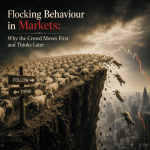

Out-of-the-Box Thinking: Be Smart, Ignore the Dumb Herd
Jan 4, 2026
Markets reward independent thought while systematically punishing emotional conformity. Every major bubble and every devastating crash begins with the same mistake: investors stop thinking for themselves and begin outsourcing judgement to the crowd. Fear and greed become contagious, conviction gives way to consensus, and what appears to be collective wisdom usually marks the point where opportunity is disappearing.
Most investors believe they are making rational decisions. In reality, they are often echoing someone else’s conclusions. They buy because prices are rising, sell because panic feels unbearable, and mistake popularity for validation. Their convictions are borrowed from financial television, social media, market commentators, or whatever narrative dominates the headlines. The crowd rarely realises it is following the crowd.
Out-of-the-box thinking is not about disagreeing with everyone simply to appear clever. Blind contrarianism is no more intelligent than blind conformity. Independent thinking means evaluating markets on evidence rather than emotion and recognising that price often reflects psychology long before it reflects underlying value. Once you understand that distinction, markets stop looking like popularity contests and begin revealing themselves as behavioural systems driven by expectation, emotion, and feedback loops.
The Folly of the Masses
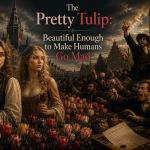
History changes its scenery but never its script because human nature changes far more slowly than technology. Dutch Tulip Mania, the South Sea Bubble, the dot-com collapse, the housing boom, cryptocurrency speculation, and countless smaller manias all followed the same psychological geometry. Optimism became certainty, certainty evolved into euphoria, and euphoria eventually detached expectations from reality. The trigger differed each time. The behaviour never did.
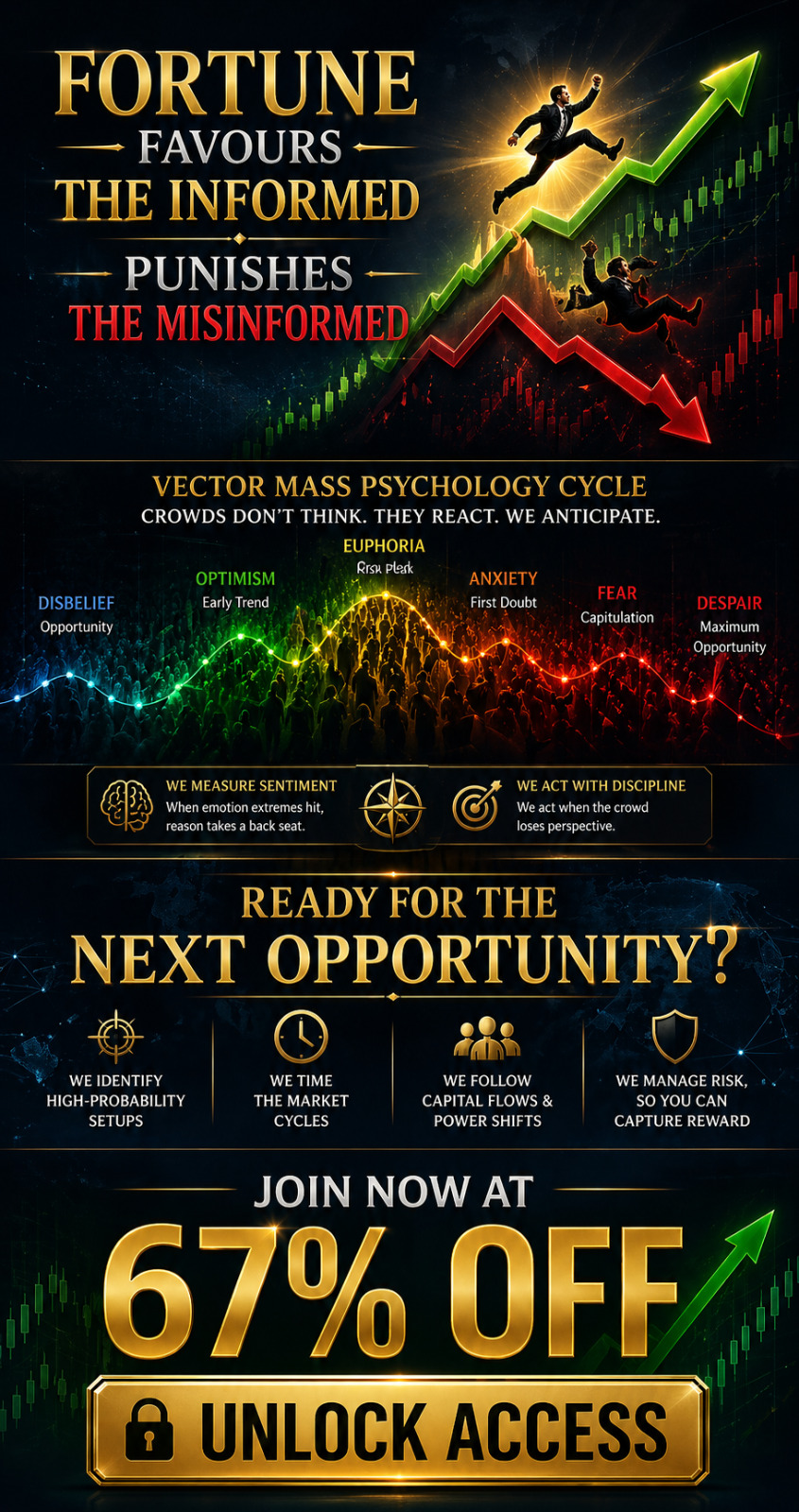
The crowd behaves predictably because emotion follows a recurring pattern. At market bottoms, fear overwhelms judgement and investors become desperate to escape further losses regardless of value. At market tops, confidence overwhelms caution and risk appears to have vanished altogether. In both cases, emotion replaces analysis, creating precisely the opportunities disciplined investors seek.
Sun Tzu advised that victory belongs to those who remain difficult to predict while understanding the behaviour of others. Markets reward the same principle. Investors who remain emotionally detached while the crowd swings between panic and euphoria consistently find opportunities that emotional participants cannot even see. They understand that the greatest profits rarely come from following the herd but from recognising when the herd has become trapped by its own beliefs.
Independent thinking is therefore less about intelligence than emotional discipline. The market has never required investors to be the smartest person in the room. It has always rewarded those capable of remaining rational while everyone else is losing perspective. That ability, more than any indicator or forecasting model, remains one of the few durable advantages available to long-term investors.

The Power of Contrarian Thinking
Thinking outside the box means being willing to offend consensus. It demands courage and clarity about market dynamics and human psychology. Cicero defined wisdom as the ability to discriminate between good and bad. In investing, that translates into spotting real value amid hype and panic.
Charlie Munger captured it cleanly: “It is remarkable how much long-term advantage people like us have gotten by trying to be consistently not stupid instead of trying to be very intelligent.” He and Buffett built empires not by chasing brilliance but by systematically avoiding idiocy while the crowd sprinted toward it.
Contrarian thinking isn’t loud posturing. It’s disciplined discrimination. When the herd buys tulips, pets.com, or meme coins, the contrarian assesses intrinsic value, waits for the cracks, and acts when price finally divorces from fantasy. This is how fortunes are built in crashes and quietly compounded while others are busy reenacting the same panic rituals.

Technical Analysis: A Tool for the Discerning Mind
Technical analysis is often mocked as glorified astrology for traders, but used with precision, it becomes a scalpel for dissecting market psychology. The key isn’t blind faith in indicators; it’s sceptical application. Archimedes declared, “Give me a place to stand, and I will move the Earth.” In markets, that place is found in critical support and resistance levels, patterns revealing sentiment shifts, and volatility signals that expose fear before price does.
During the 2008 financial crisis, most investors were caught off guard. But those watching the VIX and market breadth saw storm clouds forming months earlier. When panic hit, they weren’t caught—they were positioned. Technical tools are not crystal balls; they’re structural X-rays. But as Munger warned, “To a man with a hammer, everything looks like a nail.” Used in isolation, they become traps. Combined with fundamentals, they’re weapons.
The Role of Mass Psychology
Markets aren’t driven by numbers alone; crowds power them. Humans crave the safety of consensus, even when that consensus is wrong. Galen observed, “Employment is nature’s physician.” In markets, the “employment” is active reasoning. Passive acceptance of herd emotion leads to predictable errors.
FOMO at the top and fear at the bottom remain the two most reliable forces in finance. The dot-com mania, the housing bubble, and the crypto surge all followed the same emotional arc: enthusiasm, frenzy, and collapse. Machiavelli noted, “Where the willingness is great, the difficulties cannot be great.” Discipline in the face of emotional contagion isn’t romantic; it’s profitable.
Cognitive Biases: The Enemy Within
The biggest danger isn’t the crowd; it’s the mind using shortcuts. Confirmation bias blinds investors to inconvenient facts. Anchoring makes the first number stick like glue. Recency bias convinces them the last headline is destiny. Loss aversion causes them to sell winners too early and hold onto losers too long.
Munger emphasised building better mental models than the next investor. That requires actively spotting your own biases before they metastasise into losses. Investors who fail at this end up chasing their own shadows while disciplined competitors quietly collect their capital.
Strategies for Out-of-the-Box Thinking
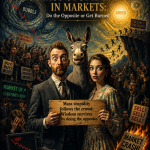
Develop a contrarian mindset. Question prevailing narratives, not to be contrary, but to expose cracks others ignore. Embrace rationality; Cicero’s advice to “let moderation be your guide” applies directly to position sizing and timing. Build a latticework of knowledge, psychology, history, probability, because markets reward interdisciplinary thinkers. Practice patience. Machiavelli’s “The wise man does at once what the fool does finally” is timeless advice for acting early on clear signals. Study history obsessively; cycles repeat because humans don’t evolve as fast as charts. And above all, master emotional discipline, the trait separating opportunists from casualties.
Case Study: The COVID-19 Market Crash and Recovery
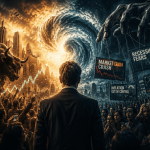
March 2020 was a panic crucible. Global markets fell over 30 per cent in weeks as investors stampeded for cash. It wasn’t analysis driving decisions; it was raw fear. But those who kept their heads saw what the herd missed: quality companies trading at once-in-a-decade discounts.
Munger’s maxim, “The big money is not in the buying and selling but in the waiting,” proved true. Those who bought during the panic and waited didn’t just recover, they thrived. Indices reached new highs within a year. This was not luck. It was clear under pressure while the herd hyperventilated.
Technical signals, crowd psychology, and disciplined contrarian thinking converged into one reality: panic is temporary, value endures, and independent thinkers always eat last, but they eat best.

Conclusion: The Path of the Wise Investor
The market is a stage, and the crowd never tires of playing fools. They stampede at the bottom, hyperventilate at the top, and call it strategy. Their emotions are algorithms written centuries ago, predictable, exploitable, and endlessly recycled. Independent thinking isn’t a luxury here; it’s the moat. It’s the difference between being trampled under the herd’s hooves and quietly collecting what they drop in their panic.
History’s sharpest minds have already drawn the map. Sun Tzu taught strategic deception, Cicero preached discrimination between sense and noise, Machiavelli celebrated disciplined resolve, and Munger weaponized rationality against mass stupidity. The principles haven’t changed; only the costumes have. Whether it’s tulips, dot-com stocks, meme coins, or whatever shiny object the mob fixates on next, the pattern remains constant.
The wise investor doesn’t join the stampede; he watches it like a theatre. He steps in when the script reaches its inevitable panic scene, buys the props for pennies, and exits before the encore. Machiavelli was right: great willingness erases great difficulty. Thinking differently won’t make you popular, but it will make you rich. The herd will always exist. Your job is simple: don’t become part of the scenery.