
Index Fund Investing: Why a Simple Plan Beats Stock Picking
Feb 10, 2026
Index fund investing looks almost too plain to matter. A dull, diversified basket that tracks the S&P 500. No stock screens. No chart patterns. No clever tactics. You buy the market and stop pretending you can outsmart it. On the surface, it feels like ordering the most ordinary item on the menu—safe, predictable, uninspired. Yet beneath that plain exterior sits one of the most quietly demanding ideas in all of personal finance: surrendering control.
Most people misunderstand how difficult that surrender truly is. They think simplicity in investing means simplicity in thought. It’s the opposite. Index fund investing requires a psychological posture that takes most people years to develop: the ability to accept uncertainty without trying to bend it to your will. It asks you to believe that a simple plan can outperform all your clever instincts, all your hunches, all the stories you tell yourself about being different. When you buy an index fund, you’re not just buying a product—you’re abandoning the idea that you should be the hero of your investment story.
And that’s the first hint that index fund investing, for all its mathematical neatness, is actually a psychological crucible. The more you study it, the more it reveals something uncomfortable about human nature: people hate simple truths because simple truths offer no room for personal glory. Stock picking, with all its drama and self-appointed expertise, is intoxicating. Index funds feel like vegetables. They work, but nobody brags about them.
Yet there’s something strangely profound about a plan that wins by refusing to pretend. And if you sit with that idea long enough, an unexpected door opens—one that leads far beyond the realm of index funds and straight into the machinery of how people behave in markets, in trading, and in every financial decision they make.
The Bridge: Where Simplicity Reveals Something Deeper
At its core, index fund investing is an exercise in accepting limits. That’s where the hidden tension lives. If you strip away the charts and analysis, most market behaviour collapses into two competing impulses: the desire to control outcomes and the need to survive reality. Index fund investing leans entirely toward survival. Stock picking leans toward control. And you can trace nearly every financial disaster back to the same psychological misunderstanding—people don’t know which impulse is steering them.
Once you see this, the topic quietly evolves. It stops being about index funds themselves and becomes a window into a deeper truth: markets reward humility far more consistently than brilliance. They punish overconfidence, impatience, and narrative addiction. They brutalise anyone who confuses a short-term win with long-term skill. They erase those who mistake noise for insight.
And suddenly, the simple idea of buying the whole market begins to look less like a strategy and more like a philosophy—one that mirrors almost every survival principle in markets.
The Seduction of the Story
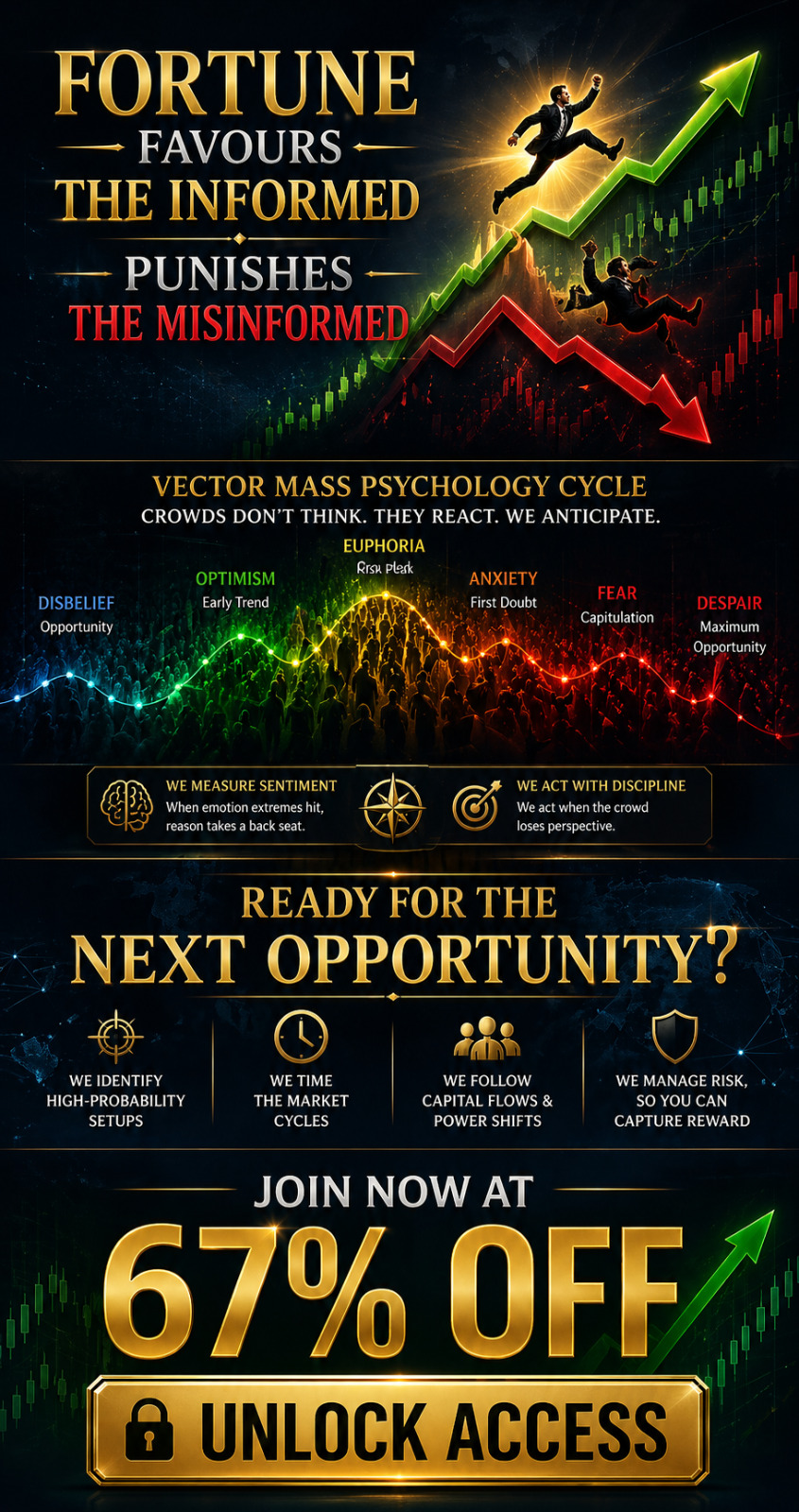
People pick stocks for the same reason they follow conspiracy theories, root for unlikely heroes, or imagine they can time the bottom of the USD markets: the brain loves stories. Stories offer structure where randomness lives. They turn volatility into plot. They transform uncertainty into a narrative where the listener gets to play the protagonist.
This tendency, often called the narrative fallacy, explains why investors latch onto tidy explanations after the fact, mistaking coherence for truth. A stock rises, and they craft a reason. It falls, and they craft a better one. They confuse post‑hoc explanation with prediction. Stock picking is fertile soil for this behaviour. Every pick comes attached to a story—about a sector, a CEO, a technological shift, a future that feels crisp and certain.
Index funds offer no such comfort. No story. No hero. No elegant justification. Just a mathematical reality: the S&P 500 has historically compounded at roughly 10% a year, and very few people beat it consistently. The story there is statistical, not emotional. And that’s precisely why so many resist it.
The Illusion of Control
Humans are wired to overestimate their influence on uncertain outcomes. It’s why gamblers blow through winnings believing the next roll will “correct” the streak. It’s why traders stare at candlesticks thinking they’re seeing patterns that aren’t there. And it’s why stock pickers cling to the idea that if they choose carefully enough, they can sculpt the future.
Index fund investing removes the illusion entirely. You don’t get to choose the winners. You don’t curate the failures. You accept that the market selects its champions without your permission. It demands a quieter form of confidence—the kind that doesn’t need to feel in control to stay committed.
The irony? The people who try hardest to control outcomes often experience the least control. They chase momentum. They sell too early. They refuse to cut losers. They buy at peaks because certainty feels high and sell at troughs because fear feels high. They mistake volatility for opportunity and noise for signal. They lose not because they lack intelligence, but because their psychology makes them predictable to a system built on unpredictability.
The Rhythm of Time
Stock picking rewards immediacy. Index funds reward patience. That alone makes the gap between the two strategies philosophical, not technical.
Most financial mistakes stem from a distorted relationship with time. People rush decisions, fearing that missing a fast move means missing the whole opportunity. Others hold losing positions for years because admitting defeat feels like collapsing the timeline of possibility. They either sprint too fast or freeze too long.
Index funds ask for something harder: steady, sometimes boring commitment. They don’t care about this quarter’s news cycle or next week’s inflation print. They care about decades. And decades have a way of smoothing out the chaos that makes daily markets look like a battlefield. Time is the quiet force that most investors misjudge, and index fund investing is one of the few strategies built around respecting it.
The Discipline of Doing Less
In most areas of life, working harder produces better results. Markets are perverse in this regard. The harder you try, the more you intervene, the more you tinker—often the worse you perform. Stock pickers feel compelled to act. They chase news, earnings, catalysts, whispers. They run toward activity because movement looks like progress.
Index investors sit still. Not lazily—deliberately. They rebalance occasionally, contribute regularly, ignore the noise, and let compounding do the heavy lifting. Their discipline is the absence of interference. It takes far more strength to do nothing than to do something that feels clever.
And underlying this is a simple truth: most people don’t fail because they lack smart ideas. They fail because they can’t restrain their impulses long enough for their good ideas to work.
The Market as a Psychological Mirror
Everyone approaches the market believing they’re evaluating the world outside themselves. What they’re really doing is revealing themselves. Markets expose your impatience, amplify your fear, mock your certainty, and punish your denial. They don’t reward who you pretend to be. They reward who you are once stripped of excuses.
Index fund investing reveals a version of you that many people don’t recognise until they try it: the version that accepts limited foresight. The version that stops trying to outguess every Federal Reserve meeting. The version that realises humility can compound just as quickly as arrogance can implode.
Because in markets, survival is underrated. Survival is itself a strategy. And index funds are survival written into an investment product.
Returning to Simplicity
When people first encounter index fund investing, they tend to focus on the mechanics: low fees, diversification, automatic exposure to USD market leaders. All of that matters. But the deeper power of the strategy lies elsewhere. It teaches you something about the limits of prediction, the traps of storytelling, and the psychological weight of trying to be right.
Stock picking is seductive because it flatters the ego. Index investing is powerful because it bypasses the ego entirely. It redirects attention from what you think the market should do to what the market will do over long stretches of time. It shifts the centre of gravity from personal cleverness to structural resilience.
Most investors eventually learn the same lesson, though some learn it the painful way: the market does not care how carefully you crafted your story or how confident you felt about your picks. It cares only whether you survived long enough for compounding to work. The simple plan wins not because it’s simple, but because it respects reality.
Understanding index fund investing is not just a lesson in finance. It’s a lesson in psychology. It’s a reminder that clarity often hides behind the things we dismiss as too plain to matter. And once you grasp that, you see the strategy for what it really is—not a fallback for the unambitious, but a blueprint for anyone who’d rather build wealth than chase validation.
Sometimes the deepest truths look boring until you live them. And sometimes the simple plan beats the clever one because it asks less of your ego and more of your discipline. The market rewards that kind of maturity far more reliably than it rewards the next brilliant stock pick.

Epiphanies and Insights: Articles that Spark Wonder