

The Crowd Sees a Crash. Is It Your Entry Point?
Sept 23, 2026
The Knife Is Falling. The Crowd Is Panicking. What Are You Seeing?
“Don’t catch a falling knife.”
The warning is repeated so often that it has become a reflex. But a reflex is not a strategy. A falling market can destroy capital, yet the panic driving the decline can also create opportunities for investors who understand what they are buying, why it is falling, and what would signal that the selling pressure is changing.
The danger is real. Buy too early, and the next wave of selling can cut deeper. Confuse a lower price with a bargain, and you may end up holding an asset whose fundamentals are deteriorating. Follow the crowd’s emotional swings, and you risk buying into euphoria or selling into despair.
But the opposite mistake is just as costly: treating every market collapse as a reason to stand aside indefinitely.The strategic investor combines Mass Psychology with Technical Analysis to examine the forces behind the decline. Sentiment reveals how investors are behaving. Technical indicators help describe price momentum, volatility, and the balance between buyers and sellers. Neither provides certainty. Together, they can help frame a more disciplined decision.
The question is not whether the knife is falling. It is whether the conditions that made it fall are beginning to change.
Falling Daggers Cut Blind Hands
A falling market becomes especially dangerous when investors mistake urgency for insight. The first sharp decline triggers fear. The next triggers disbelief. Then the crowd begins searching for reassurance: the sell-off is overdone, the rebound is imminent, the fundamentals are strong. Each argument may contain some truth. None proves that the bottom is in. Three psychological traps repeatedly draw investors into trouble.
1. Buying before the emotional cycle has run its course
A steep decline can look like a once-in-a-lifetime bargain. But the market may still be working through excessive leverage, crowded positioning, deteriorating fundamentals, or forced liquidation. The investor sees a discount. The market may still be discovering the damage.
2. Following price instead of understanding sentiment
Price tells you what has happened. It does not, by itself, explain why it happened or whether the forces behind the move are weakening.That is where sentiment matters. Are investors still treating every dip as a buying opportunity? Has confidence fractured? Are participants selling because their thesis has changed, or because they can no longer tolerate the losses? Those distinctions matter. Panic can create mispricing, but it can also accompany a genuine deterioration in value.
3. Mistaking a dramatic indicator reading for a guaranteed reversal
An RSI reading below 20 can indicate deeply oversold momentum. It does not guarantee an immediate rebound. Momentum can remain extreme while prices continue to decline. The same caution applies to volume spikes, volatility surges, and bullish divergences. They can contribute to a market assessment, but no single signal can certify capitulation or identify the exact bottom. The falling dagger punishes certainty more reliably than it punishes patience.
Catching It with Strategy: Buy the Panic, Not the Hype
The contrarian does not rush toward a falling market simply because everyone else is running away. He watches. He studies the interaction between price, sentiment, and the behaviour of participants under pressure. He looks for evidence that the selling is becoming exhausted, that the market is beginning to stabilise, and that the underlying investment thesis remains intact.The distinction is critical: extreme fear may create the conditions for opportunity, but it does not confirm that the opportunity has arrived.
What to watch
- Volume expansion: A surge in trading activity can indicate intense selling or a major shift in participation. It becomes more informative when examined alongside subsequent price behaviour.
- Sentiment extremes: Widespread pessimism can reveal that expectations have become heavily skewed toward further declines. But bearish sentiment can persist.
- RSI: A deeply oversold reading can identify extreme downside momentum. A subsequent recovery or divergence may provide additional evidence, but neither guarantees a bottom. RSI
- Volatility: A sharp rise in the VIX can reflect increased demand for protection and heightened uncertainty. It does not function as a precise market-bottom timer.
- Momentum and price structure: MACD, divergences, failed breakdowns, and the ability of prices to hold support can help assess whether selling pressure is changing. MACD
- The underlying asset: Is the business still sound? Has the balance sheet deteriorated? Is the decline driven by temporary fear, or has the investment thesis broken?
The strongest analysis comes from the interaction of these factors, not from treating any one of them as a magic signal.
Scaling in: A process, not a prediction
Once evidence begins to support stabilisation, an investor may choose to build exposure in stages rather than commit all available capital at once. This approach does not eliminate the risk of further declines. It changes how exposure is accumulated and leaves room to reassess as new information arrives.
The investor defines the thesis, the conditions that would invalidate it, and the amount of risk they can tolerate. If the market continues lower, the decision is reassessed rather than defended through stubbornness. The goal is not to buy at the exact bottom. It is to build exposure when the potential reward begins to justify the risk.
How Long Do Crashes Last? History Offers Context, Not a Clock
Market declines differ in their causes, speed, depth, and recovery paths. Historical episodes can help illustrate how quickly panic can unfold, but they cannot provide a reliable timetable for the next crash.
The 2020 COVID-19 crash
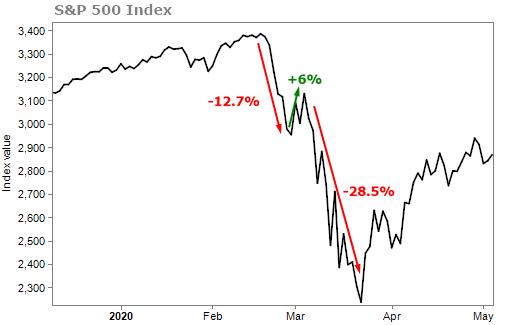
The COVID-19 shock produced an exceptionally rapid market decline. The S&P 500 fell roughly 34% from its February 2020 peak to its March 23 low, then recovered much of the lost ground over the following months.
The episode illustrates how quickly sentiment and prices can reverse when panic gives way to changing expectations and policy responses. It does not establish that future crashes will bottom within five weeks or recover within the same year.
The 2007–2009 financial crisis
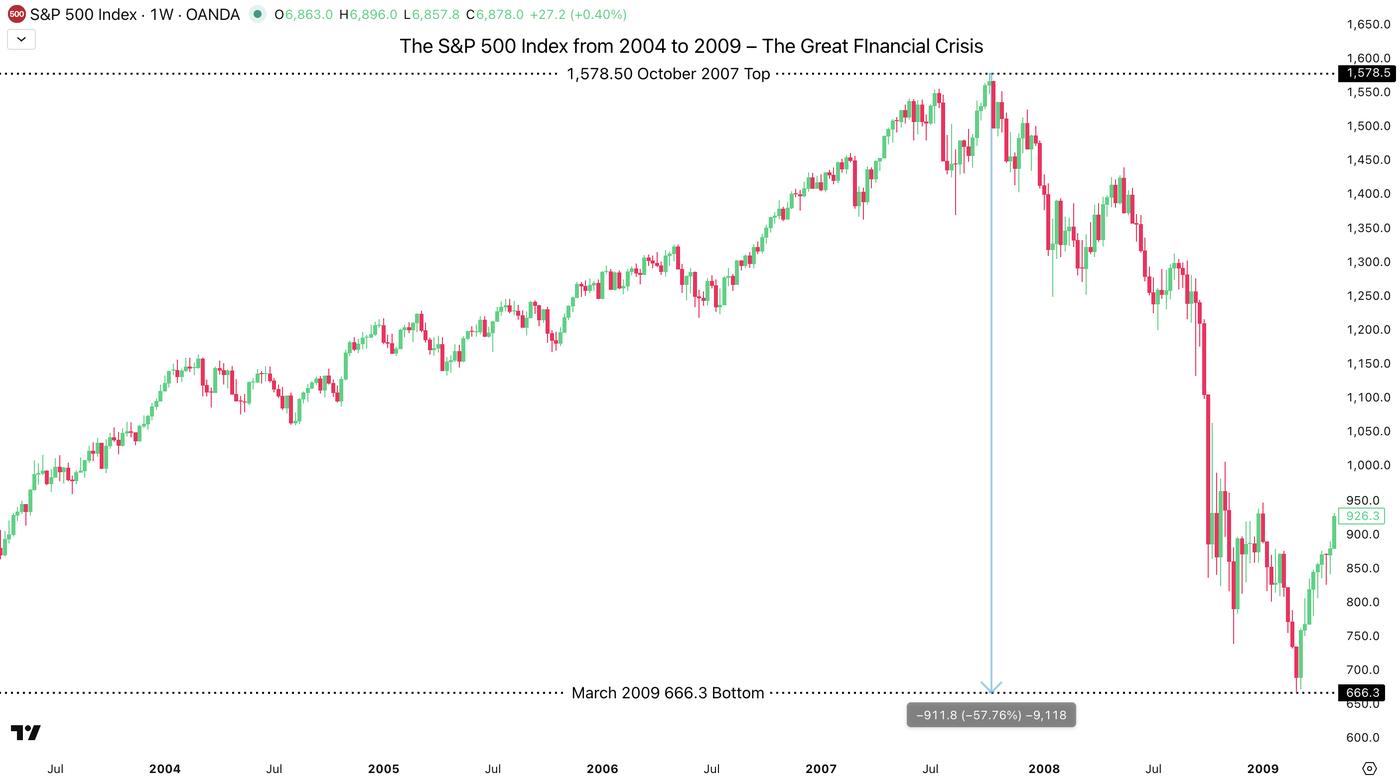
The global financial crisis followed a very different path. The US equity bear market extended from the 2007 peak to the March 2009 low, with severe declines emerging as financial-system stress intensified. The lesson is not that the final six months always contain the greatest damage. It is that a prolonged decline can repeatedly undermine confidence, expose weaknesses, and produce further waves of selling long after the initial shock. A market that appears deeply oversold can still face substantial risks if the underlying financial system is deteriorating.
The 1987 Black Monday crash
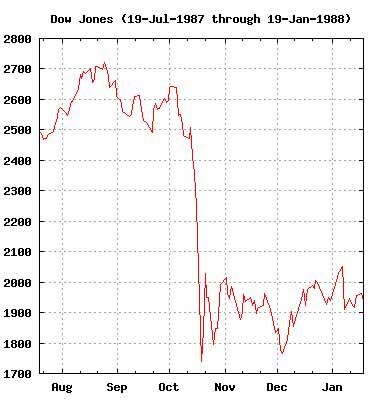
On October 19, 1987, the Dow Jones Industrial Average fell approximately 22.6% in a single session. The speed and scale of the decline demonstrated how market structure, selling pressure, and investor behaviour can interact during a crisis.
The market subsequently recovered, but the episode should not be treated as proof that every sharp crash will resolve in the same way or within a predictable period. History demonstrates that recoveries can follow severe crashes. It does not guarantee when they will begin, how long they will take, or which assets will recover.
“Show Me One That Didn’t Resolve”
This is where contrarian confidence can become dangerous. Major market declines have often been followed by recoveries in broad equity indices. But that does not mean every individual stock recovers, every entry point proves profitable, or every investor has the capital and patience to survive the decline.
Some companies never regain their previous highs. Others recover only after years of losses. Investors who use leverage may be forced to exit before a recovery begins. The claim that an investor would have won “every single time” by following fear indicators, momentum exhaustion, and volume confirmation is too absolute. These tools can help structure a decision. They cannot remove uncertainty or guarantee a profitable outcome.
A more useful framework asks:
- Has panic become extreme? Examine sentiment, volatility, and investor behaviour.
- Is selling pressure changing? Look for stabilisation and shifts in price structure rather than relying on one oversold reading.
- Is the asset fundamentally sound? Separate temporary market pressure from lasting impairment.
- Can the position survive another decline? Account for liquidity, leverage, and the possibility that the thesis is wrong.
- What would invalidate the trade? Establish that condition before entering, not after losses accumulate.
The distinction between a falling dagger and a strategic entry is not a single indicator. It is the quality of the decision-making process.
The Key: Don’t Buy the Knife. Understand the Panic Around It.
The market doesn’t bleed. People do.
The phrase captures the emotional dimension of a crash. Prices move, but people experience the fear, regret, forced decisions, and pressure that can intensify those movements. When the crowd is euphoric, investors may underestimate risk. When the crowd panics, they may abandon sound assets at distressed prices. Both reactions can create opportunities for those who maintain independent judgment.
But the contrarian must avoid becoming trapped by the opposite reflex: assuming that whatever the crowd fears must be worth buying. Panic is a condition to investigate, not a command to trade. The strategic investor prepares before the crisis. They identify assets worth owning, establish valuation ranges, monitor relevant indicators, and decide how much exposure they can tolerate. When volatility rises, they assess whether prices have become more attractive relative to the risks. They do not need to rush in while the screens are red. They need to recognise when the balance between risk and potential reward has changed.
Falling Dagger or Strategic Entry? The Conclusion You Need
When blood hits the floor, the herd screams. That is when the possibility of opportunity begins to emerge, but it is not when certainty arrives. The falling-dagger warning exists for a reason. Buying into a collapse without understanding its causes can turn a paper loss into a permanent one. Yet avoiding every severe decline can also mean overlooking opportunities created when fear overwhelms valuation. The answer is not blind courage or permanent caution. It is disciplined interpretation.
Consider the difference between the investor who sees a stock down 40% and immediately buys, and the investor who asks why it has fallen, whether the business remains sound, what sentiment reveals, and whether price action suggests the selling pressure is changing. Both see the same decline. Only one has built a decision around more than the percentage drop.
The 2020 crash, the 2008 financial crisis, and the 1987 collapse show that severe market declines can eventually give way to recovery. They also demonstrate that the path, duration, and risks can differ substantially.
The recurring psychological pattern is familiar: confidence expands, expectations rise, fear breaks through, and investors struggle to adapt. But recognising that pattern does not make timing easy. Mass psychology helps explain the crowd’s behaviour. Technical analysis helps organise the evidence in price and momentum. Fundamental analysis helps determine whether the asset deserves capital in the first place.
Together, they can support a more informed approach to strategic entry. They cannot guarantee that a crash has reached its low. Those who rush in because they fear missing the rebound may get burned. Those who refuse to reconsider because the market looks frightening may miss a genuine opportunity.
The disciplined investor does neither. They watch the panic without absorbing it. They wait for evidence without demanding certainty. They build exposure only when the thesis, price, and risk align, and they remain prepared to change course if the evidence turns against them.
The falling dagger is not defeated by bravery. It is understood through context, patience, and risk control. The market will fall again. The crowd will panic again. The opportunity, if one emerges, will belong to those who can distinguish emotional pressure from genuine value. The question is not whether you have the courage to buy when others are afraid. It is whether you can recognise when fear has created an opportunity, rather than simply a more dangerous price.

Interesting Reads