Introduction: The Matrix of Possession
Sep 15, 2025
Love, in its raw form, is chaotic. It surges, burns, vanishes, reappears. It’s lightning, not electricity. But culture hates lightning—it wants steady current. So it builds structures: contracts, rings, rituals, and ceremonies designed to trap volatility into permanence. That’s the marriage matrix.
“Settle down,” society commands. The phrase carries its own confession. You’re not asked to expand, to sharpen, to heighten. You’re asked to compress, to fold your wild edges into a sanctioned template. The promise is stability, but the reality is possession. What was once fluid becomes property. What was once presence becomes performance.
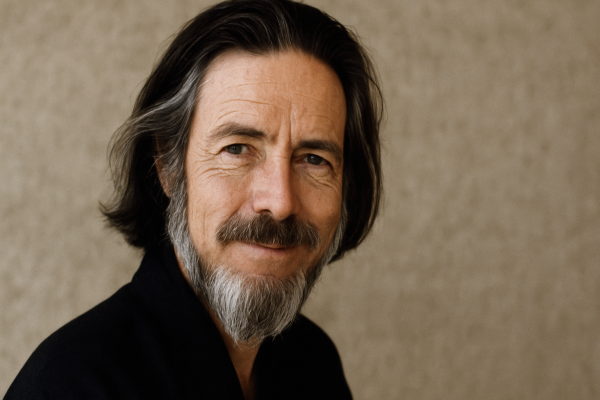
Alan Watts once quipped that marriage is humanity’s attempt to make love “stay.” The irony: the moment you force love to stay, it begins to die. You cannot trap water in a clenched fist without losing it.
The Trap of Ownership
Marriage is less about love than about management. Bodies age, desire fluctuates, and moods decay, but the contract persists. You can fall out of love, but you cannot fall out of mortgage payments or custody arrangements. The institution converts an emotional bond into a legal tether.
The vector is familiar: impulse → attachment → societal reinforcement → regret → containment. Each phase deepens the loop. What began as lust morphs into partnership; what started as partnership morphs into duty; what began as duty calcifies into ownership.
Nietzsche understood this when he warned that herd morality chains instinct into resentment. What could have been free, alive, and affirming is turned into an obligation. The crowd insists permanence equals virtue. In reality, permanence is compliance—paid for with decades of attrition.
Examples sharpen the truth:
• Real: A Michigan woman burned her ex’s house when he tried to leave—ownership pushed to its savage extreme.
• Metaphorical: Signing a marriage contract under false love is like mortgaging a sinking ship. The celebration fades quickly into the sound of bailing water.
• Historical: Nietzsche called marriage a long conversation. But what happens when the words run out in year five? Silence becomes the soundtrack.
Love as Performance
Watts diagnosed the cruelty with precision: once love becomes something you “work on,” it retreats. Spontaneity is strangled by choreography. The dance turns into routine, anniversaries into rehearsals, and passion into polite gestures of duty.
The tragedy isn’t just that love fades—it’s that couples pretend it hasn’t. Respectability replaces honesty. The ritual devours the real. Flowers bought in obligation aren’t flowers—they’re apologies to the mask, payments to keep the performance running.
Simone de Beauvoir would call this the suffocation of existence under social structure. Marriage converts human beings into actors inside a pre-written script. You don’t just love—you play “husband,” “wife,” “provider,” “mother.” Roles crush reality.
The Cultural Mirror
Look at the mirrors society holds up:
• Rom-coms: Possessiveness dressed as romance.
• Soap operas: Jealousy dressed as passion.
• Instagram reels: Surveillance disguised as devotion.
We cheer when the jealous man storms into the room, when the woman demands absolute fidelity, when the couple “fights for love.” But what we’re cheering is ownership, obsession, and fear wrapped in pretty lighting.
Watts warned that the more you grip, the faster it slips. The moment love is managed, it is already gone. Yet culture packages management as virtue. Thus, the con sustains itself.
Biological Fraud
At root, much of this isn’t even love—it’s biology. Schopenhauer saw it clearly: attraction masquerades as destiny, but what we call love is often nature’s trick to keep the species going. Sexual desire disguises itself as permanence, tricking people into contracts they wouldn’t otherwise sign.
Bodies reduce to anchors. Organs become currency. Fertility windows dictate “perfect timing.” All the while, the illusion persists: “This is love.” But it isn’t love—it’s reproduction sold as romance.
Why Ownership Persists
If the trap is so clear, why do humans keep stepping in? Because reinforcement works. The loop doesn’t need constant reward—just intermittent reinforcement. One good year, one memory of passion, one moment of joy is enough to keep the cycle alive for decades.
Gurdjieff would argue this is unconscious compliance—people living asleep. They obey vectors of culture because it feels safer than confronting freedom. Freedom demands awareness. Compliance demands only habit. Most choose the habit. Provocative Realities
Let’s strip it bare:
• Marriage doesn’t just bind—it scripts.
• Sexual desire disguised as love drives attachment to decaying physicality.
• Familiarity breeds contempt, amplifying aggression over time.
• Settling down without settling up = unconscious programming.
• The greatest fraud: convincing yourself duty equals desire.
Every one of these realities is visible in daily life. But culture wraps them in ribbons, calling them “commitment,” “loyalty,” “responsibility.” The script survives because the actors refuse to drop their masks.
The Embedded Thinker Lens
Different minds saw the same con from different angles:
• De Beauvoir: the self suffocates under roles.
• Nietzsche: resentment festers when instincts are chained.
• Gurdjieff: unconscious vectors rule unless disrupted by awareness.
• Watts: permanence kills presence.
Taken together, the thinkers reveal marriage not as sanctuary but as structure—a structure built for culture’s survival, not the individual’s freedom.

Practical Reflection
Strip away the cultural soundtrack for a moment and ask:
• When jealousy spikes, is this love or ownership?
• When desire blinds, is it affection or biology?
• When anniversaries feel like duty, are you in love—or in costume?
These aren’t academic questions. They’re daily checkpoints. Most refuse to ask them because the answers demand action. Action means disruption. And disruption means confronting the fear that maybe, just maybe, we’ve been acting our entire lives.
Cultural Collapse and the Lie of Permanence
History shows the same cycle: obsession, ritual, collapse. Ovid wrote love as obsession, jealous and consuming. Montaigne warned that only reflection punctures illusion. Watts gave the final verdict: love breathes only when it is free.
The tragedy isn’t that love changes. Change is natural. The tragedy is that humans lie about it—convincing themselves and each other that permanence equals virtue, that masks equal reality. The longer the mask stays on, the more the actor forgets who they are beneath it.
Conclusion: Settling Up, Not Down
Ownership masquerading as love is culture’s most enduring scam. The vectors—lust, jealousy, ritual, and financial entanglement—are reinforced until they appear to be the truth. But the truth is this: marriage, as culture defines it, is less about love than about possession dressed up in ceremony.
Watts’ warning seals it. Permanence suffocates presence. The flame dies in the fist. To live love consciously means to resist the urge to notarise it, stamp it, cage it.
Freedom is not in settling down. It is in settling up—paying the debt of unconscious attachment and stepping into presence without contracts, masks, or scripts. Love cannot be owned. It can only be lived. And when it is lived, it is lightning. Wild, dangerous, untamed—exactly as it should be.