The Santa Claus Rally Trap: How Fear and Herd Mentality Blind Investors to Opportunity
Updated Feb 17, 2026
Warning: Few market rituals expose the contradictions of investor psychology quite like the so‑called “Santa Claus Rally.” As December drifts into January, the screens light up, traders crowd together, and the herd latches onto seasonal patterns as if they were law. But this obsession is no edge—it’s a snare. The fear of missing out, the collective anxiety when the rally doesn’t appear, and the unquestioning belief in historical quirks are the very forces that wreck portfolios. In a battlefield like the stock market, survival comes from precision, not folklore.
The Santa Claus rally isn’t just a calendar anomaly—it’s a mirror. It reflects greed dressed up as optimism and anxiety buried beneath holiday cheer. For those who understand market psychology, it becomes an opportunity to exploit the inefficiencies created by crowd behaviour. For everyone else, it’s a storm waiting to sweep them away before the new year even begins.
Exposing Market Panic: Why the Herd Always Loses
Market panic is not a malfunction—it’s part of the design. Markets run on emotion, and nothing activates irrational behaviour faster than fear. Investors cling to patterns for comfort, and the Santa Claus rally is one of the most seductive. Who wouldn’t want to believe in a magical year‑end surge? But belief in that pattern rarely comes from logic. It comes from fear: fear of missing a rally, fear of underperforming, fear of being the only one sitting out.
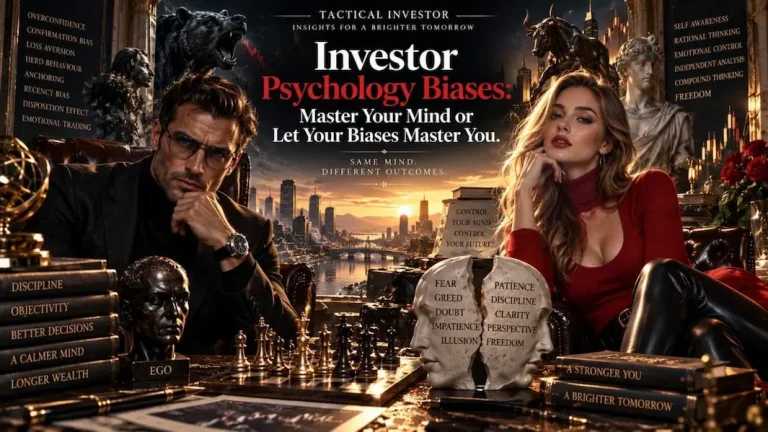
The problem? Fear blinds. When traders rush into the market in late December chasing Santa Claus rally dates, they often ignore fundamentals. Behavioural finance explains why. Anchoring locks them onto last year’s pattern. Confirmation bias convinces them they’re seeing signals that don’t exist. Layer in herd behaviour—where each investor amplifies the panic or enthusiasm of the next—and disaster becomes inevitable.
Look back at the 2018 year‑end collapse. The “Santa Claus Rally” never materialised. Instead, markets spiralled lower. The S&P 500 plunged nearly 10% in December alone, wiping out billions. Investors who piled in expecting a seasonal lift were left holding losses. Meanwhile, the contrarians—those willing to step away from the herd—profited from the chaos. The lesson is simple: the herd promises safety but consistently delivers destruction.
The Wolves Move Different: Contrarian Mastery in Action
While the crowd suffocates under its own fear, the wolves—the disciplined contrarians—thrive. They know market anomalies aren’t guarantees. They’re signals, exploitable only if read correctly.
Jesse Livermore, one of the most famous traders in history, didn’t chase crowd behaviour. He anticipated it. He recognised that markets move on emotion, not logic, and he built fortunes by striking where fear and greed collided. The same logic applies to Santa Claus rally dates. The contrarians don’t buy because it’s December. They examine whether sentiment is overstretched, whether valuations have detached from reality, and whether conditions favour fading the rally instead of joining it.
Modern thinkers like Ray Dalio take the same approach. Dalio’s principles emphasise seeing the market as a system, not a calendar. For traders like him, Santa Claus rally dates are just one variable. They look at liquidity, positioning, macro signals, and human behaviour. And when they strike, they turn herd psychology into their edge.
Fear as Fuel: The Power of Strategic Options Plays
Fear doesn’t just harm investors—it hands opportunities to those who know how to extract value from it. In volatile conditions, one of the strongest plays is selling put options. When sentiment cracks around Santa Claus rally dates and volatility spikes, options premiums swell. To the trained eye, that’s not danger—it’s income.
Here’s the dynamic: sentiment swings wildly as the year ends. If the rally falters, panic rises, and options traders rush to buy protection. That demand inflates premiums. Contrarians step in and sell puts, collecting those bloated premiums while positioning themselves to buy quality stocks at cheaper prices if assigned. This is not reckless speculation. It’s structured risk-taking rooted in an understanding of market psychology.
The real magic comes after: those premiums can be redeployed into LEAPS—long‑dated options that offer leveraged exposure to future rebounds. It’s a strategy that turns panic into potential, allowing traders to profit from both the fear in front of them and the growth that follows it. It’s not luck—it’s calculated asymmetry.
Disciplined Boldness: The Art of Calculated Aggression
Boldness without structure is suicide. Structure without boldness is stagnation. The wolves walk between those extremes with precision. For them, Santa Claus rally dates are not promises—they’re stress tests. Signals to analyse, not scripts to obey.
Disciplined boldness means knowing when to step in and when to wait. Contrarians study the data, sentiment, and macro backdrop before acting. Yes, the rally has shown up historically—but history is not the contract. They prepare for both outcomes, using tools like the VIX, momentum indicators, and even the stochastic oscillator to map pressure points.
This is the real divide between wolves and herd: the herd reacts; wolves anticipate. The herd chases; wolves position. The herd panics; wolves extract. And when the dust settles, the wolves walk away with gains while the herd walks away confused.
The Exit Velocity of Independence
Market success isn’t just financial—it’s psychological. It’s the freedom to think clearly while others drown in noise. Santa Claus rally dates are a perfect symbol of this divide: a ritual that blinds the herd but sharpens the contrarian.
Once you understand the forces behind the rally, you gain something extraordinary: perspective. You stop treating the market as a seasonal lottery and start seeing it as a behavioural battlefield where emotion—not data—moves prices. That clarity lets you act decisively when others hesitate, hold steady when others fold, and tune out the noise when the herd is screaming.
Here’s the paradox: independence requires discipline. Freedom demands restraint. To escape the herd, you first master yourself. And once you do, the market shifts from something to fear into something you can shape—an arena where your advantage grows as others lose theirs.
So, as the next Santa Claus rally approaches, ask yourself: will you chase the myth, or position yourself to profit from its failures? Will you follow the crowd into predictable traps, or rise above it and take the other side of their fear?
The choice is yours. And as every market cycle shows—the bold don’t just win. They endure.