
Psychological Drama: Emotional Leverage and the Death of Wealth
Oct 23, 2025
The Theatre of Self-Sabotage
Every market chart hides a stage. Every investor walks onto it carrying an untrained actor’s heart—unrehearsed, emotional, unarmed. The show is called Psychological Drama, and it never closes. The plot is simple: emotion writes the script, ego directs the scene, and money dies in the spotlight.
From The Market Within: “Every trade is a confession.” That line carries the whole tragedy. Investors believe they are fighting the market; in truth, they are fighting themselves. The tick of the screen is the pulse of their insecurity, the red candle the echo of their fear, the green bar the narcotic of false redemption. They think they are trading capital, but they are actually trading chemistry—specifically, dopamine, cortisol, and adrenaline. The balance sheet is merely the mirror.
Modern investing has devolved into a dopamine lab. “Every market chart is a slot machine,” the book warns. Every flicker triggers a pellet of anticipation. You don’t chase profit; you chase the thrill of almost having it. That almost is the leash. Algorithms, feeds, influencers—all know the cycle: anticipation > dopamine > action > loss > rationalisation> repeat. It’s not trading; it’s pharmacology disguised as finance.
The crowd baptises this addiction with slogans. YOLO. Diamond hands. Buy the dip. Each phrase is the same anaesthetic. YOLO is not courage; it is self-destruction wearing a meme. A soldier earns his scars. A speculator earns his debt. Living like the rich on a soldier’s salary is stupidity on steroids—a comedy until the repo man arrives. The Instagram fantasy of risk-free luxury devours more portfolios than bear markets ever could.
Humans ruin themselves trying to impress people they secretly despise. They buy cars for neighbours they ignore, clothes for strangers who forget them, and gadgets to fill the silence of their own discontent. The financial statement becomes a diary of social insecurity. The capital that should have been invested in a 401 (k) or a portfolio is spent on staging relevance. This is the most consistent trade in history: swapping compound interest for fleeting applause.
From The Market Within: “Prosperity is the sweetest poison… it magnifies desire and delusion.” The tragedy is that prosperity’s first taste teaches nothing. Every bonus check is a test; most fail. They upgrade lifestyle instead of upgrading discipline. They buy dopamine hits instead of buying shares. They become consumers of appearance instead of builders of autonomy. The result: psychological drama—acted daily, financed monthly.
Emotional leverage is more detrimental than financial leverage. You can survive a margin call; you can’t survive a shattered identity. Investors over-size positions because they need to prove something—to themselves, to an imaginary audience, to the ghosts of their own fathers. The need for validation becomes the hidden margin: the unrecognised loan taken against their own sanity. And when markets correct, the collector arrives.

The Hidden Margin Within
A real commander—Suvorov would agree—wins not by numbers, but by knowing terrain. The investor’s terrain is internal. Discipline is logistics. Emotion is attrition. “The battlefield is you. Know it or perish.” Every loss, every panic, every act of greed is a failure of reconnaissance inside your own mind.
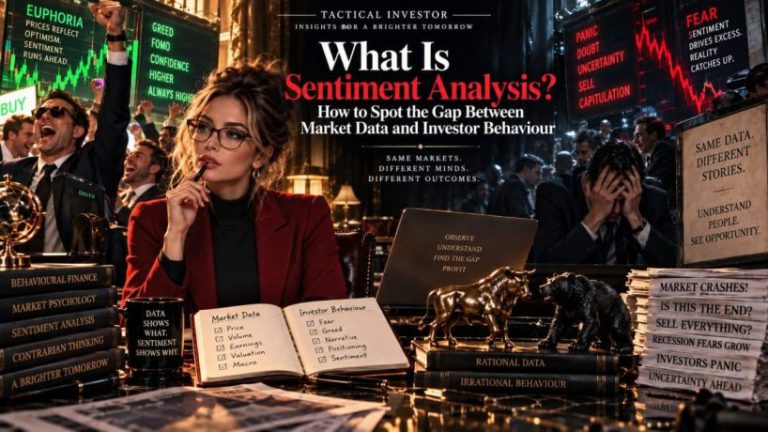
Look closely at the crowd during a crash. Faces tighten, voices rise, timelines flood with hysteria. They call it fear of loss. It’s not. It’s fear of being exposed as ordinary. The herd worships wealth not for freedom but for spectacle. When prices fall, their stage collapses. That is the real ruin—not the drawdown in percentage points, but the humiliation of being revealed as fragile.
The Market Within describes this perfectly: “Ruin is not an accident. It is the end of a story you refused to stop telling yourself.” Most investors don’t go broke from bad trades; they go broke from refusing to rewrite their narrative. They double down on a lie because admitting defeat feels like death. They call it conviction; it’s compulsion in a tailored suit.
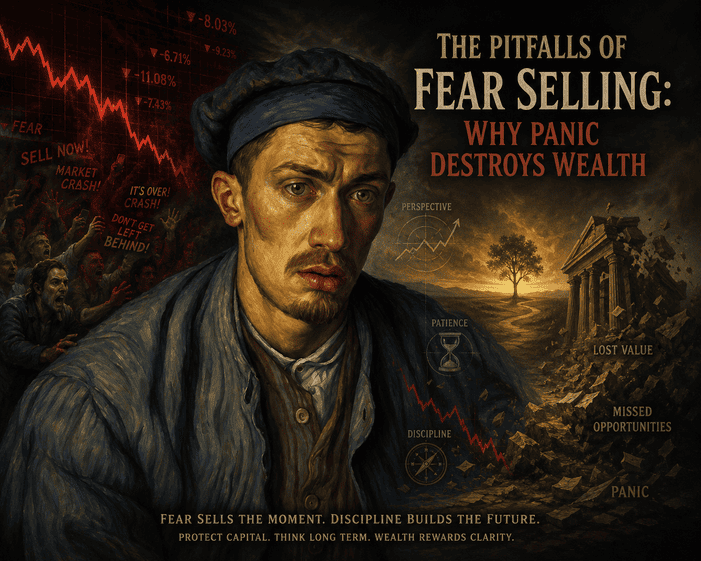
Hope becomes the last poison. “Hope is paralysis disguised as virtue.” Every time series of collapse—dot-coms, housing, crypto—shows the same pathology: holders praying for a bounce while reality grinds lower. The crowd can’t sell, because selling would mean admitting to an error. They wait, they hope, they perish. The sovereign trader executes without sentiment. He bleeds quickly, moves on, survives.
Discipline is not about restraint; it’s about amputation. Cut early, cut clean, cut emotion. The surgeon does not cry for the tissue he removes. Yet most investors cradle their losers like injured pets. They whisper, “It might come back.” It won’t. Markets are indifferent; mercy is not a metric. Execution is clarity with teeth.
The modern financial landscape amplifies every weakness. Social media converts speculation into performance art. Influencers flaunt paper gains; followers imitate leverage. Each scroll reinforces the delusion that confidence equals competence. The feedback loop is pure Psychological Drama: emotion performs for validation, validation fuels emotion, reality disappears. The investor becomes actor, audience, and victim simultaneously.
You want freedom? Stop performing. Stop pretending wealth is a costume. Suvorov would slap the vanity out of your face and tell you to sleep on the cold ground until you respect discipline. Financial mastery begins the same way: strip luxury, measure risk, attack with precision, retreat with honour. The true investor is a field commander of capital—efficient, silent, ruthless.
The paradox of the market is that you cannot conquer what you need. Need is dependency; dependency breeds blindness. The moment you need a win, you trade poorly—the moment you need to impress, you haemorrhage cash. Detachment is not apathy—it’s supremacy. When you cease needing, you start seeing.
To live inside the market’s paradox is to embrace loss as tuition. “Loss teaches through destruction; it burns away what was never real.” Every crash purges fantasy. Every bear market exposes the fool’s theatre. Those who treat pain as data survive; those who treat it as injustice vanish.
Here lies the hidden margin within: emotional cost—the unbooked liability on every trader’s ledger. You pay it with sleepless nights, broken focus, strained relationships, health decay. The market charges interest on every undisciplined impulse. You think you lost ten per cent; you lost a year of peace. Multiply that by decades and you’ll grasp the actual price of psychological drama.
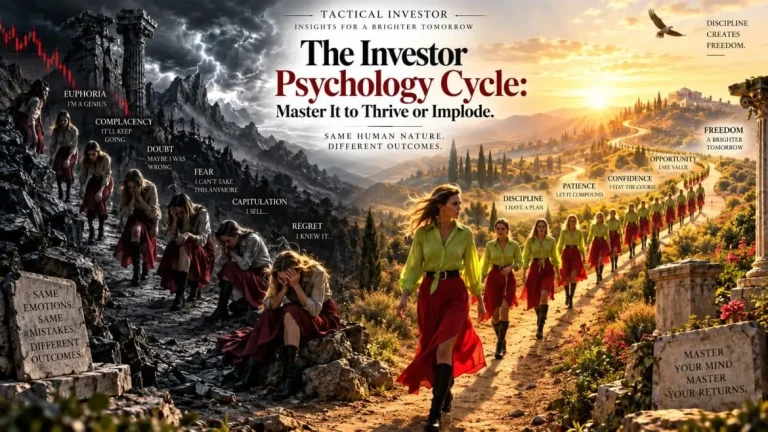
Rescue comes from inversion. Spend less, invest more, think slower, act faster. Accept that fear, greed, envy, pride—they’re constants, not bugs. Mastery means not erasing emotion but commanding it. As The Market Within says: “The sovereign confesses nothing—he cuts, he acts, he endures.” The sovereign investor does the same. He knows dopamine’s tricks, hope’s whisper, risk’s seduction. He treats each like an adversary to be studied, not obeyed.
Ultimately, the market offers two roles: actor or strategist. Actors chase applause and die broke. Strategists build silent empires and vanish into freedom. Choose.
And remember this rephrased maxim for fools chasing appearance:
“You could have funded your future; instead, you financed your vanity.”
Ten thousand small, unnecessary purchases could have compounded into independence. Instead, they became recipients of regret.
Every generation learns this too late. Do not repeat the ritual. The market forgives nothing, but it rewards awareness with interest. Break the script. Stop performing. Control the lever before the lever controls you.