
The Longevity Illusion: Why the Most Powerful Anti-Aging Interventions Are Already Known
September 3, 2026
The longevity industry increasingly sells the idea that the next breakthrough molecule, genetic therapy, or cellular technology will fundamentally alter human aging, and although several emerging fields deserve serious attention, the strongest evidence available today still points toward a far less glamorous conclusion: physical fitness, preserved muscle mass, cardiovascular capacity, metabolic health, adequate recovery, and the reduction of chronic disease risk remain the most reliable interventions for extending healthspan. The central mistake in much of the longevity discussion is the assumption that biological complexity requires an exotic solution, when aging is strongly influenced by systems that can already be modified through sustained behavior.
That does not mean exercise will make humans immortal, nor does it mean supplements, senolytics, cellular reprogramming, or regenerative medicine are irrelevant. It means the hierarchy of evidence matters. A promising molecular pathway is not equivalent to demonstrated human longevity benefits, and improvements in laboratory markers are not equivalent to reductions in mortality or the preservation of functional independence over decades.
The practical objective of longevity is therefore not simply to add years to life. It is to delay the period in which cardiovascular disease, metabolic dysfunction, frailty, cognitive decline, weakness, and loss of independence increasingly dominate the final decades of life.
Exercise Remains the Broadest Intervention Available
Exercise is unusually powerful because it affects multiple biological systems simultaneously rather than targeting a single pathway. Regular physical activity improves cardiovascular function, insulin sensitivity, blood pressure, body composition, endothelial function, mitochondrial adaptation, skeletal muscle maintenance, and physical capacity, while higher levels of cardiorespiratory fitness are consistently associated with lower mortality risk.
This breadth matters because aging is not caused by one isolated mechanism. Declining health emerges through interacting failures in metabolism, vascular function, immune regulation, muscle mass, energy production, and cellular maintenance. A drug may target one component of that system, whereas exercise imposes a broad physiological demand that forces multiple systems to adapt.
The claim that exercise can influence cancer biology should nevertheless be handled carefully. Research examining intense exercise and circulating biological signals has generated evidence that physical activity can alter the internal environment in ways potentially relevant to cancer progression, including changes in inflammatory signaling, immune activity, metabolism, and cellular repair pathways. That does not mean exercise cures cancer, and it should never be presented as a substitute for evidence-based medical treatment. The stronger conclusion is that physical activity can modify biological conditions associated with disease risk and progression.
The most important point is simpler: the human body responds to repeated physical demand by maintaining capacity. Remove that demand for decades and the organism progressively adapts in the opposite direction.
Muscle Is a Core Longevity Asset
Loss of muscle is one of the most consequential features of aging because muscle is central to mobility, metabolic regulation, physical resilience, and independence. Sarcopenia, the progressive decline in muscle mass and strength associated with aging, increases vulnerability to falls, frailty, hospitalization, disability, and loss of functional capacity.
Muscle is also metabolically active tissue. Skeletal muscle is a major site for glucose disposal and plays an important role in maintaining insulin sensitivity. When muscle mass and physical activity decline while excess body fat increases, metabolic dysfunction becomes easier to develop.
Resistance training therefore has significance far beyond appearance. It helps preserve strength, muscle mass, bone health, physical competence, and metabolic function. The ability to stand from a chair, climb stairs, carry objects, recover from illness, and avoid injury during a fall depends heavily on strength that has been maintained throughout adulthood.
Simple measures such as grip strength have also attracted attention because they can function as rough indicators of broader physical capability. Grip strength is not a complete measurement of health, but declining strength often reflects a larger deterioration in neuromuscular and physiological resilience. The longevity implication is straightforward: muscle is reserve capacity. Aging becomes considerably more dangerous when reserve capacity disappears.
Cardiovascular Fitness and the Aerobic Foundation
Cardiorespiratory fitness is another major determinant of long-term health because the cardiovascular and respiratory systems determine how efficiently the body delivers oxygen and energy during both ordinary activity and physiological stress.
High-intensity training can improve VO2 max, power output, glucose regulation, and the capacity to perform demanding work, but intense exercise is only one component of a durable training system. Sustained moderate aerobic exercise, often described as Zone 2 training, has attracted substantial attention because it supports the aerobic machinery responsible for long-duration energy production.
Zone 2 is not a universally precise physiological threshold because individual thresholds vary, but the broader principle is well established: sustained aerobic training improves endurance capacity and stimulates adaptations associated with mitochondrial function and metabolic efficiency.
Mitochondria are essential for cellular energy production, and declining mitochondrial function has been implicated in several aspects of aging and metabolic dysfunction. Aerobic training increases the body’s capacity to generate energy efficiently during prolonged activity and improves the ability to use different fuel sources.
The practical relationship between moderate and intense training is complementary. Lower-intensity aerobic work builds a large base of cardiovascular capacity and metabolic efficiency, while high-intensity exercise develops the upper end of physical performance. An effective long-term approach generally requires both, with the precise balance determined by age, health status, training history, injury risk, and individual goals. The objective is not to become exhausted as frequently as possible. The objective is to build a system capable of producing energy, tolerating stress, and recovering effectively.
Chronic Inflammation Accelerates Biological Deterioration
Inflammation is essential for survival because the immune system requires inflammatory responses to fight infection and repair injury. The problem emerges when inflammatory activity becomes chronically elevated rather than resolving after the immediate threat has passed.
This persistent low-grade inflammatory state is frequently described as inflammaging because chronic inflammation is increasingly associated with the biological processes that accompany aging. Persistent inflammatory signaling is linked to cardiovascular disease, metabolic dysfunction, insulin resistance, and other chronic conditions.
C-reactive protein, commonly known as CRP, is frequently used as a marker of systemic inflammation. CRP is not itself a diagnosis, and an elevated result does not automatically identify the cause of inflammation, but persistent elevation can provide useful information about underlying inflammatory burden.
Chronic inflammation interacts with other major drivers of aging. Excess visceral fat can promote inflammatory signaling. Poor metabolic health can intensify it. Sleep disruption and inactivity can worsen the broader physiological environment.
The objective should not be to eliminate inflammation, because that would impair normal immune and repair processes. The objective is to reduce unnecessary chronic inflammatory pressure by addressing the factors that consistently contribute to it.
Physical activity, healthy body composition, adequate sleep, improved diet quality, smoking avoidance, and management of metabolic disease can all contribute to reducing the biological conditions associated with persistent inflammation.
Heat Exposure Is Promising but Should Not Be Oversold
Sauna use has attracted growing attention because observational research, particularly from Finland, has found associations between frequent sauna use and improved cardiovascular outcomes.
These findings are interesting, but observational associations cannot establish that sauna use alone causes the observed benefits. Individuals who use saunas frequently may differ from non-users in exercise habits, socioeconomic characteristics, lifestyle patterns, and other health behaviors.
Nevertheless, heat exposure produces measurable physiological responses. Heart rate rises, circulation increases, and the body activates stress-response mechanisms. Heat shock proteins, which help protect cellular structures during stress, are frequently discussed as one potential mechanism.
Regular heat exposure may also influence vascular function and endothelial health, although sauna should be regarded as an adjunct rather than a replacement for exercise.
The evidence for far infrared sauna remains less established than the broader literature surrounding conventional sauna exposure. Some studies suggest potential benefits involving circulation, pain, and certain cardiovascular measures, but commercial claims frequently move faster than the evidence.
The rational position is therefore neither dismissal nor exaggeration. Heat exposure may provide useful physiological benefits, but it should remain secondary to interventions with substantially stronger evidence.
Metabolic Health Determines How Well the Body Ages
Metabolic dysfunction can influence almost every major system involved in aging. Insulin resistance, excess visceral fat, chronically elevated blood glucose, poor cardiovascular fitness, and declining muscle mass create conditions that increase long-term disease risk.
The ability to shift between glucose and stored fat as energy sources is commonly described as metabolic flexibility. Physical activity, muscle preservation, energy balance, and periods without constant food intake can support healthier metabolic regulation.
Intermittent fasting has become one of the most discussed strategies in longevity circles, but extreme fasting protocols should not be confused with established anti-aging medicine. Meal timing can influence metabolic regulation, but fasting is not automatically beneficial at every duration or for every person.
A moderate overnight fasting period can provide a structured break from continuous food consumption without necessarily creating the nutritional risks associated with prolonged restriction. The benefits of such patterns must still be evaluated within the broader context of total diet, protein intake, physical activity, sleep, and health status.
Autophagy is another concept frequently exaggerated in public discussion. Cellular recycling processes are biologically important, and nutrient availability can influence them, but the claim that extreme fasting is required to activate meaningful cellular maintenance is far more certain online than it is in established human longevity research. The objective is metabolic resilience, not permanent deprivation.
Taurine, NMN, and the Gap Between Mechanisms and Human Longevity
Taurine, NMN, NAD+ related interventions, and other longevity compounds have generated substantial interest because they interact with biological pathways associated with cellular energy, mitochondrial function, repair, and metabolic regulation.
Taurine is involved in multiple physiological processes, including cellular regulation and cardiovascular function. Animal research has generated interest in whether taurine availability influences aspects of aging, but animal lifespan findings do not establish human lifespan extension.
NMN has attracted attention because it contributes to NAD+ metabolism, a critical component of cellular energy production and repair processes. Research suggests potential effects on certain physiological and metabolic markers, but evidence that NMN extends human lifespan remains absent.
This distinction is fundamental. A compound can affect a legitimate biological pathway and still fail to produce meaningful improvements in human longevity. The longevity industry repeatedly compresses several different levels of evidence into one headline. A molecule affects a pathway. The pathway is associated with aging. Therefore, the molecule is presented as an anti-aging treatment.
That chain of reasoning is incomplete. Mechanistic plausibility is valuable. Animal evidence is valuable. Improvements in human biomarkers are valuable. None automatically demonstrate that an intervention extends healthy human life.
Cellular Reprogramming Could Eventually Change the Field
The most scientifically ambitious area of longevity research involves attempts to reverse aspects of cellular aging through reprogramming. Research inspired by the Yamanaka factors demonstrated that mature cells can be pushed toward a more primitive state, fundamentally changing scientific understanding of cellular identity and plasticity. The possibility that aged cells might regain more youthful function has therefore become one of the most important concepts in modern aging research.
The central challenge is control. Full cellular reprogramming can erase the characteristics that make a specialized cell function correctly within a tissue. Excessive or poorly controlled reprogramming could therefore produce serious consequences, including abnormal cellular behavior and potentially increased cancer risk. Current research increasingly focuses on partial reprogramming, attempting to restore aspects of youthful cellular function without completely erasing cellular identity.
If successful, this approach could eventually represent a more profound intervention than lifestyle optimization because it would attempt to repair accumulated biological deterioration rather than merely reduce the rate at which further deterioration occurs.
The potential is enormous, but the science remains experimental. Delivery, tissue specificity, safety, tumor risk, durability, and long-term effects remain unresolved. Cellular reprogramming deserves serious attention precisely because it could become transformative. It does not deserve to be presented as established human anti-aging medicine before that evidence exists.
The Real Longevity Hierarchy
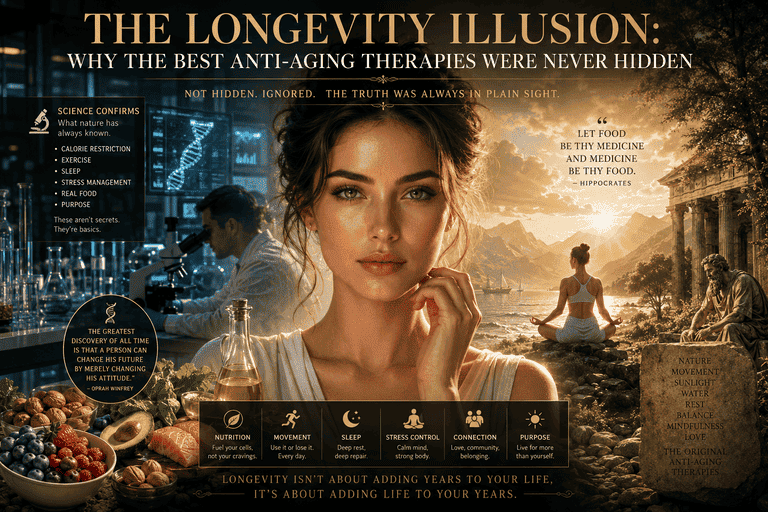
The strongest current strategy for extending healthspan remains structurally simple because the major drivers of physical decline are themselves interconnected. Maintain cardiovascular fitness. Preserve muscle and strength. Reduce metabolic dysfunction. Avoid chronic inactivity. Maintain healthy body composition. Sleep adequately. Manage blood pressure and glucose. Avoid smoking. Treat disease early. Use emerging interventions according to evidence rather than marketing.
Supplements and experimental therapies may eventually become important additions to this foundation, but they cannot compensate for its absence. The problem is psychological as much as scientific. People consistently overvalue novelty and undervalue repetition because novelty feels like progress while discipline feels ordinary.
A decade of exercise rarely produces a dramatic headline, yet the cumulative effect on cardiovascular capacity, muscle mass, metabolic health, and functional independence can be enormous. A single molecule can be purchased immediately. Long-term fitness must be built. That difference explains much of the longevity market.
Conclusion
The future of longevity research may eventually be transformed by cellular reprogramming, regenerative medicine, gene therapies, senolytics, and molecular interventions capable of repairing biological damage more directly than lifestyle modification ever could. That future remains possible. The present evidence, however, supports a more demanding conclusion: the most reliable methods for extending healthspan are already known, and they require consistent application rather than technological novelty.
Exercise does not make aging disappear. Strength training does not guarantee immortality. Fasting does not stop time. Sauna exposure does not replace cardiovascular fitness. Supplements do not substitute for metabolic health.
What these interventions can do, particularly when applied intelligently and consistently, is reduce the probability and delay the onset of the diseases and functional losses that make aging destructive.
The goal is not to defeat death. The goal is to preserve biological capacity for as long as possible, because a longer life has limited value if the final decades are dominated by weakness, metabolic disease, cardiovascular dysfunction, and loss of independence. The longevity industry will continue searching for the breakthrough that changes everything. It should.
But the evidence available today suggests that the foundation of longer, healthier life remains less mysterious than the industry would prefer: sustained movement, preserved strength, cardiovascular fitness, metabolic control, adequate recovery, and disciplined management of known risk factors.