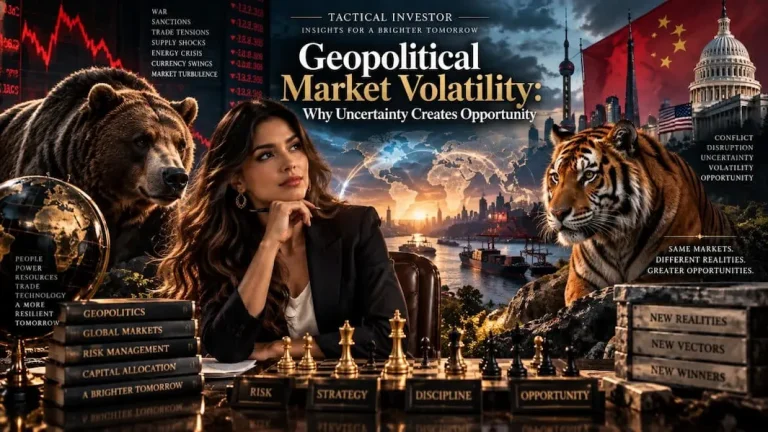

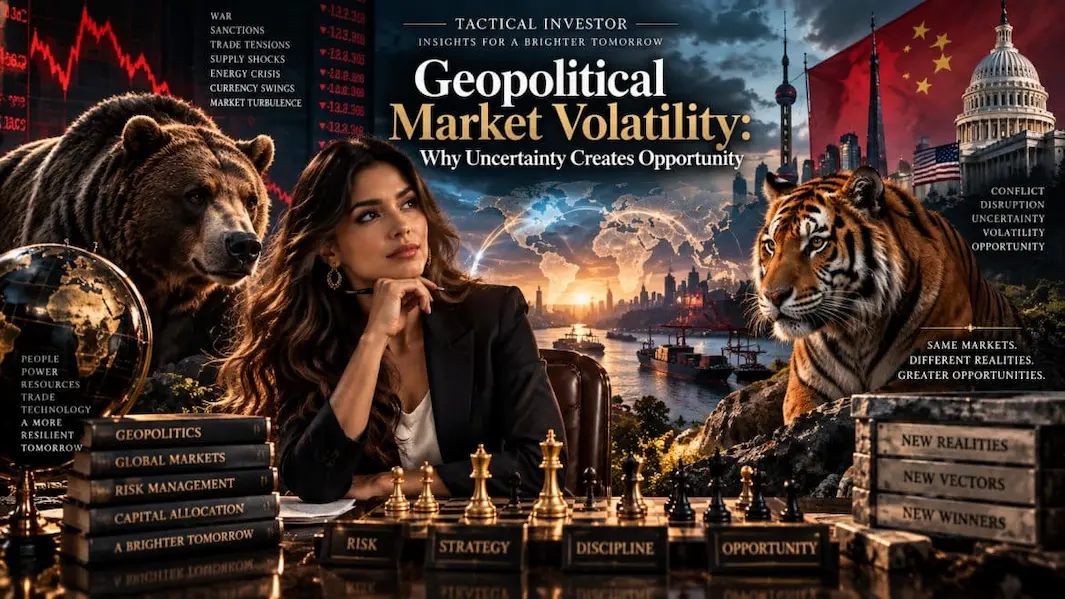
Geopolitical Market Volatility: Why Uncertainty Creates Opportunity
Sept 18, 2026
Geopolitical shocks move markets, but investor positioning, sentiment and momentum determine how far the reaction travels. Markets remain vulnerable to sharp swings as speculative excess from the AI boom and earlier cryptocurrency mania collides with geopolitical uncertainty. Speculation has not disappeared; its intensity shifts, making it dangerous to mistake temporary cooling for a fundamental change in investor behaviour.
Inflation has added another pressure. As purchasing power erodes and asset prices move beyond reach, inactivity can begin to feel riskier than speculation. COVID intensified this dynamic as fiscal intervention, monetary expansion and supply disruptions combined to push inflation more directly into everyday life.
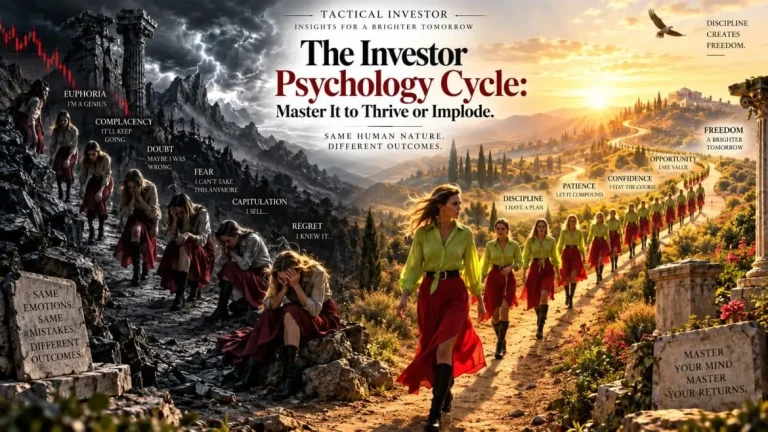
The consequence was psychological as much as economic. Investors who once felt comfortable saving and waiting increasingly feared being left behind, watching cash lose purchasing power while financial assets appeared to move further out of reach. Speculation became, for many, a response not simply to greed but to the fear that standing still meant falling behind. That is the pressure worth tracking. When fear of missing out combines with fear of financial exclusion, narratives can spread rapidly and push investors toward risk before they have developed a sound strategy.
Volatility Is a Condition, Not a Headline
Elevated volatility calls for greater discipline in position sizing and capital allocation. Smaller, staged investments preserve flexibility when direction is unclear, allowing investors to respond to changing conditions rather than committing too much capital to a single interpretation.
Geopolitical events matter because wars, energy disruptions, trade tensions and political instability can affect inflation, capital flows, borrowing costs and economic growth. But the latest headline is not necessarily the underlying cause of a market move; it often acts as a catalyst that exposes weaknesses already present in positioning, valuation or sentiment.
Markets carrying excessive optimism or fragile momentum may react sharply to bad news, while markets already dominated by fear can absorb further negative developments if much of the damage has been priced in. The same event can therefore produce very different outcomes depending on the environment in which it arrives.
The key distinction is between the trigger and the market’s capacity to absorb it. Geopolitical volatility becomes more consequential when disruption persists and begins affecting energy, trade, inflation or capital flows rather than remaining a short-lived shock.
Investors do not need to predict every geopolitical development. They need to understand how the market is positioned before the next shock and whether its response strengthens or weakens the prevailing trend.
Sentiment Is Fragmenting, Not Resolving
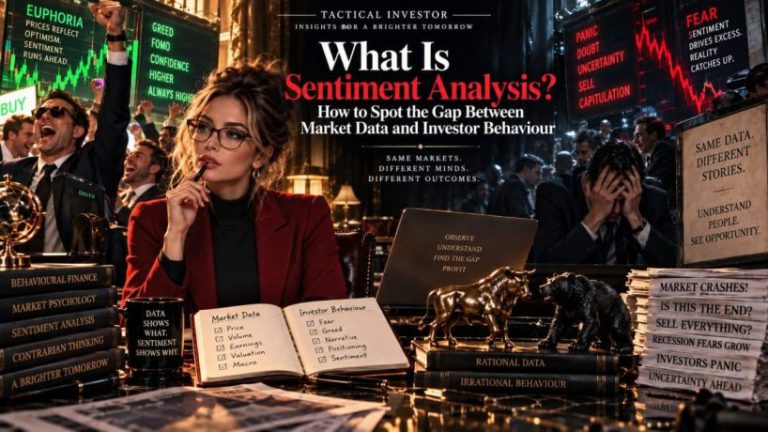
The sentiment readings supplied for this analysis show a market without clear psychological dominance. Bullish sentiment initially stood near 33%, bearish sentiment around 36% and neutral sentiment near 31%; the latest calculations shifted to approximately 34% bullish, 40% bearish and 26% neutral.
Bearish sentiment has increased, but bullish sentiment has also edged higher, while the neutral share has contracted. With historical bullish sentiment averaging roughly 37%, these figures do not indicate overwhelming optimism or the kind of extreme fear that can accompany major market turning points.
The important development is the movement between readings, not the numbers in isolation. A growing bearish share may signal deteriorating confidence, but it does not establish whether selling pressure is accelerating, stabilising or approaching exhaustion.
If fear intensifies alongside weakening prices and deteriorating breadth, risk may be increasing. If bearish sentiment rises while selling pressure begins to fade, the market may be approaching a different phase. Neither outcome should be assumed before price behaviour confirms it.
Mass Psychology Explains the Crowd. Vector Psychology Explains the Movement.
Mass psychology helps explain how fear, optimism and social reinforcement shape collective decisions. Vector psychology adds the dimension of movement by examining whether sentiment is strengthening, weakening, spreading or losing persistence.
A bearish reading of 40% describes an emotional condition, but it does not reveal whether fear is accelerating or fading. That distinction matters because elevated pessimism can accompany the beginning of a decline or emerge late in a selling wave.
The practical questions are straightforward: What direction is capital moving? Is the force intensifying? How broadly is it spreading? Is the trend persisting or beginning to weaken? These questions help distinguish a temporary reaction from a meaningful change in market structure.
A market can continue falling while bearish sentiment is elevated if investors remain under pressure to reduce exposure. It can also begin stabilising while headlines remain negative if selling loses intensity and prices stop responding to bad news in the same way.
Blind contrarianism is no more useful than blind conformity. The crowd can be right about genuine deterioration, so the task is to identify when consensus becomes excessive and whether the force supporting it is still gaining strength.
Why We Remain Flexible
The current environment calls for selectivity rather than rigid predictions. New positions should reflect prevailing volatility, valuation and trend conditions, while profits may need to be taken more readily when momentum weakens or risk rises.
Flexibility means responding to evidence instead of defending an earlier view. Confirmation bias makes investors interpret favourable developments as proof and dismiss contradictory signals, even when the market has already changed direction.
A practical approach is to buy when assets become genuinely attractive, reduce exposure when valuations become excessive and adjust deployment to market conditions. Overbought and oversold readings can help identify stretched conditions, but neither guarantees a reversal.
Technical analysis identifies price conditions, mass psychology explains the crowd’s behaviour, and vector psychology examines whether the force behind that behaviour is strengthening or weakening. Used together, these perspectives provide context; none eliminates uncertainty.
Opportunity Emerges When Perception and Price Diverge
Uncertainty is difficult because it offers neither the clarity of a strong trend nor the emotional exhaustion of a fully developed panic. Competing narratives and fragmented sentiment can keep investors reactive, encouraging them to wait for certainty that markets rarely provide.
That creates two common traps. Some investors refuse to buy until geopolitical risks disappear, potentially missing a recovery that begins while the headlines remain negative; others become so committed to a bearish outlook that they overlook improving market conditions.
The response is not to assume that fear creates a buying opportunity. It is to examine whether valuation, price behaviour, sentiment and selling pressure are aligning in a way that improves the potential reward relative to risk.
If fear accelerates into panic, attractive opportunities may eventually emerge, but the first wave of selling is not automatically the bottom. If optimism expands while momentum and breadth deteriorate, caution becomes more relevant.
Geopolitical instability is likely to remain an important influence through energy security, trade relationships, inflation and shifting capital flows. Its market impact, however, will depend on how those pressures interact with positioning, liquidity and investor expectations.
The headlines will change, and the crowd will react. The investor’s task is to track the movement beneath those reactions, remain selective and avoid allowing uncertainty to dictate decisions. The opportunity is not uncertainty itself. It is the mispricing that can emerge when emotional reactions outrun the underlying change in conditions.

Fresh Perspectives