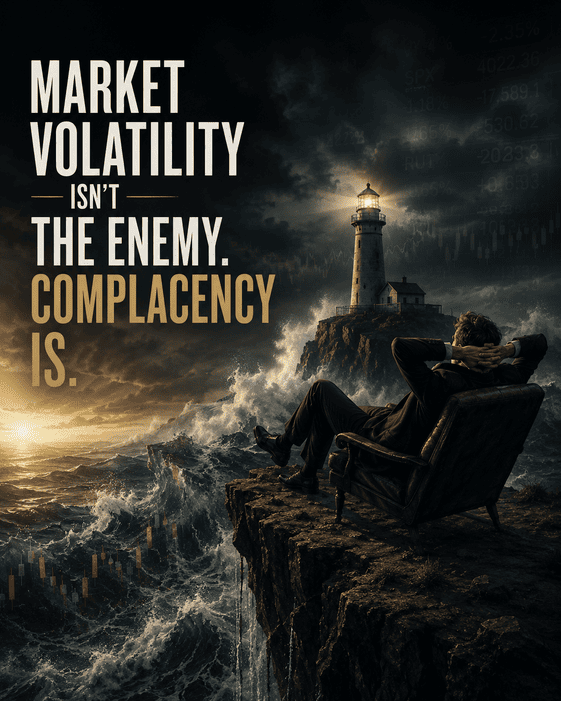
Market Volatility Isn’t the Enemy. Complacency Is
Aug 18, 2026
Every year, investors brace themselves for what many call the market’s “danger season.” August, September and especially October have earned a reputation for producing violent swings, leading many to believe that a crash becomes more likely simply because the calendar says so. History tells a more nuanced story. Markets do not follow fixed seasonal scripts. One year may deliver a turbulent August followed by a relatively quiet autumn, while another remains calm until volatility suddenly erupts in late October and carries into November. The common thread is not the month itself but the tendency for periods of heightened uncertainty to cluster when liquidity, leverage and psychology begin reinforcing one another.
Mark Twain captured this truth more than a century ago in one of the most quoted observations about speculation. In Pudd’nhead Wilson he wrote, “October. This is one of the peculiarly dangerous months to speculate in stocks. The others are July, January, September, April, November, May, March, June, December, August, and February.” The humour endures because the lesson remains timeless. Speculation is dangerous throughout the year, not because of the calendar, but because investors repeatedly convince themselves that risk has somehow disappeared.
Volatility Is a Messenger, Not a Threat
One of the costliest mistakes investors make is treating volatility as synonymous with danger. Price fluctuations merely reflect disagreement, changing expectations and the continuous process of price discovery. They become destructive only when excessive optimism has encouraged investors to employ too much leverage while convincing them that every setback is temporary and every dip deserves to be bought without question. Volatility exposes weakness that already exists beneath the surface. It rarely creates that weakness on its own.
This distinction explains why corrections often become opportunities rather than disasters. Markets periodically need uncertainty to reset excessive confidence, flush out speculative excess and restore more attractive valuations. Investors who view every decline as a catastrophe frequently become forced sellers precisely when expected future returns are improving. Those who understand market psychology recognise that temporary fear often creates the very discounts that long-term wealth is built upon. The enemy is not volatility. The enemy is believing that volatility will never return.
When Psychology Replaces Investment
Recent survey data offers a revealing glimpse into the psychology shaping today’s markets. A Yahoo Finance report found that 64% of young male day traders described themselves as feeling like failures in life, suggesting that speculative trading has become, for many, less an investment discipline than an emotional attempt to escape financial frustration. The survey does not argue that day trading created those feelings. Instead, it suggests that many individuals already experiencing dissatisfaction increasingly view speculative trading as a shortcut to financial security, reinforcing the idea that markets often attract emotion before they attract discipline.
This pattern has appeared repeatedly throughout financial history. During every speculative cycle, markets gradually shift from allocating capital efficiently to offering psychological escape. Investing becomes entertainment, trading becomes identity and profits become validation. Once that transformation begins, participants stop asking whether an investment creates value and instead ask only whether someone else will pay more tomorrow. At that point, psychology has quietly replaced analysis.
Leverage Determines Fragility
The broader financial backdrop deserves equal attention. Corporate borrowing remains near record levels, while leverage among many publicly traded companies remains high by historical standards. Retail participation also remains elevated, creating a system that is increasingly sensitive to changes in liquidity. None of these developments guarantees an imminent collapse because leverage alone rarely bursts a bubble. As long as credit remains available and liquidity continues supporting risk assets, speculation can persist far longer than logic appears to justify.
This is precisely why market timing based solely on valuation has frustrated generations of investors. Expensive markets can become considerably more expensive before psychology finally reaches exhaustion. The critical variable is not whether valuations appear stretched but whether confidence has become so universal that almost nobody remains willing to question it. Every major bubble eventually reaches that point because certainty compounds much faster than caution.
Confidence, Not the Calendar, Signals Real Risk
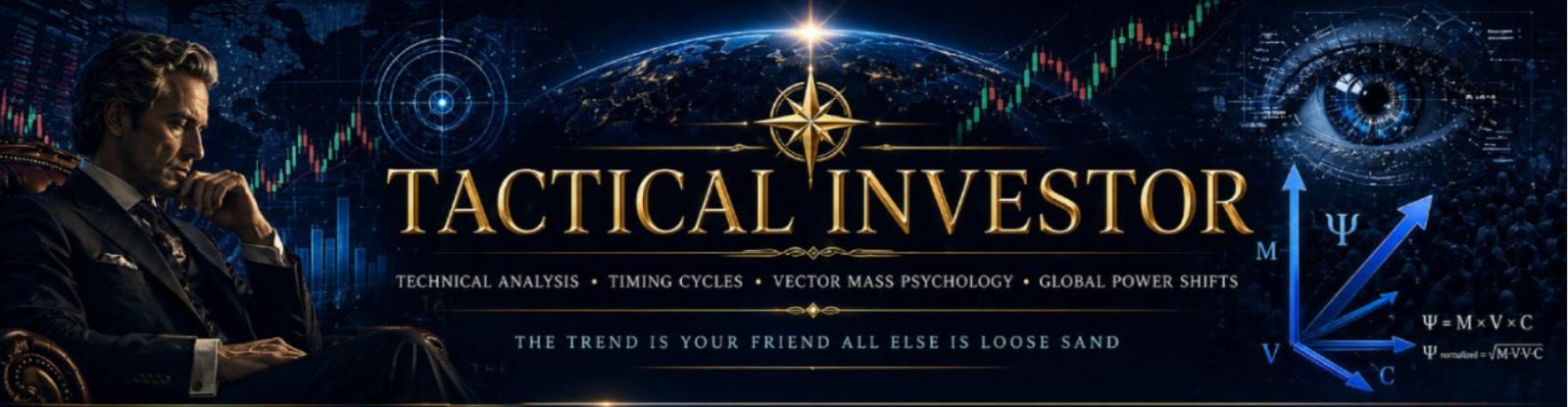
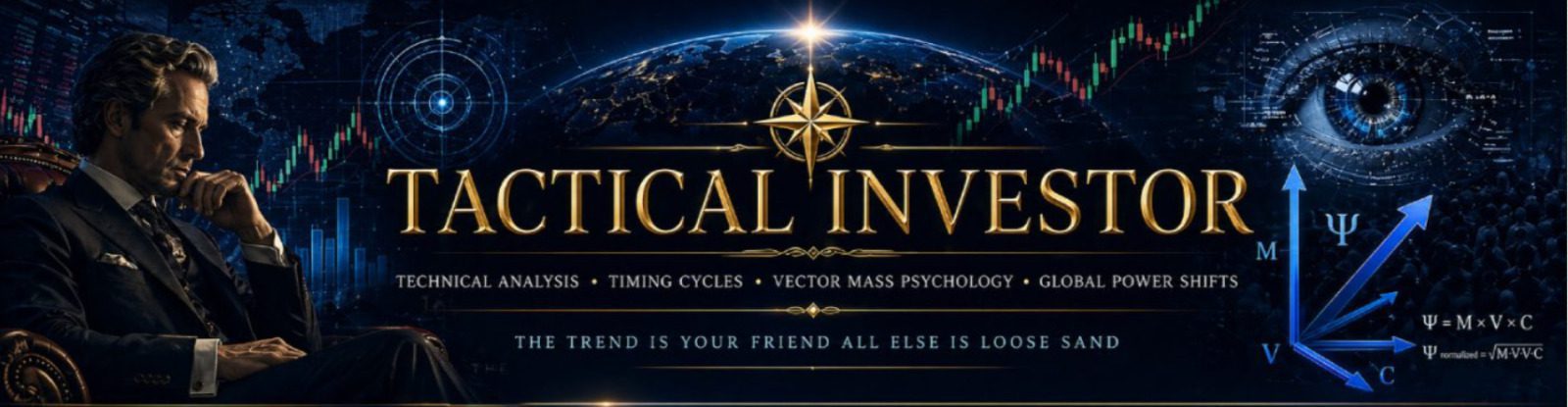
Within our framework, a genuine market crash becomes significantly more probable only when excessive leverage converges with excessive optimism. That means bullish sentiment moving above 60%, the Vector Mass Psychology indicator signalling unusually strong psychological coherence and the Joy Indicator confirming widespread complacency. Until those conditions align, corrections remain considerably more likely than a full-scale collapse because markets still require an emotional catalyst capable of transforming confidence into panic.
The calendar therefore tells us very little. August does not cause crashes, nor does October possess any unique power over financial markets. Human psychology remains the constant. Markets become dangerous when investors stop respecting uncertainty, convince themselves that risk has permanently disappeared and mistake confidence for certainty. History has never punished investors for owning stocks in October. It has consistently punished those who believed the crowd could not possibly be wrong.

Beyond the Headlines