

Contrarian: The Disciplined Warrior Who Turns Psychology Into a Weapon
July 11, 2026
Contrarian Warfare: Vector Power Against the Sleeping Crowd
When the crowd sleeps, it is not resting but surrendering. Consensus sedates judgement, transforming independent thinkers into spectators and spectators into casualties. Safety in numbers is one of the oldest illusions in finance because markets, like power, are never democratic. They reward clarity over conformity and disciplined execution over emotional agreement.
True contrarian thinking is not reflexive opposition but strategic independence. It is psychological warfare conducted through patience, discipline, and emotional detachment rather than noise or rebellion. While the crowd gravitates towards comfort, the contrarian searches for pressure, recognising that beneath every period of apparent calm lies a build-up of sentiment, liquidity, and expectation waiting to resolve itself. The objective is never simply to oppose the herd but to understand its structure, identify its blind spots, and exploit its predictable weaknesses with precision.
Psychological Terrain: Where the Crowd Loses Its Advantage
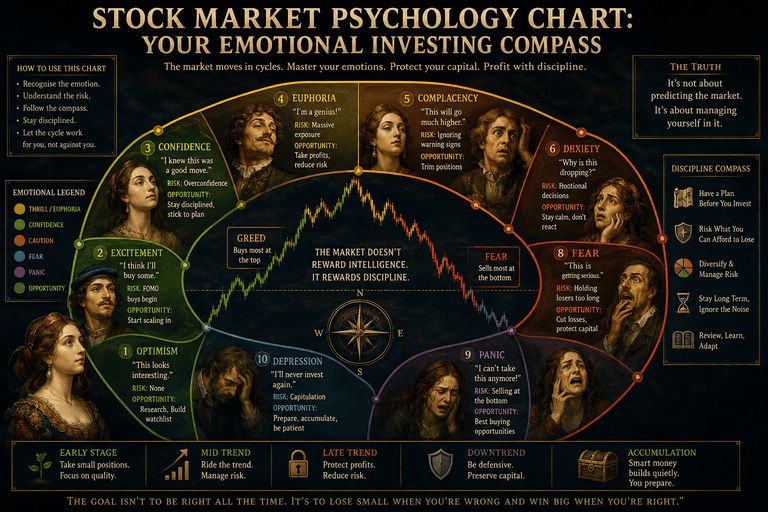
Mass psychology does not evolve nearly as much as technology or financial markets. It simply repeats the same emotional cycles under different names. Optimism expands into euphoria, narratives replace independent analysis, complacency masquerades as stability, and eventually reality forces expectations back towards equilibrium. Market crashes rarely arrive without warning; they represent the final stage of a psychological process that has been developing for months or years.
Contrarians therefore study interpretation rather than price alone. While the crowd assumes rising prices validate the prevailing narrative, disciplined investors examine sentiment, positioning, liquidity, and participation to determine whether conviction remains genuine or has become self-reinforcing. Their battlefield is not price but perception, because fear, greed, and complacency leave measurable footprints long before they appear on a chart. As in military strategy, success depends less on fighting the battle than on occupying the strongest position before it begins.
Breaking the Status Quo Before It Breaks You
The status quo possesses enormous psychological power because familiarity is frequently mistaken for safety. Investors gradually become conditioned to accept elevated valuations, expanding leverage, or deteriorating fundamentals simply because they have persisted long enough to feel normal. Strategic dissent begins by questioning these assumptions rather than accepting consensus as evidence.
Throughout history the same warning signs have repeatedly emerged near major turning points: excessive foreign capital flows, widening policy divergence, currency imbalances, increasingly stretched valuations, and narratives that dismiss risk altogether. The crowd interprets these conditions as confirmation that prosperity will continue indefinitely, while contrarians recognise them as evidence that stability is becoming increasingly fragile. The challenge is never defeating the market itself but resisting the psychological impulse to obey it unquestioningly.
The Vector Mind: Commanders Rather Than Spectators
Most investors observe markets through the narrow lens of price. Contrarians examine the forces driving that price, measuring the direction, strength, and persistence of collective belief. Their questions are fundamentally different. Is demand being driven by genuine capital formation or speculative momentum? Does liquidity reflect durable investment or increasingly desperate positioning? Has optimism become conviction, or has conviction quietly become complacency?
Like experienced military commanders, contrarians avoid unnecessary confrontation. They do not attack strong trends simply because valuations appear expensive, nor do they confuse patience with hesitation. Instead, they wait until momentum begins losing internal strength, allowing emotional excess to exhaust itself before acting. This approach reflects strategic empathy rather than cynicism. Understanding the crowd allows disciplined investors to manoeuvre around its weaknesses instead of becoming trapped within them.
The Crowd’s Greatest Blind Spot: Comfort
Comfort is one of the most dangerous signals in financial markets because it encourages investors to confuse consensus with safety. Every cycle produces reassuring narratives that appear obvious while conditions remain favourable, whether they concern permanent prosperity, transitory inflation, or technological revolutions that supposedly suspend economic reality. These stories reduce scepticism precisely when scepticism is needed most.
Periods marked by record foreign ownership, expanding fiscal deficits, abundant liquidity, and historically rich valuations often appear strongest immediately before they become most vulnerable. Investors interpret these conditions as confirmation that risk has disappeared when, in reality, they often indicate that expectations have become dangerously concentrated. Contrarians therefore treat widespread confidence not as reassurance but as valuable information about positioning and potential fragility.
Historical Echoes Beneath the Noise
Every market cycle insists it is fundamentally different from those that came before, yet the underlying behavioural patterns remain remarkably consistent. The early 1970s, the technology bubble, and today’s market environment all reveal familiar characteristics: concentrated leadership, expanding narratives, heavy capital inflows, and growing confidence that structural risks no longer matter. Although the catalysts differ, the psychological sequence rarely changes.
History suggests that markets seldom collapse because investors suddenly discover new information. More often, they collapse because existing information can no longer support increasingly unrealistic expectations. By the time consensus recognises that conditions have changed, the adjustment is already underway.
Turning Pressure into Position
Mass psychology accumulates pressure in much the same way tectonic plates accumulate stress beneath the earth’s surface. The objective is not to predict the exact moment of release but to identify where emotional strain has become unsustainable. Contrarians therefore monitor sentiment, leverage, liquidity, and positioning, recognising that the greatest opportunities often emerge when confidence becomes indistinguishable from certainty.
This process is neither mystical nor intuitive. It reflects disciplined behavioural analysis combined with patience. Investors who understand emotional compression rarely need extraordinary courage because careful preparation allows them to act decisively once conditions begin to change. Timing remains critical, but patience is the discipline that makes effective timing possible.
The Contrarian Playbook
Successful contrarian investing begins by identifying psychological extremes where valuations, sentiment, and positioning become mutually reinforcing rather than independently justified. At such moments, confidence itself becomes a warning signal. The next step is separating narrative from market structure by determining whether liquidity, earnings, and credit conditions continue supporting price or whether expectations have detached from underlying reality. Only after these conditions align does disciplined capital deployment become appropriate.
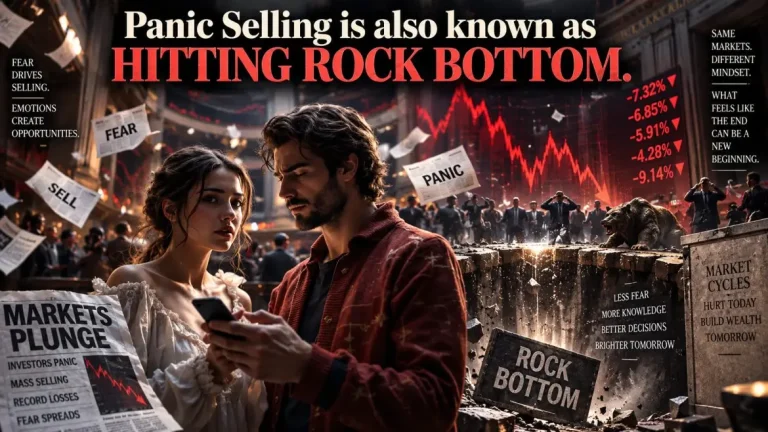
Execution matters as much as analysis. Positions should be built incrementally, risk managed continuously, and conviction measured against evidence rather than emotion. The objective is not to predict every turning point but to preserve asymmetric opportunities while limiting unnecessary exposure. The crowd’s greatest mistakes are consistently the same: mistaking temporary corrections for lasting structural failures and confusing prolonged calm with genuine stability. Contrarians avoid both errors because they understand that markets often become most dangerous when they appear least threatening.
Contrarian Investing: Secrets Revealed: Uncover Profitable Opportunities Today
Discipline and Patience: The Twin Foundations
Discipline filters noise while patience allows opportunities to mature. Together they create the foundation upon which successful contrarian investing rests. Most participants chase immediacy because action feels productive, whereas disciplined investors recognise that inactivity is often the highest-return decision available.
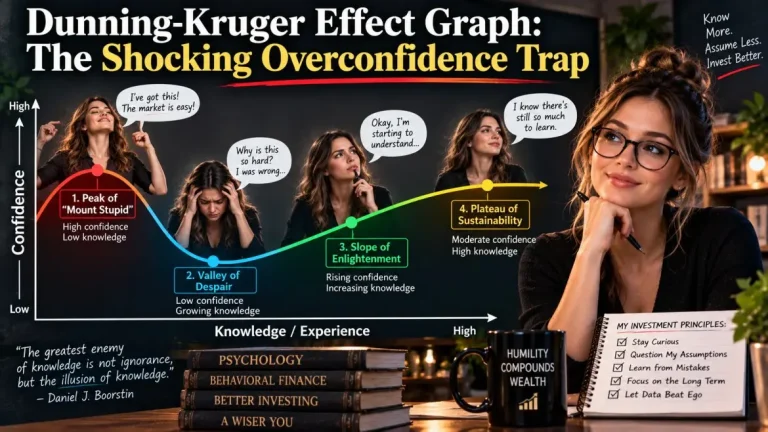
Standing apart from consensus is psychologically demanding because independent judgement inevitably attracts criticism during periods of widespread optimism. Contrarians succeed not because they lack fear but because they govern it, allowing evidence rather than emotion to determine both conviction and timing. History repeatedly demonstrates that premature action destroys more capital than correct analysis ever saves.
Strategic Scenarios
No disciplined investor relies upon a single forecast. Instead, multiple outcomes are evaluated simultaneously. Mean reversion may gradually reduce foreign ownership, compress valuations, and allow liquidity to cushion the adjustment. A more severe stress scenario could combine weakening margins, declining capital flows, and deteriorating confidence into a much sharper correction. Alternatively, continued policy support and abundant liquidity may extend the cycle despite deteriorating fundamentals, producing slower but equally persistent erosion beneath the surface.
The disciplined contrarian prepares financially for every plausible outcome while remaining emotionally prepared for the most severe. Markets reward flexibility far more consistently than certainty.
The Edge of Disciplined Dissent
Contrarian investing is neither heroic nor inherently pessimistic. It demands emotional independence, analytical precision, and the patience to wait while others chase increasingly fragile narratives. Every major cycle ultimately follows a familiar progression in which concentration produces complacency, complacency breeds vulnerability, and vulnerability eventually becomes decline. Foreign capital that once amplified gains frequently accelerates losses once sentiment reverses, while central banks may delay adjustment but cannot permanently eliminate economic gravity.
Today’s market again displays many of the characteristics that have preceded earlier turning points. Elevated valuations, concentrated positioning, abundant liquidity, and widespread confidence create impressive momentum but also increasing fragility. Whether the adjustment begins tomorrow or much later matters less than recognising the psychological conditions already in place.
Contrarian thinking is therefore not pessimism but disciplined realism. While the crowd reacts to headlines and price movements, contrarians monitor the emotional pressure quietly building beneath the surface. When volatility finally returns, they are neither surprised nor paralysed because they prepared long before consensus recognised the risks. They understand that successful investing is not about predicting every market move but about remaining psychologically independent when collective judgement begins to fail. That independence, consistently applied, becomes their greatest competitive advantage.

Other articles of Interest