Fear and Euphoria: The Two Emotions That Quietly Steal Investor Wealth
Aug 4, 2026
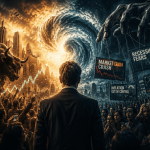
Markets rarely defeat investors with complexity. They defeat them with timing, and timing turns out not to be an intelligence problem nearly as often as people assume. It is an emotional one, subtle enough that participants think they are reasoning when they are actually reacting.
Every major loss pattern repeats the same structure. People sell only after pain becomes intolerable, and they buy only after opportunity feels safe. The return exists between those two moments, and the crowd reliably chooses the opposite side because emotional pressure feels like information.
Investors believe they are evaluating price, yet they are responding to internal discomfort. Fear compresses time and demands action now, while euphoria stretches time and promises safety will continue. Both quietly remove patience.
This is not a personality trait. It is a group behaviour. Collective perception moves first and fundamentals become visible later.
The Feedback Loop That Breaks Judgment
Fear and euphoria are not just emotions. They are distortions in feedback. Rising prices feel like proof of correctness. Falling prices feel like proof of danger.
The market becomes a mirror. Investors think they are learning from price, yet price amplifies their existing belief. Optimism becomes stronger during advances and pessimism becomes stronger during declines, even if valuation moves in the opposite direction.
Human perception tracks direction more than magnitude. A steady rise feels safe even when risk grows quietly underneath, while a steady decline feels fatal even when risk is already shrinking. Once that shift occurs, analysis fades and the mind stops weighing evidence. It begins defending a conclusion it already reached emotionally.
Why Crowd Behaviour Cannot Be Modelled
Investors often believe market timing requires predicting belief, but belief inside crowds does not follow stable parameters. Confidence expands slowly and collapses suddenly, often before observers realize the shift occurred.
What people call irrational behaviour is certainty without correction. Instead of asking whether they are right, participants search for evidence that supports the view they already hold. Contradictory information becomes invisible.
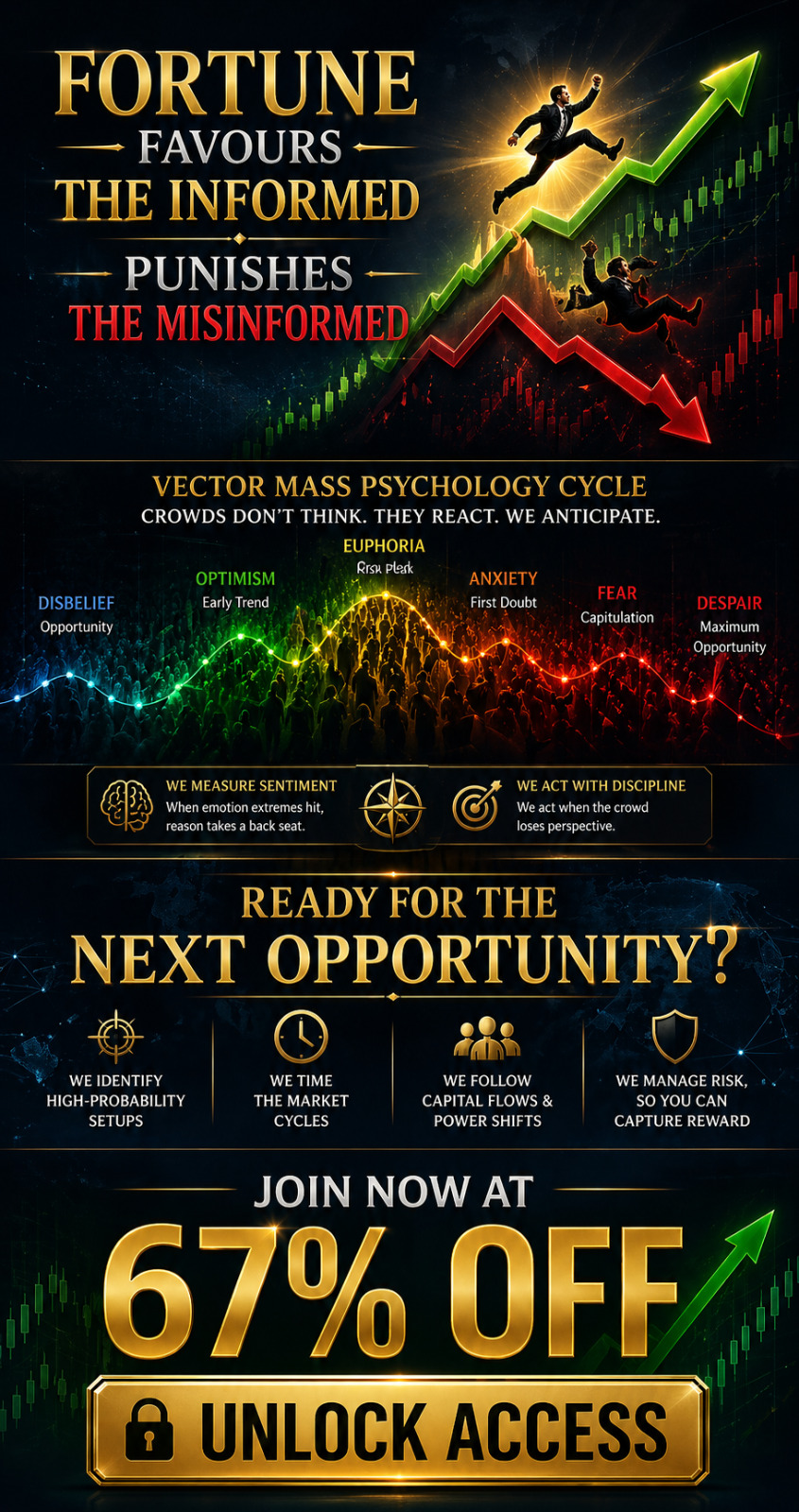
You cannot forecast when optimism turns into mania or pessimism into despair. The transition happens internally before it appears externally, but behaviour leaves traces. Fear shows up as urgent selling, high volume, and liquidation at any available price. Euphoria appears as leverage expansion, valuation indifference, and dismissal of risk.
Timing therefore depends less on predicting psychology and more on observing pressure.
Dot-Com 2000: Euphoria Removes Doubt
During 1999 technology stocks rose almost daily and investors began believing the internet had eliminated economic cycles. Companies without profits reached valuations above established industrial firms.
The key signal was not valuation itself. The signal was the disappearance of doubt. Analysts discussed potential instead of earnings, and investors stopped asking what a business produced. They began watching how quickly prices advanced.
At that moment the feedback loop closed. Participants evaluated other investors’ enthusiasm rather than the asset.
The Nasdaq peaked in March 2000 and lost roughly 78 percent over the following two years. Most investors did not sell near the top. They sold after declines, once fear replaced excitement. They entered late and exited late.
Euphoria invited them in and fear pushed them out.
2008 Financial Crisis: Fear Removes Opportunity
The opposite occurred in 2008. Banks failed, credit markets froze, and expectations shifted from concern to certainty that the system might not recover.
The market bottomed in March 2009 while news remained overwhelmingly negative. Prices began rising months before economic data improved. This pattern appears repeatedly. Markets turn when emotional pressure peaks, not when information becomes clear.
Investors waited for confirmation and clarity arrived only after the rally was well underway. Many returned to equities years later at significantly higher prices. Fear eliminated patience, even though patience was precisely what the environment rewarded.
2020 Pandemic: A Compressed Cycle
The pandemic compressed the entire emotional cycle into weeks. Markets fell more than thirty percent rapidly and liquidation replaced analysis almost instantly. Stabilization began while economic conditions worsened. Unemployment rose and lockdowns expanded, yet prices recovered quickly. Investors who waited for reassuring news missed the move entirely, while those willing to act amid discomfort benefited.
The lesson was unusually visible. Extreme emotion produces mispricing because participants react to recent experience rather than future probability. Opportunity appeared precisely when participation felt irresponsible.
Meme Trading and the AI Surge: Euphoria Returns
In 2021 speculative trading surged and groups bought companies regardless of fundamentals. Profitability mattered less than price direction. The defining feature was certainty rather than enthusiasm, a belief that collective participation prevented loss.
A similar pattern appeared in later technology enthusiasm surrounding artificial intelligence. Some companies deserved higher valuations, yet many secondary firms rose primarily because expectations expanded beyond realistic timelines.
Momentum replaced evaluation. Investors bought because prices were rising, not because earnings justified the move. Late buyers followed emotional comfort rather than opportunity. When enthusiasm faded, prices adjusted and those late participants absorbed losses.
The Rule Investors Struggle to Follow
Markets reward observation more than prediction. The task is not forecasting belief but recognizing extremes. Buy when sellers must sell and sell when buyers stop caring about price. Fear creates forced sellers. Euphoria creates careless buyers, and both conditions appear in behaviour before they appear in explanation. The difficulty is psychological. Acting during fear feels reckless and acting during euphoria feels cautious, yet experience shows the opposite tends to be true.
Mass psychology does not disappear. Each cycle uses new narratives, new sectors, and new justifications, yet the emotional pattern remains constant. Investors lose not because the rule is complex but because it contradicts instinct. The crowd buys relief and sells anxiety.
Wealth quietly transfers from emotional certainty to patient observation, and it usually happens at the moment when people feel most confident about their decision.