
Technological Leadership vs Industrial Leadership
Jun 7, 2026
One of the most persistent mistakes investors make is assuming technological leadership and industrial leadership are the same thing. Sometimes they overlap. Often they don’t.
The Western discussion surrounding China still tends to focus on whether Chinese companies can match the most advanced products produced by the United States, Taiwan, or Europe. The debate almost always revolves around benchmarks, transistor sizes, model rankings, and frontier capabilities. Those measurements matter, but they are not always the measurements that determine who wins.
History is littered with examples where the best technology lost to the better system.
The solar industry provides one example. Electric vehicles provide another. Battery manufacturing offers a third. In each case the initial assumption was that China needed to replicate the incumbent leader’s approach exactly. Instead, Chinese firms focused on scale, cost, manufacturing depth, supply-chain integration, and deployment. The result was not always immediate technological superiority. The result was often market dominance.
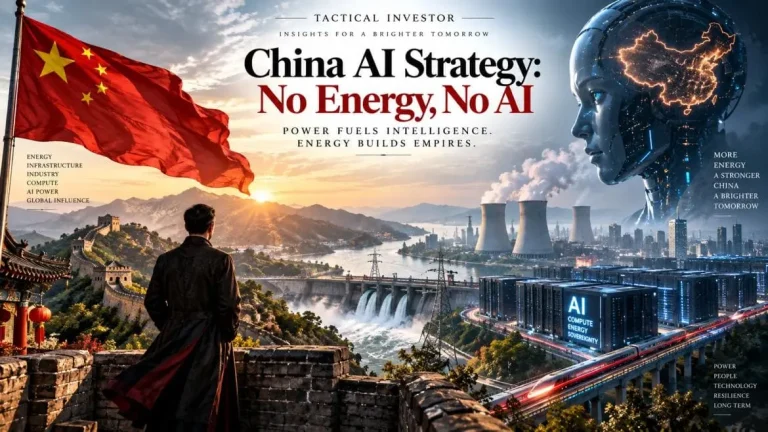
That distinction matters because the global AI race increasingly resembles an industrial competition rather than a pure technology competition.
Why Good Enough Technology Wins
Most countries do not need the absolute best AI model available. They need affordable AI. They need infrastructure. They need deployment. They need systems that work reliably without requiring Silicon Valley budgets. A model delivering ninety-seven percent of frontier performance at a significantly lower cost becomes extraordinarily competitive once budgets, sovereignty concerns, and deployment realities enter the equation.
This is where many analysts continue making the same mistake. They assume the world behaves like Silicon Valley. It doesn’t.
The majority of countries care less about benchmark supremacy than they do about affordability, local control, and implementation costs. The same principle transformed manufacturing, smartphones, solar panels, and electric vehicles. The market frequently chooses good enough once the performance gap narrows and the price gap widens.
Distribution Matters More Than Invention Alone
That is why China’s export data deserves more attention than many of the headline technology announcements. China’s exports reached record levels recently, with integrated-circuit exports surging and data-processing equipment exports posting enormous growth rates. Those numbers reveal something more important than trade. They reveal distribution.
Technology leadership is not determined solely by who invents first. It is also determined by who distributes fastest and widest.
The country that places hardware, networks, cloud infrastructure, software platforms, and AI ecosystems throughout emerging markets gains influence that compounds over time. Every deployment creates relationships. Every relationship creates dependencies. Every dependency creates future demand.
Two Different AI Competition Models
The United States still possesses extraordinary advantages. Frontier AI research remains concentrated there. NVIDIA dominates the highest end of the accelerator market. American software ecosystems remain deeply embedded across global technology infrastructure. Venture capital remains unmatched.
Those advantages are real and should not be dismissed.
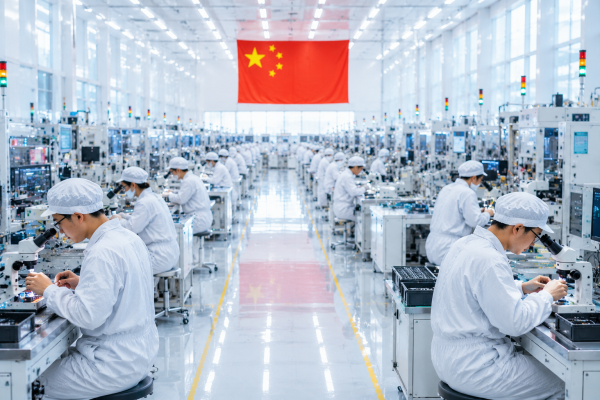
But China’s advantages are equally real. Manufacturing depth. Supply-chain integration. Industrial scale. A massive engineering workforce. State-backed capital. A growing ability to connect hardware, software, infrastructure, and deployment into a single ecosystem.
Viewed this way, the competition increasingly resembles two different optimization strategies. The American model continues emphasizing frontier leadership. The Chinese model increasingly emphasizes scale, affordability, integration, and deployment.
Scalable Systems May Define the Winner
The developing world may ultimately become the most important battlefield because that is where economics often outweigh prestige. Most governments do not wake up asking whether they possess the world’s most advanced AI model. They ask whether they can afford the infrastructure, whether it works reliably, and whether they control it.
That reality is becoming more important as open-source AI continues improving. Open-source systems lower switching costs, weaken platform lock-in, and allow nations greater control over data and deployment. As those capabilities improve, the gap between frontier systems and practical systems becomes increasingly important.
This is why Huawei’s broader strategy deserves attention even if some of its technical claims remain unproven. The real story may not be whether China produces the single best chip. The real story may be whether China can combine chips, networks, cloud infrastructure, AI models, developer tools, and deployment economics into a coherent system that much of the world finds attractive.
History suggests industries are rarely transformed by perfect products. They are transformed by scalable systems.
And scalable systems have a habit of spreading much faster than their critics expect.