
May 15, 2026
There’s a strange assumption baked into modern investing: that more information always leads to better decisions. The financial news industry depends on it. CNBC depends on it. Your favorite finance podcast definitely depends on it. But sit with the idea for a few minutes and it falls apart. Information overload isn’t just unhelpful — it actively damages most investors’ results. The data is overwhelming. The studies are consistent. And yet here we all are, refreshing the same five tabs at 1 a.m., looking for clarity in a stream that was never built to provide it.
Today, May 15, 2026, with markets digesting another round of central bank theatrics, fresh AI-related volatility, and approximately ten thousand “this changes everything” headlines this month alone, it’s a good moment to talk about a skill that almost nobody teaches: when to ignore financial news. Not how to avoid it forever. Not how to become some kind of media-fasting monk. Just how to recognize the moments when the news is hurting you more than helping you — and what to do about it.
What Financial News Is Actually Selling
Let’s start with an unromantic observation. Financial news is not in the business of making you a better investor. It’s in the business of holding your attention long enough to monetize it. Those are very different jobs, and they often pull in opposite directions.
Good investing requires patience, boredom, long time horizons, and the willingness to do nothing for extended periods. Good media requires urgency, drama, fresh angles, and the implication that something important is happening right now. Notice the conflict? The format itself is hostile to the behavior that makes investors successful. It’s not malicious. It’s just the business model. Recognizing it is the first step toward filtering it.
The Three Types of Financial News (and Which to Ignore)
Not all news is equal. A simple framework:
| Type | What It Is | What to Do |
|---|---|---|
| Signal | Hard data: earnings, filings, central bank decisions, economic releases | Read directly from the source. Skip the commentary. |
| Context | Long-form analysis from credible thinkers with skin in the game | Read sparingly. Once a week is plenty. |
| Noise | Hot takes, breaking-news alerts, panel debates, “what this means” headlines | Ignore aggressively. Mute, unsubscribe, scroll past. |
The trouble is that 80 percent of what most retail investors consume falls in the third category. The signal is buried. The context is rare. The noise is everywhere — because noise is cheap to produce, easy to share, and emotionally engaging in a way that genuine analysis simply isn’t.
When to Hit the Mute Button
Some moments are louder than others. These are the times when ignoring financial news isn’t just helpful — it’s a strategic edge:
- During crashes. The worst time to listen to financial media is when stocks are falling fast. Coverage becomes apocalyptic. Pundits compete to sound the most alarmed. Decisions made under that emotional pressure are almost always wrong.
- During euphoria. The opposite extreme is equally dangerous. When every guest on every show is celebrating, the social pressure to add risk becomes overwhelming. Mute it.
- The day before, of, and after major announcements. Earnings, Fed decisions, jobs reports — the noise around these events is legendary, and almost none of it improves outcomes. The data itself is fine. The reaction industry around the data is poison.
- When you’re already anxious. If your hand hovers over the sell button while you scroll, stop scrolling. You’re not gathering information. You’re seeking permission to panic.
- When a position is moving sharply against you. The temptation to read every take on a falling stock is huge. The value of doing so is near zero. The decisions made in that mode are almost always bad ones.
- When you don’t have a plan. News only helps investors who already know what they’re doing. For everyone else, it just adds confusion to chaos.
The Auditory Pareidolia Problem
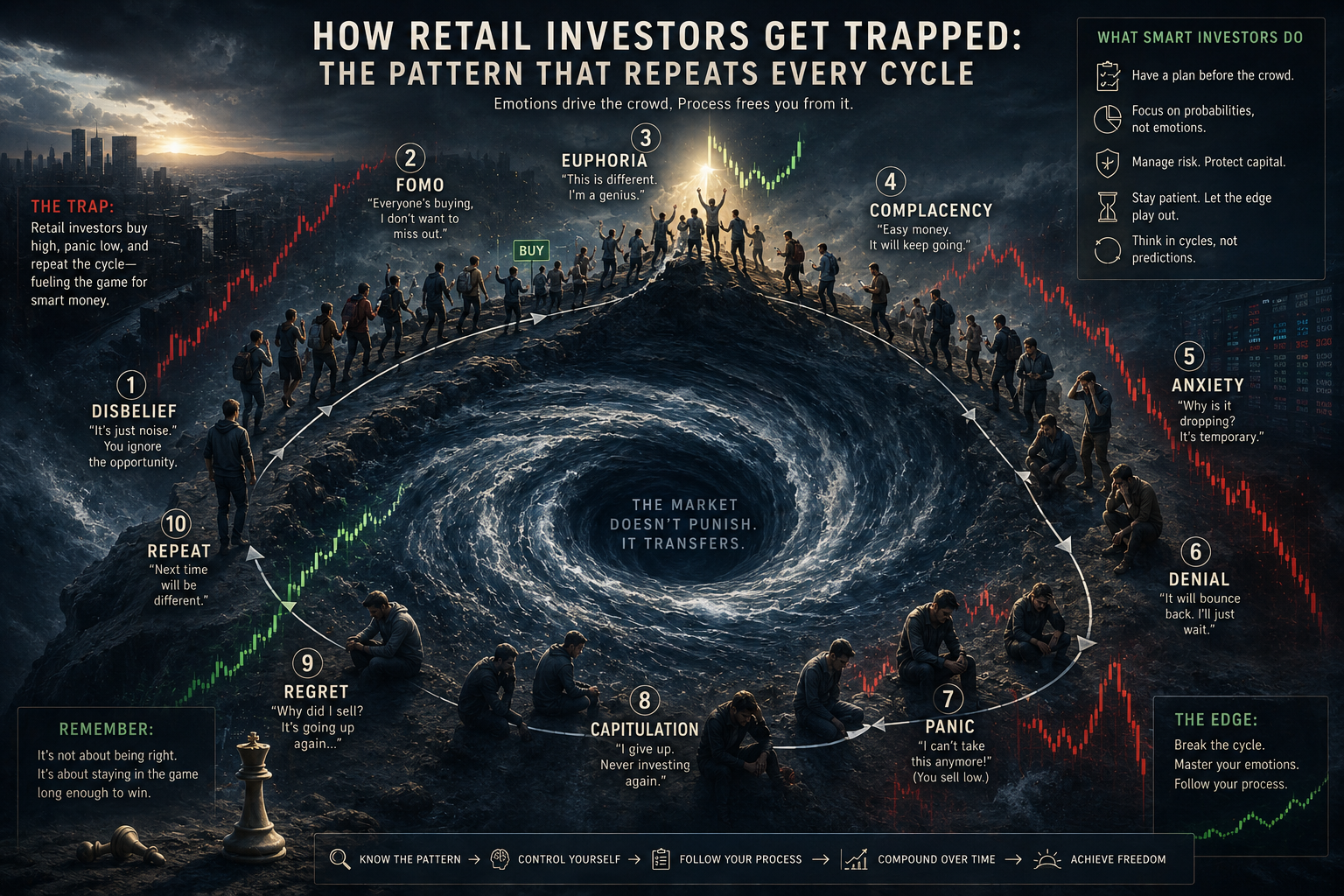
Here’s the deeper issue. Most investors don’t read financial news to learn. They read it to feel — to find confirmation of what they already believe. This is auditory pareidolia in action. You hear what you want to hear. You see headlines that match your position. You filter the rest. The more news you consume, the more elaborate your confirmation becomes — until your “research” is really just a library of arguments for the trade you already made.
This is why heavy news consumers often perform worse than casual ones. They mistake volume for insight. They mistake familiarity with a story for understanding it. And they end up making decisions based on a curated reflection of their own biases, dressed up as objective analysis. The cure isn’t more news. It’s less.
How the Crowd Uses News Against Itself
Markets are crowds, and crowds use news to synchronize. When a headline drops, it doesn’t just inform — it coordinates. Suddenly, millions of people are reading the same words, drawing the same conclusions, and reaching for the same buttons. That synchronization is what creates the violent moves around news events. It’s not the information itself. It’s the simultaneous reaction to it.
The contrarian advantage isn’t being smarter than the crowd. It’s not synchronizing with it. While everyone else is reacting to the headline of the hour, the disciplined investor is doing the unglamorous work of reading the actual filing, checking the actual data, and ignoring the panel of strangers shouting about it on television. The edge isn’t in better information. It’s in better filtration.
How to Build a News Diet That Doesn’t Hurt You
You don’t need to disconnect entirely. You just need to rebuild the relationship with intention. A few rules that age well:
- Read sources, not summaries. The original earnings release is shorter and more honest than the article about it. Same for Fed statements, economic data, and corporate filings.
- Schedule your news consumption. Twice a day, fifteen minutes each. That’s enough. Real-time alerts are almost always net negative.
- Unfollow aggressively. If a source consistently makes you feel anxious or euphoric without making you smarter, it’s not informing you. It’s manipulating you.
- Prefer weekly to daily, monthly to weekly. The longer the time horizon of the analysis, the lower the noise-to-signal ratio.
- Keep a “things I read that turned out wrong” file. One month of this exercise will permanently change how you consume financial media.
- When in doubt, do nothing. The cost of skipping a piece of news is almost always lower than the cost of reacting to it badly.
The Investors Who Get This Right
Notice something about the most successful long-term investors of the last fifty years. Almost none of them are heavy news consumers. They read filings. They study businesses. They think in years and decades. They don’t have CNBC playing in the background. The ones who do are usually selling something — a book, a service, a brand. The ones quietly compounding capital have, in nearly every case, deliberately reduced their exposure to financial media, not increased it.
That should tell you something. The people doing the actual job have figured out that the noise isn’t the job. The noise is what gets in the way of the job.
The Bottom Line
Knowing when to ignore financial news is one of the most underrated skills in investing. Not because news is bad — but because most of what’s labeled news is really entertainment with a financial costume on. The difference between investors who compound calmly and investors who churn through their accounts often comes down to this single habit: knowing when to put the phone down.
The market doesn’t reward you for being informed. It rewards you for being correct, patient, and emotionally controlled. Sometimes those goals require more information. Far more often, they require less. The mute button is free. It’s also, quietly, one of the most profitable tools ever invented.
So the next time you feel that itch to refresh the feed, ask yourself one honest question: am I about to learn something, or am I about to feel something? If it’s the second one, close the tab. Your portfolio will thank you in about six months.