
Peter Lynch, the Crowd, and the Quiet Mind That Beats Them Both
Oct 27, 2025
Peter Lynch, the legendary fund manager of Fidelity Investments’ Magellan Fund, has left an indelible mark on the investment world. His unorthodox yet highly effective approach to stock picking, encapsulated in his mantra “invest in what you know,” has yielded some of the most remarkable returns in financial history. Lynch’s strategy, however, is more than just a guide to buying familiar stocks; it is a masterclass in leveraging mass psychology to identify and capitalise on undervalued opportunities. This essay will delve into Lynch’s strategy, explore the benefits of combining it with Mass Psychology and technical analysis, and provide actionable insights backed by complex data and real-world examples.
Overview of Peter Lynch’s Investment Strategy
Peter Lynch’s philosophy is deceptively simple: invest in companies you understand and have confidence in. He famously claimed that the average investor, armed with common sense and a keen eye for detail, could outperform professional analysts. Lynch’s approach emphasises fundamental analysis, particularly the company’s growth prospects, management quality, and competitive advantages.
One of Lynch’s most celebrated principles is the “Tenbagger”—a stock that returns ten times its initial investment. Lynch’s tenure at the Magellan Fund from 1977 to 1990 saw the fund grow from $18 million to $14 billion, achieving an average annual return of 29%. This outperformance was not a result of market timing or complex quantitative models; it was grounded in a deep understanding of companies and the ability to identify mispricings driven by market sentiment.
Ten Rules from a Man Who Watched the Market Forget It Had a Brain
- Invest in What You Know: Stick to industries and companies you understand; firsthand knowledge gives you an edge over Wall Street analysts.
- Seek Unnoticed Opportunities:– Companies without earnings estimates are often undervalued and overlooked.
- Find Hidden Gems: Stocks with little analyst coverage can offer significant upside potential.
- Bet on Under-the-Radar Winners – Lesser-known yet fundamentally strong companies often yield the biggest gains.
- Prioritise Steady Earnings Growth – Companies with consistent, predictable earnings are more likely to outperform.
- Avoid Overhyped Stocks: Hot stocks in trendy sectors are usually overpriced and risky.
- Think Long-Term: The most significant rewards come from holding onto strong performers over time.
- Don’t Ignore Dividends: Dividend-paying stocks offer stability and boost overall returns.
- Diversify Smartly: Spread risk but avoid excessive diversification that weakens returns.
- Be a Contrarian: Buy when fear dominates, sell when optimism peaks.
Lynch never pretended to be a prophet. He played a simpler game. He paid attention to the world in front of his face. He stayed inside his circle of competence because he knew that familiarity is the cleanest advantage an investor can get in a world addicted to noise. This is why he searched for unnoticed companies with no analyst coverage. The market ignores them until it suddenly remembers, and that moment of recognition can turn a patient investor into a winner.
He loved steady earnings because consistency forces the crowd to confront reality. He avoided overhyped nonsense because popularity distorts price. He held his winners long enough for compounding to do its quiet work. He respected dividends because they anchor value during storms. He diversified intelligently but never scattered capital like confetti. Most of all, he understood the precise moment to be a contrarian. He bought when fear poisoned the air and sold when optimism turned into intoxication.
This is the skeleton of his philosophy. The flesh is mass psychology.

Why Lynch’s Edge Worked: He Watched the Crowd, Not the Predictions
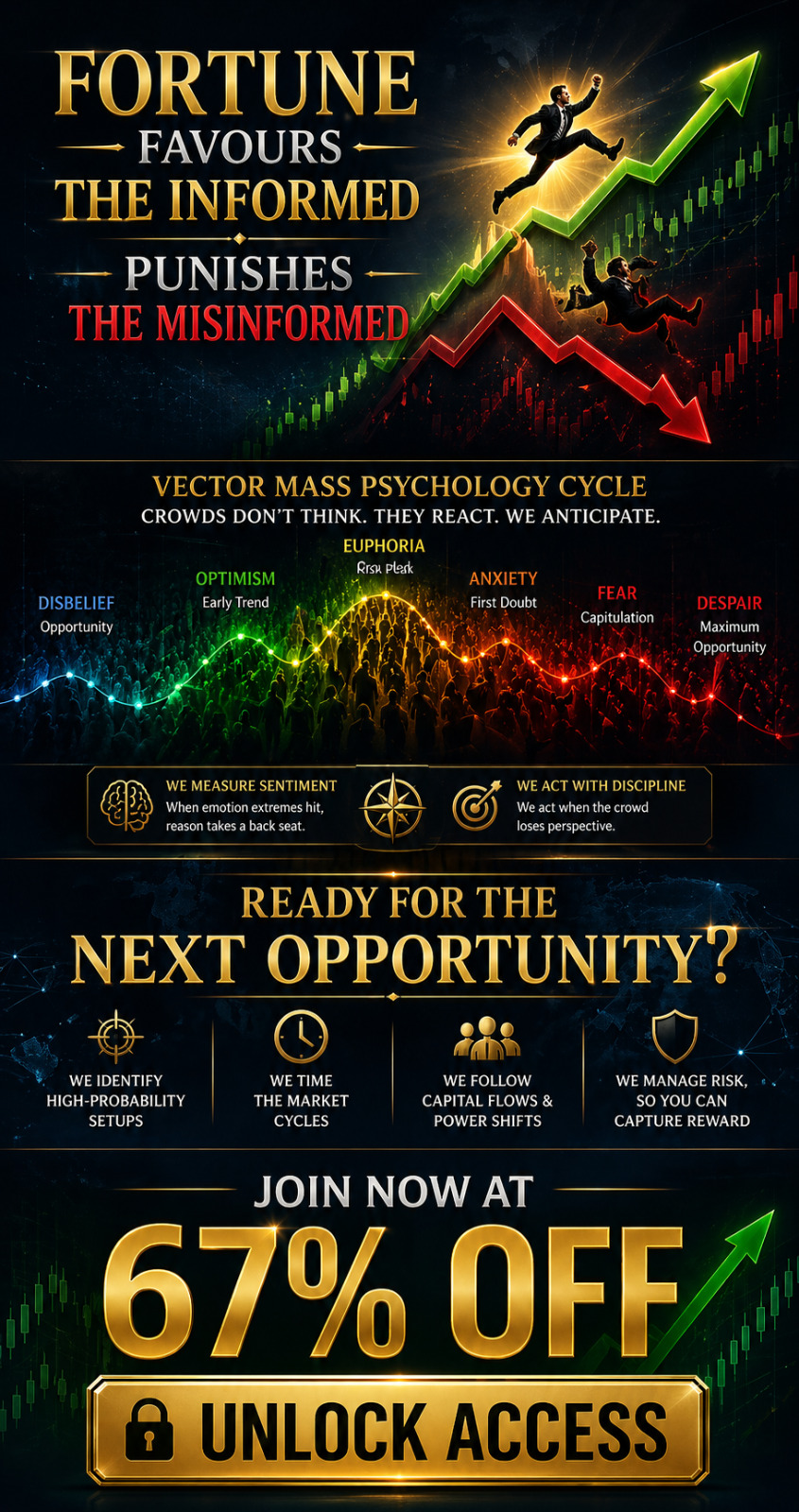
Mass psychology is the engine behind every irrational move in a market that pretends to be rational. Lynch understood the herd long before behavioral finance dressed it up with academic language. He knew that crowds are emotional reactors, not thinkers. Human nature swings between euphoria and terror with boring predictability. That predictability is the goldmine.
Take the 1987 collapse. Investors panicked so hard the Dow dropped twenty-two per cent in a single day. People dumped blue chips because the mood told them to, not because the businesses changed. Lynch stepped in while the floor was still shaking. He bought Coca-Cola and Johnson and Johnson at prices that insulted their value. The crowd fled. He collected.
Mass psychology is not subtle. It screams. Most people refuse to listen because they are too busy screaming back.
Seeing What Others Miss: The Dunkin Example
Lynch excelled at spotting opportunity in everyday life. He watched people line up for Dunkin’ Doughnuts in the early eighties and realised the market had not recognised what the customers already knew. Emotional contagion had not yet begun. The herd had not discovered the story. He bought before the psychology shifted. This is the essence of unnoticed value. The world knows something is good before Wall Street acknowledges it. Lynch simply listened to the world first.
Contrarian Thinking: The Discipline to Walk Away from the Noise
Lynch lived the spirit behind Jonathan Swift’s line that falsehood travels faster than truth. Markets amplify that dynamic through rumour, fear, and herd thinking. When Home Depot faced criticism for expanding aggressively, sentiment turned sour despite strong fundamentals. The crowd projected failure because the headlines told them to. Lynch ignored the fear, read the business, and bought into the pessimism. When the company proved itself, sentiment flipped and price followed.
Once again, mass psychology provided the entry point. Fundamentals provided the conviction.
Adding Technical Analysis: Timing the Crowd’s Panic and Euphoria
Lynch did not rely on TA, but his strategy becomes even sharper when you add fundamental technical insight. Psychology leaves footprints. RSI readings below thirty expose oversold fear. Volume spikes expose emotional pressure. Retracements expose hesitation. TA gives the contrarian a clock.
During the 2008 crash, Bank of America’s RSI dropped far below thirty while the business model remained intact. Lynch’s framework would have seen value. TA added timing. Over four years, from three dollars to twenty, the combined method paid off.

How Chart Patterns Strengthen Lynch’s Edge
Patterns as Emotional Maps
Chart patterns are not shapes created by math. They are the market’s mood painted in real time. A double bottom shows exhaustion pretending to stay strong. A head-and-shoulders top shows confidence, fraying at the edges. An ascending triangle shows pressure building like a crowd gathering behind a locked door. Lynch valued anything that revealed emotional extremes, and patterns do precisely that. They show when panic hits its ceiling or when greed reaches its saturation point.
Look at the early two thousand. The tech bubble collapsed, and even healthy companies were dragged into the graves dug by hype and hysteria. Apple was one of them. The chart carved out a clean double bottom while the business was quietly preparing its next wave of products. Selling pressure dried up. Sentiment flattened. The pattern signalled that the herd had finished panicking. Fundamentals said the company was absurdly cheap. That combination offered a long runway for anyone disciplined enough to trust both sides of the equation. The rise from ten dollars to more than seven hundred was the market punishing those who ignored both the psychology and the structure.
Patterns work because the herd is predictable even when it believes it is free.
MACD as a Sanity Check Against Herd Noise
The MACD indicator helps you see the trend beneath the panic. It exposes momentum when the crowd refuses to believe momentum exists. A bullish crossover often signals that the bleeding has stopped and accumulation has begun. For a long-term investor, MACD is not a trading gadget. It is a psychological filter. It tells you when pessimism has reached absurd levels and when strength is returning before the headlines admit it.
Imagine Tesla in 2010. The company had the vision but not the credibility. The stock hovered around seventeen dollars. Lynch’s approach would have recognised the product story, the clarity of management, and the long arc of growth. A MACD crossover would have added another piece of evidence. It would have shown that selling fatigue had settled and demand was beginning to rise. The later surge into the hundreds was not magic. It was the outcome of a company executing while sentiment flipped from doubt to belief. A bearish MACD signal near the high would have indicated that emotional excess had peaked and the mood was beginning to rot.
MACD is the pulse monitor. Fundamentals are the bones. Mass psychology is the breath between them.
Patterns as Precise Entry and Exit Guides
Lynch did not obsess over timing, but he respected discipline. Chart patterns give structure to that discipline. They mark the points where emotion bends, where pressure resolves, and where narratives break. A double bottom signals the moment when fear loses its grip. A breakout from an ascending triangle signals the moment when confidence becomes action. A head-and-shoulders breakdown signals the moment when enthusiasm gives way to reality.
During the tech bust, Apple’s double bottom was not just a pattern; it was a strategy. It was capitulation turning into reluctant accumulation. Anyone following Lynch’s view would have seen a company with a product pipeline sharper than its stock price implied. The technical structure added confirmation. Both together transformed uncertainty into conviction.
Tesla’s MACD surge in its early years played a similar role. The indicator confirmed that doubt was fading. As the stock moved higher, the MACD also warned when trend strength began to erode. You protect your gains by listening to these shifts rather than waiting for the crowd to tell you what it has already felt.
Patterns reveal the battleground. MACD shows the momentum of the battle. Lynch’s philosophy reveals
Real-World Examples and Case Studies
Home Depot: Contrarian Vision in Action
Home Depot began as a battered retailer staring down sceptics. Analysts doubted its expansion, and the stock sank under their gloom. Lynch saw what they missed. Strong leaders, a scalable model, and technical signals that screamed oversold. That mix turned a dismissed stock into a ten-bagger.
Red Lobster: Timing the Turn
When Darden cut Red Lobster loose in 2014, the market priced it like scrap. A deeper read showed operational fat that could be trimmed and a brand that still carried weight. Technicals added the final cue with a clean upward pattern. The result was a low-risk entry that later paid more than 150 per cent as the chain rebuilt itself.
Amazon: Patience with Precision
Amazon’s fall to six dollars during the dot-com wreck looked like failure. Its fundamentals said otherwise. Lynch would have seen a structural shift in retail and matched it with a bullish RSI divergence that marked the floor. Holding through the next twenty years turned a modest stake into life-changing money.
Final Thoughts
Lynch’s playbook is not nostalgia. It is a blade that cuts through noise and exposes where money hides. Mass psychology turns markets into storms of fear and greed, and anyone who understands that chaos can turn panic into profit. Pair that with clean technical signals, and you stop reacting. You start hitting.
Mencken’s acid clarity, Swift’s bite, and Confucius’ steady line remind us that progress comes from discipline, not noise. Real investors do not trail crowds. They move with purpose while the herd trembles.
This strategy is not a compass. It is a strike plan. Read the cycles, see the breaks in sentiment, and step in with intent. When the crowd loses its nerve, you gain the opening.
The market runs on emotion, but the truth sits in the numbers. Trust the fusion of instinct and evidence. That is how you endure. That is how you win.