
Foolish Behavior: A Guaranteed Path to Market Losses?
July 10, 2025
Introduction
In this game, stupidity has a pattern, and the market punishes it with surgical precision. This isn’t about unlucky trades. It’s about predictable, mechanical self-destruction. Buy high on hype. Sell low on panic. Repeat until broke.
The worst part? Most people think they’re being smart when they’re acting like idiots. They slap logic on top of raw emotion, then call it strategy. But markets don’t care what you meant to do. They respond only to what you did, especially when it’s dumb, impulsive, and perfectly timed to fail.
This isn’t a pep talk. It’s a blunt force breakdown of how foolish behaviour compounds into financial catastrophe. No fluff. Just the truth, stripped of excuses.
The Anatomy of Foolish Behavior
Foolish behaviour in markets doesn’t look ridiculous at first. It looks normal. Common. Widespread. That’s the danger.
You chase a breakout because “it’s running.” You hold a loser because “it’ll bounce back.” You sell a winner too early because “you don’t want to be greedy.” Each move, on its own, feels justified. But when do they stack? That’s a death loop.
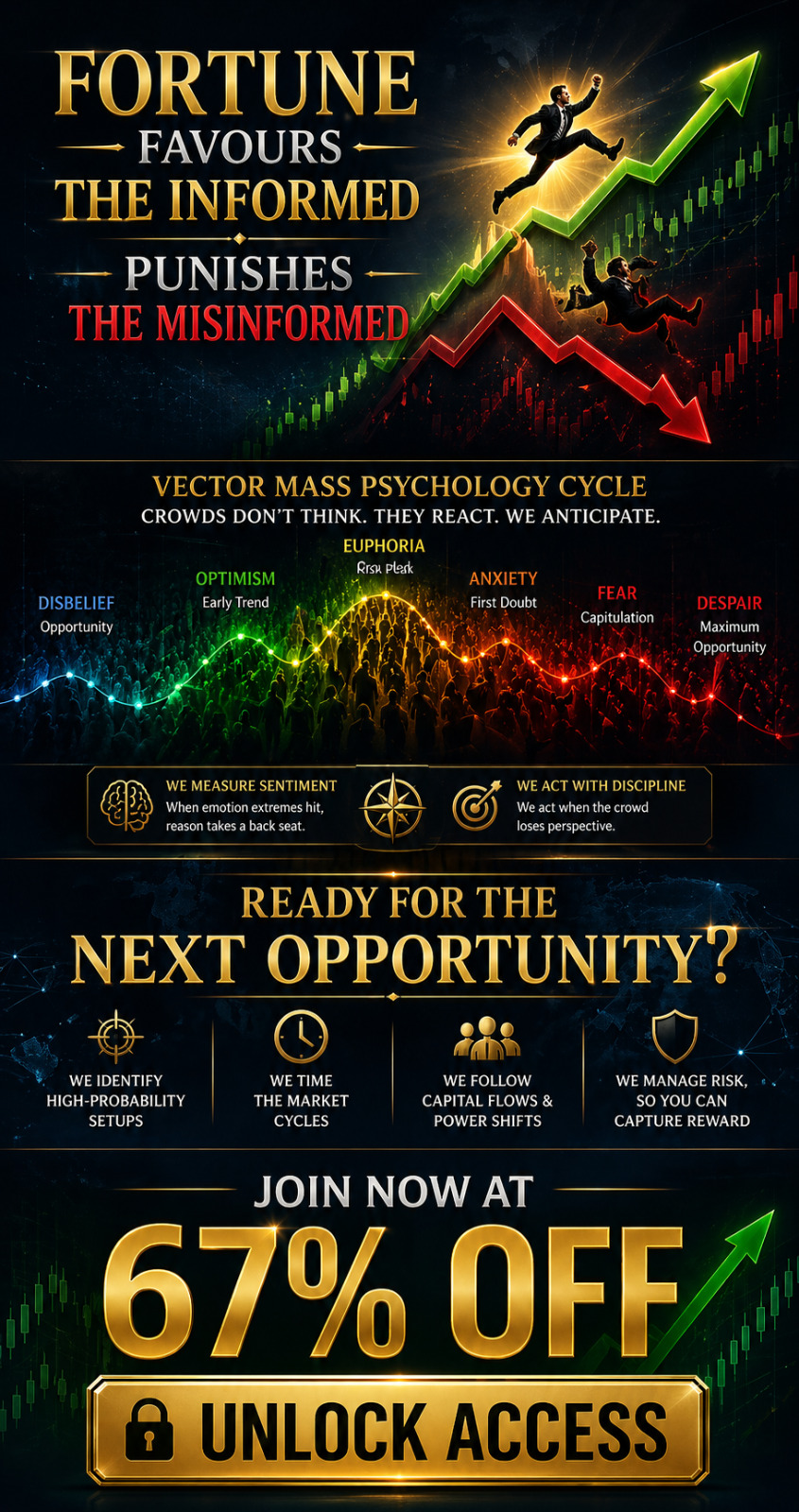
The core issue isn’t ignorance—it’s emotional automation. Fear hits, and you sell. Greed hits, and you buy. The strategy changes based on mood, not data. Over time, you’re not trading anymore. You’re reacting like a rat in a lab, hitting the same lever, hoping for different results.
Ouspensky would say you’re sleepwalking through a system that exploits unconscious patterns. Jung would argue you’re being puppeted by your shadow—the part of you that needs drama, needs revenge, needs the rush. In the heat of the moment, most traders aren’t executing a plan. They’re reenacting personal mythology. That’s not investing. That’s performance art with real money on the line.
Mass Delusion Isn’t a Bug—It’s the System
When markets shake, the herd doesn’t adapt. It stampedes. And if you don’t recognise the signs, you’ll be trampled right along with them.
Look at every major correction. The signs were there—overcrowded trades, unsustainable valuations, and sentiment euphoric. Yet people piled in, convinced “this time is different.” It never is. Collective stupidity thrives because it’s disguised as consensus. No one wants to feel left out of a bull run—even if that run is sprinting off a cliff.
This isn’t just about poor timing. It’s about the refusal to think independently. Investors copy each other’s fear, mimic each other’s greed, and trade not on analysis, but on social proof. And when it breaks, everyone acts shocked.
As Ehrenreich observed, groupthink doesn’t just flatten nuance—it rewards delusion. And in markets, delusion is expensive. It drains accounts and rewires confidence into superstition.

Historical Cases of Financial Destruction
Financial history is less about surprise and more about repetition. The tech bubble of the late ’90s? Investors abandoned fundamentals and funnelled billions into pipe dreams. Profits didn’t matter—only potential. When reality hit, the fantasy collapsed. Billions vanished. The lesson? Blind optimism is just unpriced risk.
2008 was no different. Panic selling overtook logic. Valuations collapsed far below intrinsic value as even strong companies were dumped indiscriminately. Those who stayed grounded—who followed a defined strategy—didn’t just survive; they came out stronger. The rest capitulated, turning temporary losses into permanent destruction.
The COVID crash exposed the same flaw in a new costume. Algorithms screamed “oversold,” but the herd ignored it. Retail dumped quality positions in mass hysteria. Days later, markets rebounded hard. The difference? Those who acted on signal, not sentiment, got paid.
Actionable Data: The Numbers Don’t Lie
Forget the stories—look at the stats. A 2019 Journal of Behavioural Finance study found that investors who sold in panic underperformed by 30% compared to those who held. In 2008, panic spiked trading volumes up to 3x normal levels, accelerating the collapse.
Roughly 75% of retail investors sell during crashes—often at the worst possible moment. That single error compounds: you miss the bounce, re-enter too late, and dilute every gain. Meanwhile, disciplined players quietly absorb the upside. Not because they’re lucky, but because they refused to panic.
These aren’t outliers. They’re patterns. And the market punishes those who ignore them.
The Path to Winning: Change Your Perspective
The market’s madness isn’t a signal to follow—it’s a mirror. Most chase it because they don’t know what else to do. But if you’re watching the crowd, you’re already behind.
When panic erupts, step back. Not in retreat—but in analysis. Ask: Is this fear justified, or is it reflex? Use RSI, volume spikes, macro signals—anything rooted in signal, not noise. If data confirms capitulation, that’s your cue to act.
Contrarian thinking isn’t romantic—it’s statistical. Selling into strength, buying into fear—that’s the DNA of every outsized win. But it only works if your thinking isn’t outsourced to the crowd.
Real edge comes from refusing to imitate. When everyone else dumps assets, you analyse. When they chase highs, you trim. That shift—from reactive to proactive—is the path out of financial mediocrity.

The Market Trifecta: Common Sense, Mass Psychology, and Technical Analysis
Success in the stock market demands more than intuition or expert advice—it requires a strategic blend of common sense, mass psychology, and technical analysis.
Common Sense keeps you grounded, cutting through hype to assess real asset value. It helps identify unjustified price swings and recognise when emotion, not fundamentals, drives the market.
Mass Psychology reveals how collective fear and greed create opportunities. By tracking sentiment indicators like the VIX and trading volumes, you can anticipate overreactions and position yourself accordingly.
Technical Analysis adds precision, using charts, moving averages, and indicators like RSI to confirm when prices are overextended. This data-driven approach eliminates guesswork, strengthening your market edge.
Together, these three elements form a powerful strategy—helping you navigate irrational market trends and turn volatility into opportunity.
Lessons from the Trenches: Data Over Emotion
Market history proves one thing: following the herd leads to disaster. Independent, data-driven investors consistently outperform emotional traders.
Warren Buffett vs. the Dot-Com Bubble (1999-2002)
While tech speculators chased overvalued internet stocks, Buffett stuck to fundamentals, avoiding companies with no earnings. When the NASDAQ collapsed 78%, wiping out billions, Buffett’s Berkshire Hathaway thrived, proving that hype is no substitute for value.
The COVID-19 Crash and Rebound (2020)
In March 2020, the S&P 500 plunged 34% as fear-driven investors liquidated holdings. Contrarians spotted RSI and VIX extremes, signalling oversold conditions. Those who bought blue-chip stocks like AAPL, MSFT, and AMZN at their lows saw 100%-200% gains within 18 months.
Michael Burry vs. the 2008 Housing Crisis
While banks and investors ignored reality, Burry used data to short the subprime mortgage market. His bets netted $700 million, while the S&P 500 dropped over 50%. His success underscores that understanding fundamentals beats blind optimism.
The takeaway? Facts over fear. Discipline over speculation. The market punishes irrationality—but rewards those who think ahead.
Avoiding the Trap: Becoming an Enlightened Investor
Winning in markets isn’t about intellect. It’s about control. Discipline over impulse. Clarity over noise. If you want to survive, you need a method that slices through panic, not one that buckles under it.
Recognise the Warning Signs
Fear distorts. In 2008, the S&P 500 collapsed 40%. But those who bought near the bottom in early 2009 earned over 400% in the following decade.
Volatility tells the story. The VIX above 30 = fear. Below 15 = complacency. Use that. Don’t react to noise—track extremes.
Stick to a Disciplined Strategy
Plan before the market opens. Entry, exit, size. No improvisation.
Trailing stops (10–15%) on high-growth names protect gains without second-guessing.
Panic-selling? Retail investors who sell during drawdowns often miss the recovery. This isn’t theory—it’s historical fact.
Educate and Evolve
Self-audit matters. Barber & Odean’s 2016 study? Clear: investors who reviewed and adjusted outperformed the static.
History is your teacher. The dot-com collapse didn’t wipe everyone out—Amazon survived, thrived. $1,000 turned into $100,000+ because someone understood fundamentals, not FOMO.
Embrace Counter-Cyclical Thinking
Buy when the herd is terrified. It’s not contrarian—it’s calculated.
RSI below 30? Oversold territory. History says: 70% odds of short-term rebound.
Buffett’s quote about fear and greed isn’t just a mantra. It’s a data-backed kill-switch against herd stupidity.
Crush Collective Stupidity—Dominate the Market
The herd is your warning label. When they chase, you pause. When they panic, you load up.
Dot-com. 2008. COVID Crash. Same mistakes. Same outcomes. Retail investors fed to the woodchipper—again and again.
The outliers do not win because they’re brave, but because they’re prepared. Buffett. Burry. Druckenmiller. They don’t feel more—they feel less. They don’t chase—they position. Their advantage? Discipline, not prediction.
Your edge is structure.
- VIX above 30? Start watching for blood-on-the-streets entries.
- RSI above 70? Time to trim.
- When headlines scream collapse, assume opportunity is near.
This game doesn’t reward reaction. It is a rewarding method. Use data like a blade. Kill your bias. And when the crowd flinches, advance.