
What Is Independent Thinking and Why It Matters in a Conformist World
Updated 23 Feb, 2026
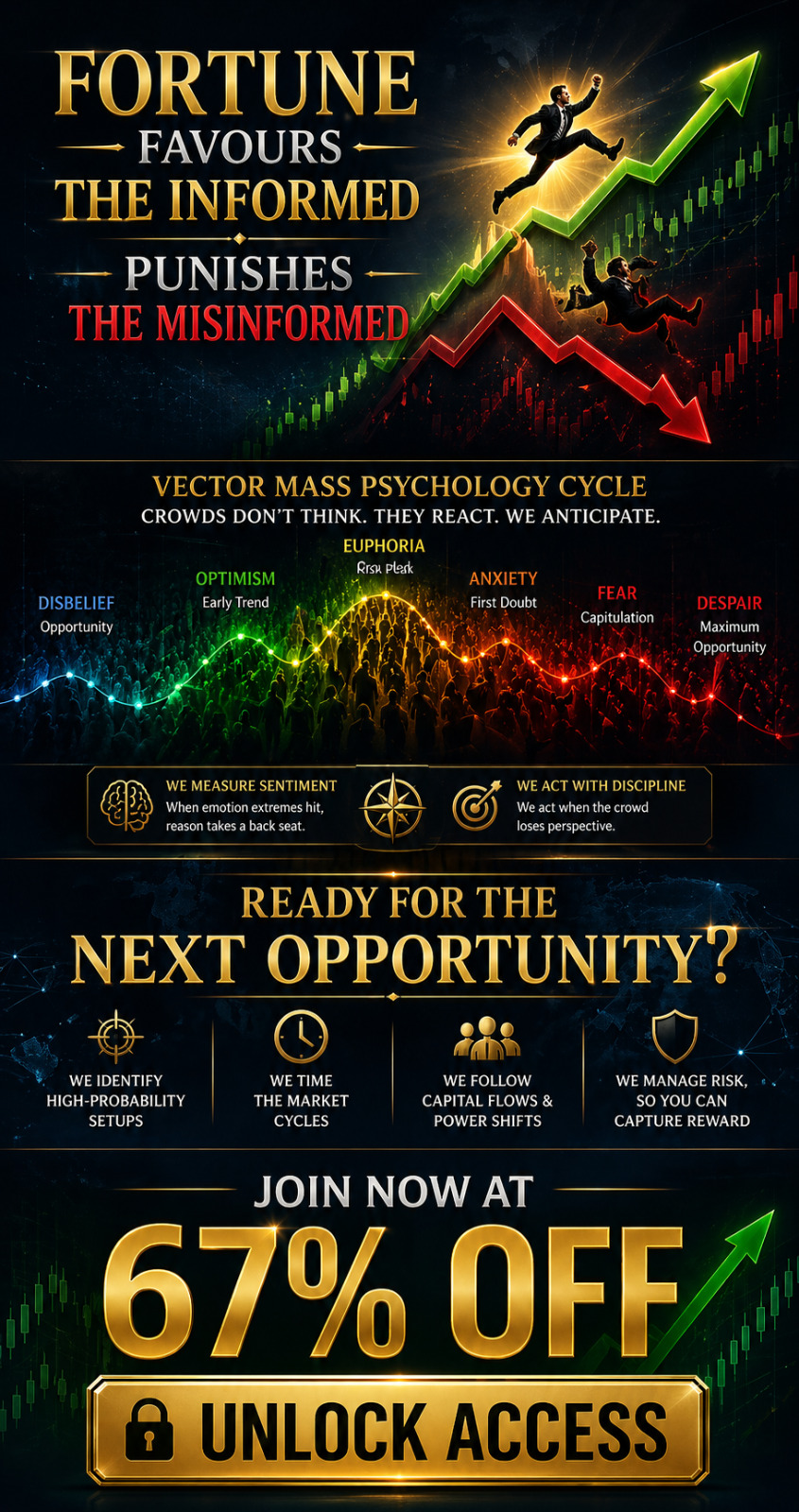
“The crowd has never been right at turning points that matter.” Financial history repeats this truth with mechanical consistency, yet people keep surrendering their judgment to collective delusion. When markets spiral into panic, rational thinking evaporates. Emotional contagion takes over, transforming otherwise intelligent individuals into a stampede running toward their own financial extinction. This isn’t just economically destructive—it’s the clearest demonstration of why independent thinking has become rare, precious, and indispensable.
What is independent thinking if not the ability to stay rational while everyone else dissolves into reflex and fear? Financial markets are the perfect arena to study this discipline. Here, conformity is punished in real time and independent judgment is rewarded precisely at the moments when the crowd loses its mind.
The Devastating Cost of Cognitive Surrender
Take the market collapse of March 2020. As COVID panic spread, the S&P 500 fell 34% in 23 trading days. Media outlets broadcast catastrophe. Online forums turned into digital echo chambers of fear. Retail investors liquidated retirement accounts at the exact moment they should have been buying.
What was independent thinking worth in those moments? Roughly 100% returns within a year. Contrarians like Bill Ackman moved from catastrophic hedges to aggressive buying near the bottom, capturing one of the sharpest recoveries in market history. This was not luck—it was the refusal to hand judgment over to mass hysteria.
This dynamic isn’t limited to crashes. During the 1990s tech bubble, fund managers who questioned the mania were ignored or fired. Many capitulated just before the collapse, abandoning independent judgment precisely when it mattered most. That failure wasn’t analytical—it was psychological.
The Psychological Architecture of Independent Thought
Independent thinking isn’t mere contrarianism. It’s a disciplined, structured assessment of reality that challenges popular narratives and one’s own assumptions simultaneously. Several core components form its foundation:
First-Principles Analysis: Breaking problems into their essential elements rather than accepting packaged explanations. Independent investors look at cash flows, balance sheets, and intrinsic value—not sentiment or headlines.
Intellectual Sovereignty: Holding views without social validation. When Charlie Munger maintained stakes in Chinese tech despite overwhelming geopolitical pessimism, he displayed cognitive sovereignty—anchoring decisions to fundamentals, not public mood.
Calibrated Skepticism: Questioning not just conclusions but the frameworks that generated them. Michael Burry’s analysis of housing risk models exemplifies this. He didn’t just disagree with Wall Street—he dissected the assumptions that made their conclusions inevitable and wrong.
The Evolutionary Challenge: Why Independent Thinking Feels Unnatural
Our biology actively sabotages independent thought. For most of human history, conformity meant survival; deviation meant exile. The brain still rewards group alignment with dopamine and punishes divergence with cortisol and anxiety.
Financial markets weaponize this wiring. When everyone panic-sells, resisting the urge produces genuine physiological stress. Your body interprets independence as danger. That is why most investors cannot hold their positions when the mob is fleeing—the cost feels biological, not intellectual.
What is independent thinking worth in evolutionary terms? Everything. While conformity once preserved life, today it destroys wealth. Independent thinking requires overriding primal circuitry and replacing instinct with analysis. Seth Klarman’s steadfast cash positions during bubble eras exemplify this override. He tolerated discomfort in the short term to avoid disasters that crushed conformity‑driven peers.
Strategic Applications: Weaponizing Independent Analysis
Theoretical understanding is irrelevant without structured application. The best independent thinkers operationalize their autonomy through strategic frameworks:
1. Inverted Analysis
Rather than asking “What’s working?” they ask “What’s irrationally abandoned?” During the 2020 crash, entire sectors traded at 70–80% discounts despite strong balance sheets and clear paths to recovery. Inverted analysis finds asymmetry where others see wreckage.
2. Strategic Contrarianism Through Options
Panic inflates put premiums to absurd levels. Selling puts when fear peaks—not randomly, but on companies with strong fundamentals—creates immediate income and funds leveraged upside through LEAPS. It’s fear monetization executed with discipline.
3. Temporal Arbitrage
The modern market’s time horizon shrinks yearly. Algorithms, quarterly pressures, and headline trading compress sentiment into micro-cycles. Independent thinkers extend the horizon. Amazon’s 90% collapse in 2000 looked fatal to conformists; to independent thinkers, the long-term trajectory remained intact—and delivered generational returns.
The Conformity Tax: Measuring the Cost of Cognitive Surrender
Markets quantify the price of herd behavior with mathematical cruelty. DALBAR’s research shows the average equity investor underperforms the S&P 500 by 4.5% annually over decades. This shortfall compounds into enormous gaps in terminal wealth.
The cause is simple: behavioral errors at extremes. Investors buy late, sell early, panic on dips, and chase rallies—exactly the opposite of what independent analysis demands.
What is independent thinking worth in numbers? Matching the index instead of succumbing to panic can double or triple long‑term wealth. And that’s before adding the excess returns generated by contrarian positioning during extremes.
Cultivating the Independent Mind: From Theory to Practice
Independent thinking is not innate—it’s trained. The world’s best practitioners adhere to habits that systematically weaken the grip of conformity:
1. Information Diet Optimization
Buffett’s distance from Wall Street is deliberate. Physical and informational separation protects clarity. Independent thinkers curate inputs—primary data over punditry, facts over narrative.
2. Decision Journals and Pre‑Commitment Protocols
Writing investment rationales before volatility hits creates accountability to analysis rather than emotion. Pre‑commitment rules (“If stock X drops below Y with fundamentals intact, deploy Z%”) bind future actions to rational thought.
3. Intellectual Stress Testing
Bridgewater institutionalized dissent. Individuals can replicate this by seeking the strongest arguments against their own positions—not to create false balance, but to expose blind spots conformity would conceal.
The Paradoxical Power of Independent Thinking
The greatest paradox is this: true independent thinking does not create rigid certainty. It creates calibrated conviction—confidence proportional to evidence, adjustable as facts evolve. It balances boldness with humility.
George Soros embodied this through reflexivity. He built massive positions with conviction, yet remained alert to feedback loops that could shift fundamentals themselves. This dual awareness—sharp belief paired with adaptable skepticism—is the hallmark of mature independent thought.
In today’s world of algorithmic sameness, passive indexing, and narrative overload, what is independent thinking if not the final remaining edge? Information is commoditized. Execution is automated. But intellectual sovereignty remains scarce—and therefore valuable.
The path is uncomfortable. It requires standing apart during manias and maintaining composure during chaos. But for those who cultivate it, the reward is more than financial performance—it is clarity. Autonomy. The ability to see the world without distortion.
The crowd will continue to be wrong at the moments that matter most. Independent thinking remains the only reliable antidote—and the only way to see opportunities hiding in plain sight.