


Start with the chart, not the quarter
Mar 3, 2026
To understand METC stock, you actually have to ignore the earnings report for a moment and look at something bigger than the company itself. Ramaco Resources does not control its own destiny the way a software firm or consumer brand might. Its business lives inside a commodity cycle, and commodity cycles rarely announce their turning points politely.
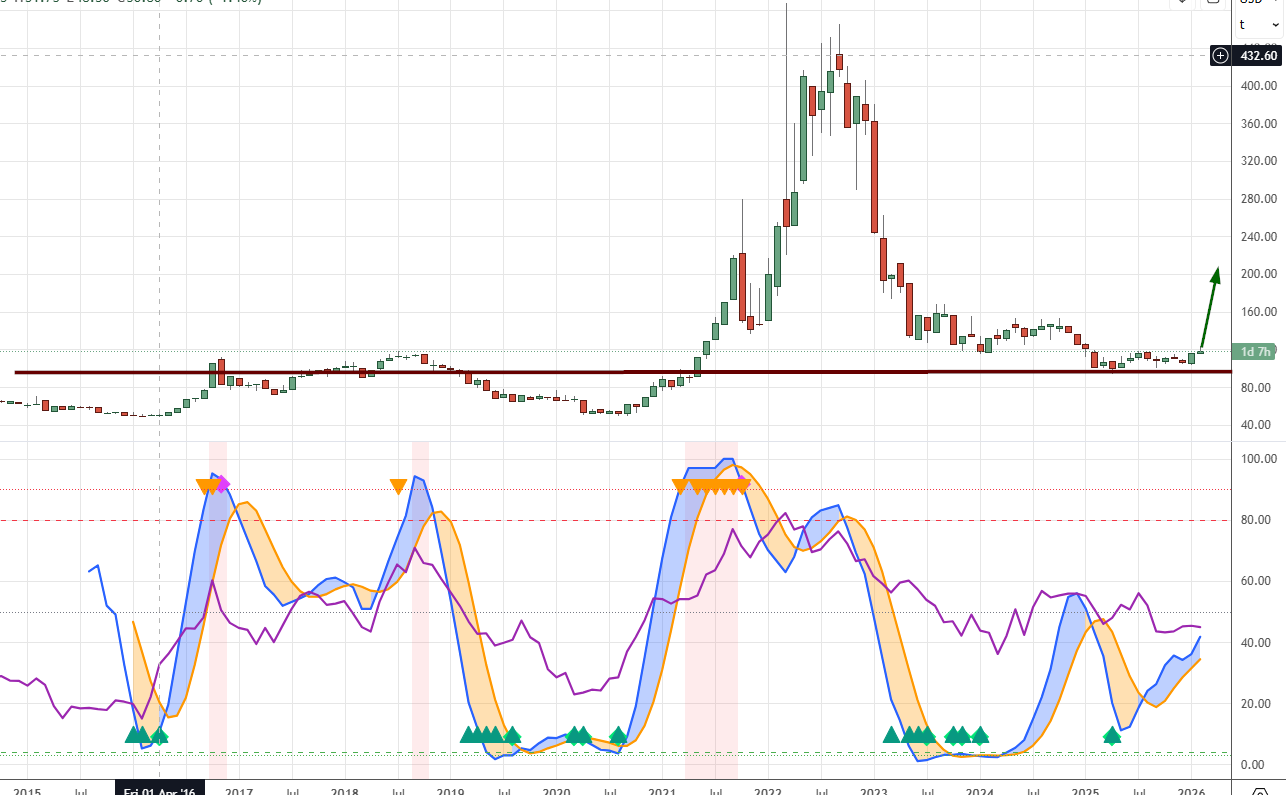
If you step back and examine the Newcastle coal price history (look at long term chart further below), what you see is not random volatility. You see a classic commodity structure. First a violent spike, then a collapse, and then a long stretch where nothing appears to happen. That final phase is the one investors usually misread.
The 2022 coal surge was not a normal high. It was a panic high created by war disruptions, European gas shortages, and global fear of energy scarcity. Buyers were not responding to steady demand. They were responding to uncertainty, and uncertainty produces hoarding. Power plants, traders, and industrial users ordered more coal than they needed because they feared not getting any at all.
When that fear faded, the opposite occurred. They stopped buying.
Prices did not collapse because consumption disappeared. Prices collapsed because inventories already existed. The system spent 2023 and 2024 digesting stockpiles accumulated during panic. In commodity markets, liquidation phases often look like demand destruction even though end usage remains relatively stable.
Now the chart shows flattening lows, compressed volatility, and reduced downward momentum. That pattern rarely produces headlines because it feels uneventful. Yet historically it is exactly how commodity bottoms form. Not dramatic reversals. Boredom.
And miners often begin moving during boredom.
Why this matters specifically for Ramaco
Ramaco produces metallurgical coal used in steelmaking rather than thermal coal used for power. Even so, the direction of global coal pricing and steel expectations strongly influences its valuation. The important connection is psychological rather than mechanical.
Coal equities do not wait for coal prices to rise. They move when the market believes prices have stopped falling.
That distinction sounds subtle but changes everything. A miner’s earnings depend heavily on margins, and margins change quickly with small shifts in selling price while operating costs move slowly. The market anticipates this before it shows up in financial statements.
So, while the earnings report may still reflect weak realized prices from prior quarters, the stock begins reacting to expected prices next year.
The earnings that looked bearish
The recent earnings report disappointed on the surface. There was a loss, revenue came in soft, and analysts reacted negatively. Under normal circumstances those would be straightforward warning signs.
In commodity cycles they often appear near troughs. Financial results always lag price cycles because reported earnings reflect past selling prices. Equity markets, however, price future profitability. If coal stabilizes, the numbers investors just read may represent the worst financial print of the cycle rather than the beginning of deterioration.
This is why mining stocks sometimes rally while reporting poor earnings. The market is not reacting to what just happened. It is reacting to what may stop happening.
The economics behind early rallies
The reason miners move early is simple operating leverage. A coal producer’s extraction cost does not change dramatically quarter to quarter. Suppose production costs hover near a fixed level. When selling prices approach that level, profits are minimal. When prices rise modestly above it, margins expand quickly. When prices rise further, cash flow accelerates dramatically.
The stock therefore does not require high coal prices to rise. It requires stabilization. Investors begin repricing valuation once they believe prices will no longer decline.
Financial markets price direction rather than level.
When participants conclude coal is no longer heading lower, the earnings power of the business changes immediately in valuation models, even before accounting statements improve.
What actually caused the decline
The fall in METC stock was not driven by operational failure, debt stress, or mine impairment. The mines remain active and reserves remain intact. Production capability did not disappear.
The decline was almost entirely tied to the commodity cycle. Revenue compressed because selling prices dropped after the 2022 spike. Margins narrowed accordingly. That is margin compression, not structural damage.
In cyclical industries the market often confuses temporary earnings weakness with business deterioration. Over time the distinction becomes clearer, but not before price volatility tests investors’ patience.
The signal hidden in the Newcastle pattern
Commodity cycles follow a sequence. A parabolic peak forms, liquidation follows, volatility contracts, and then a base forms. The base phase is psychologically difficult because it offers no confirmation. Prices do not rise enough to inspire confidence and do not fall enough to create urgency.
Yet historically that phase precedes equity repricing. Miners typically rally months before commodity prices trend higher because investors anticipate improved forward economics once supply and demand rebalance. By the time headlines report recovery, equities have often already moved.
This dynamic explains why you noticed coal companies sometimes advance even while coal prices appear stagnant.
Mass psychology and market timing
The reason is rooted in behaviour. During declines investors anchor to falling prices and assume continuation. Once price stabilizes, uncertainty replaces fear. Professional investors start accumulating quietly because risk becomes measurable again.
Retail participation usually arrives later, once prices visibly rise. Commodity bottoms therefore occur when sentiment is still sceptical. The absence of excitement is part of the signal. In many past cycles, the best opportunities appeared when news flow looked worst and trading volume looked indifferent.
Markets shift not when conditions look good but when conditions stop worsening.
Why this is not a turnaround story
METC is neither a broken company nor a traditional turnaround. The assets remain viable and production continues. The business simply sits at the low point of a cyclical earnings curve.
Turnarounds involve repairing operations. Cycles involve waiting for pricing. Understanding the difference prevents analytical errors. The earnings look weak because they correspond to the weakest point in the commodity environment. If pricing stabilizes, profitability can improve without operational change.
That is the leverage inherent in resource producers.
Insider and positioning perspective
In cyclical sectors, insider behaviour often carries meaning. When executives maintain exposure through compensation structures or ownership retention during downturns, it usually reflects confidence in long-term asset value rather than short-term results. Resource operators understand cycles intimately because they have lived through several.
Institutional investors also behave differently near troughs. Rather than chase earnings momentum, they accumulate assets whose forward cash generation could improve disproportionately with modest pricing changes.
That type of positioning rarely produces immediate rallies. It produces gradual base formation followed by repricing once broader sentiment shifts.
The practical takeaway
METC stock does not require a coal boom. It requires the absence of further deterioration. If the stabilization seen in coal pricing persists, the recent earnings report may eventually be recognized as the trough of the cycle rather than evidence of permanent weakness.
Commodity equities frequently move six to twelve months before the underlying commodity confirms the change because equity investors anticipate the margin expansion ahead of time.
So the question investors are really answering is simple. Not whether coal is strong today, but whether coal is still getting worse.
If the base holds, the market may already be beginning to price the next phase of the cycle quietly and without headlines.