Markets Reflect Perception, Not Reality
June 30, 2026
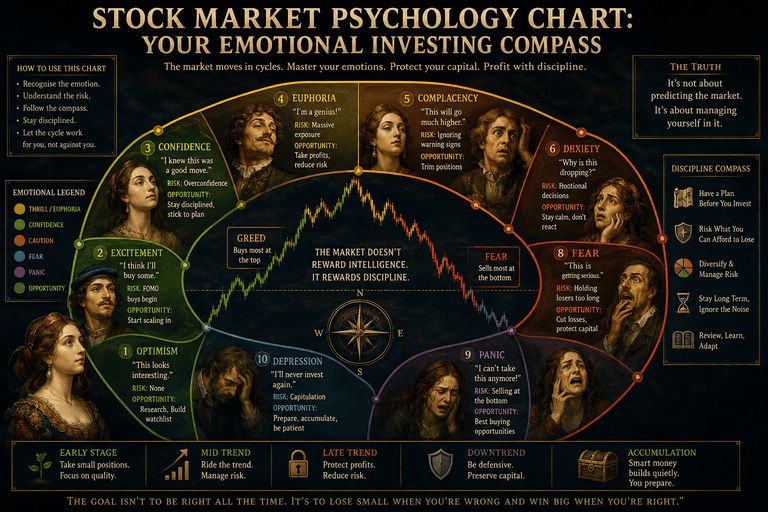
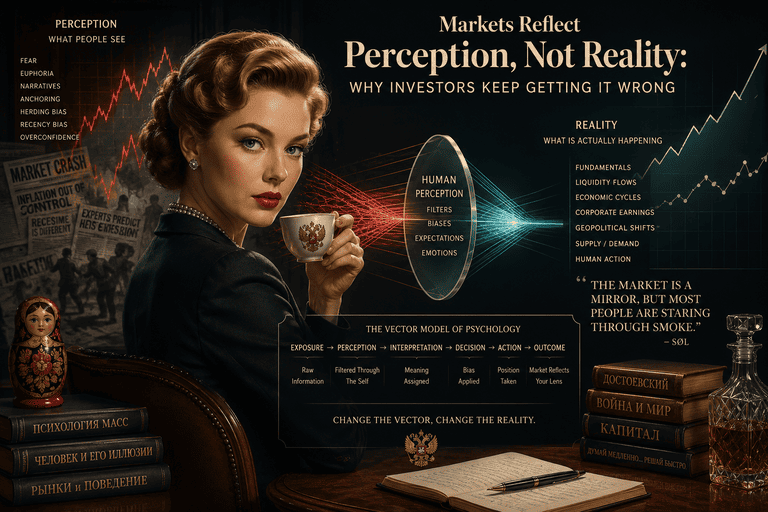
Reality changes slowly, while perception can change in minutes, creating a gap between what businesses are actually worth and what investors temporarily believe they are worth. A company does not suddenly become worthless because its stock falls 30 percent in a month, just as a business does not become exceptional simply because its share price doubles, yet investors routinely confuse price with truth because the crowd mistakes movement for information. Rising prices create confidence, confidence attracts buyers, and those buyers push prices even higher until optimism becomes self-reinforcing. The same process unfolds in reverse during declines as falling prices generate fear, fear encourages selling, and selling drives prices lower until pessimism becomes equally detached from reality.
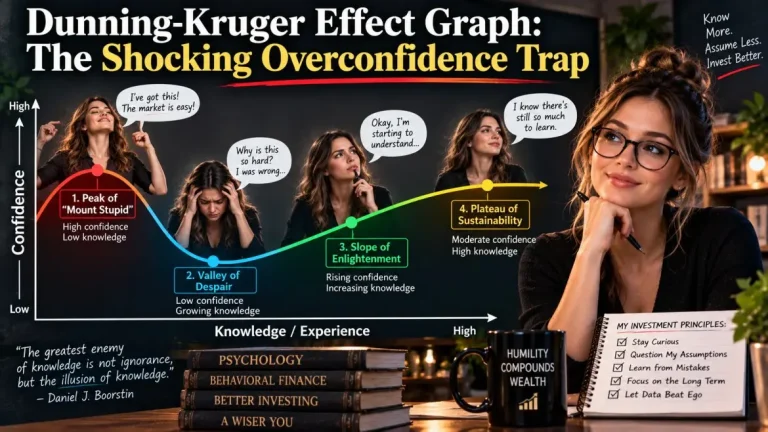
Markets regularly overshoot in both directions because optimism eventually disconnects prices from intrinsic value while fear pushes them far below it. Every major market cycle follows the same sequence: fundamentals initiate the move, psychology accelerates it, emotion eventually overwhelms logic, and only after expectations collapse does reality begin to reassert itself. Investors who understand this process stop asking whether markets are rational and instead focus on a far more useful question: how far has perception drifted from reality? That distance is where opportunity begins to emerge.
Crowds Do Not Think. They Synchronize.
Most people believe they make independent investment decisions, but human beings evolved as social creatures whose survival often depended on remaining aligned with the group. For thousands of years, separating from the crowd frequently carried greater risks than following it, so conformity became an efficient survival strategy even when independent judgment might have been more accurate. Markets expose the weakness of that instinct because they reward disciplined thinking precisely when collective behaviour becomes most emotional.
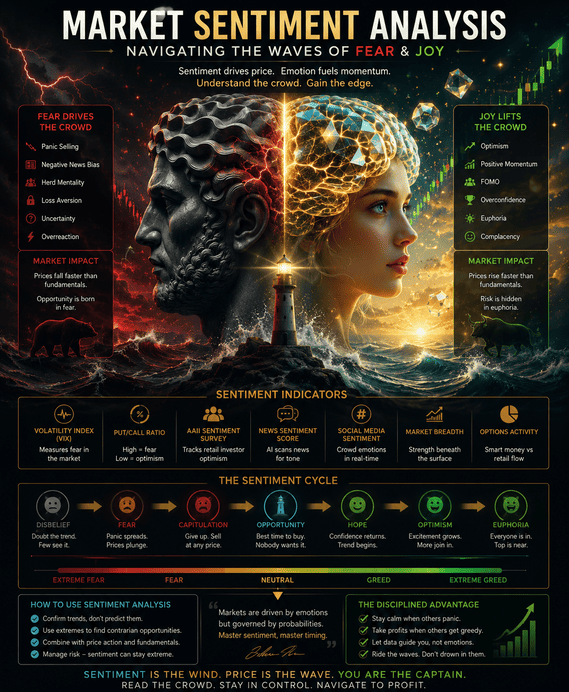
As prices rise rapidly, investors assume others possess information they lack, causing buying to become an act of social validation rather than analytical judgment. Rising prices justify further buying, producing a self-reinforcing cycle in which confidence feeds on itself until valuations lose any meaningful connection to reality. The reverse occurs during declines as investors sell because everyone else appears to be selling, fear spreads through observation rather than evidence, and rational analysis quietly disappears beneath the pressure to conform.
This explains why markets often move with remarkable coordination during periods of stress. Thousands of investors appear to reach identical conclusions independently, yet many are simply reacting to one another in a continuous feedback loop. The crowd rarely discovers truth. It discovers consensus, and consensus often reaches its greatest strength precisely when the best opportunities have already disappeared.
Fear Compresses Time
Fear alters far more than emotion. It changes the way investors perceive time itself. During bull markets, people willingly project earnings, growth, and innovation many years into the future because optimism naturally expands their investment horizon, making temporary setbacks appear insignificant within a much larger narrative. Bear markets reverse that process almost overnight.
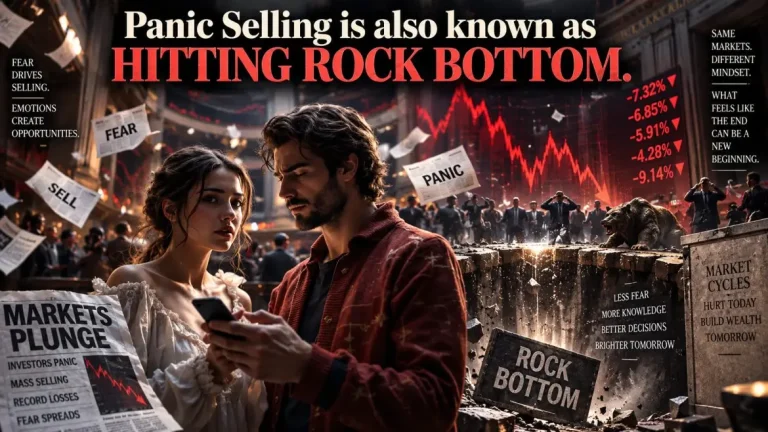
Instead of thinking in years, investors begin thinking about tomorrow morning. A company capable of generating billions in future cash flow suddenly appears dangerously overvalued because next week’s earnings might disappoint, while long-term value becomes almost invisible as immediate survival dominates attention. The business may not have changed in any meaningful way, but the investor has, because fear compresses time until every problem feels permanent and every decline appears irreversible.
History demonstrates this repeatedly. The financial crisis convinced many investors that capitalism itself had failed, while the pandemic persuaded others that economic activity might never fully recover. Neither conclusion survived reality because fundamentals eventually reasserted themselves after perception had drifted too far from the facts. The greatest buying opportunities almost always emerge during these periods, when fear has compressed every investment decision into the next headline instead of the next decade.
The Media Doesn’t Predict Emotion. It Amplifies It.
Financial media follows attention, and attention follows emotion, creating an incentive structure in which dramatic narratives consistently outperform balanced analysis. During powerful rallies, headlines celebrate unstoppable growth, while during corrections those same outlets begin discussing crashes, recessions, and systemic collapse even though the underlying information may have changed very little. More often than not, it is the framing that shifts rather than the facts themselves.
Most investors underestimate how powerfully repeated narratives influence perception. Hearing the same conclusion from dozens of commentators creates the illusion of certainty, even when the supporting evidence remains weak or incomplete. Financial media rarely creates market psychology on its own, but it amplifies existing emotional trends until they appear far more convincing than they truly are.
By the time headlines explain why markets are collapsing, the decline has usually been underway for weeks. Likewise, by the time optimism becomes universal, much of the upside has already occurred. Successful investors therefore learn to separate information from its emotional packaging, giving careful attention to facts while approaching narratives with considerably more skepticism.