
Behavioural Finance Degree: Navigating Business Decisions in Line with Established Norms
Feb 13, 2026
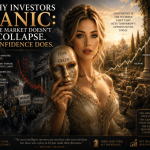
Warning: The markets are a battlefield, and fear is your greatest enemy. History shows that fear‑driven herd behaviour can shatter fortunes, destabilise economies, and erase years of progress in days. Yet those who understand the psychology beneath the chaos—the few who resist the tide and think independently—are the ones who walk away intact. Behavioural finance isn’t just about numbers; it’s a war of the mind, a struggle between logic and emotion, and a test of whether you can see clearly while everyone else panics.
In behavioural finance, fear isn’t an abstract force—it’s the engine behind most market mistakes. Investors stuck in herd mentality chase trends, buy at highs, and panic‑sell at lows. This cycle stems from cognitive biases and the suffocating influence of groupthink. A behavioural finance degree trains you to recognise these traps, navigate them, and make decisions that align with reality rather than emotion—decisions grounded in established norms rather than collective irrationality.
Exposing Market Panic: The Psychology of Fear
Fear sits deep in human wiring. When markets fall, panic spreads instantly, triggering cascading selloffs. Behavioural finance labels this as cognitive bias—an evolutionary reflex that protected our ancestors but destroys portfolios today. FOMO, loss aversion, and overconfidence distort judgment when volatility rises.
Look at 2008. As fear consumed global markets, investors unloaded assets at any price, accelerating the crash. Meanwhile, contrarians like Warren Buffett moved in, understanding that mass panic creates forced selling and rare opportunity. His mantra—“Be fearful when others are greedy, and greedy when others are fearful”—captures the essence of market psychology. A behavioural finance degree helps you dissect such moments, enabling you to act rationally when logic disappears from the crowd.
The pattern repeats: the dot‑com bubble, the 2010 flash crash, the COVID‑19 panic of 2020. Fear-driven herds suffered heavy losses; those who kept discipline capitalised. Success in these moments requires more than technical knowledge—it requires a precise understanding of human behaviour and the courage to move against the stampede.
Contrarian Mastery: Profiting from Fear
While fear drives the herd, contrarians prosper by doing the opposite. They treat selloffs not as disasters but as discounted entry points. Behavioural finance teaches that market irrationality, especially during fear spikes, creates mispricing ripe for exploitation.
Consider Jesse Livermore, who built his fortune shorting markets during periods of panic, including the 1929 crash. He succeeded because he could detach from hysteria and stick to clear reasoning. Today, investors like Charlie Munger preach the same ethos—discipline over emotion. These principles are embedded in behavioural finance and form the backbone of contrarian thinking.
A behavioural finance degree trains you to identify these high‑stress points and see opportunity where others see only danger. During volatility spikes, options premiums soar. Experienced investors sell puts during these periods, collecting inflated premiums while preparing to buy quality stocks at discounted prices. This approach blends psychological insight with market skill—exactly the toolkit behavioural finance cultivates.
Fear-Exploiting Strategies: Turning Volatility into Profit
One of the cleanest ways to exploit fear-driven markets is through options. When panic surges, volatility rises and options become expensive. This is the moment for disciplined investors to step in. Selling put options during fear spikes allows you to collect substantial premiums while positioning yourself to acquire undervalued stocks.
But the true power lies in what you do with those premiums. LEAPS—long‑dated call options—enable you to convert short‑term panic into long‑term asymmetric gains. Buying LEAPS on strong companies during market stress sets the stage for amplified upside when the recovery takes hold. This method demands planning, emotional control, and deep understanding of market dynamics—skills refined through behavioural finance training.
Picture an investor who collects $10,000 selling puts during a downturn, then reinvests it into LEAPS on the same stock. They benefit from panic pricing twice: once through premium income, and again when the stock rebounds. This is contrarian thinking executed with precision.
Disciplined Boldness: The Key to Success
Contrarian strategies demand boldness, but not recklessness. They require discipline anchored in clear analysis and firm self-awareness. Behavioural finance stresses this principle: bold moves only work when paired with a structured plan.
Developing such discipline means questioning assumptions, resisting popular narratives, and remaining composed in the face of collective fear. This is where behavioural finance proves invaluable. By studying psychological biases, students uncover the forces that cloud judgment—and learn how to counter them.
Disciplined boldness also requires context. Geopolitical shocks, central bank policy shifts, and technological disruption all shape markets. Understanding how these forces intersect gives investors the ability to anticipate movement rather than chase it. This multi-layered awareness is foundational to behavioural finance and essential for consistent success.
Visionary Empowerment: Breaking Free from the Herd
The power of behavioural finance lies in its ability to break the chains of herd mentality. Independent thinking is not just financially advantageous—it is liberating. By mastering behavioural principles, investors escape the fear‑greed cycle and build strategies rooted in clear reasoning rather than emotional reflex.
Imagine making financial decisions unclouded by market hysteria. Imagine assessing risk with precision, navigating complex environments with confidence. This is the promise of a behavioural finance degree: not only financial success, but intellectual autonomy.
The journey demands effort, but it pays dividends. By embracing paradox, recognising nonlinear relationships, and cultivating emotional discipline, you can uncover opportunities hidden from the crowd. You become a strategist in a field where most react blindly.
Conclusion
Markets reflect human psychology—chaotic, reactive, and volatile. But within that chaos lies immense opportunity for those willing to think differently. A behavioural finance degree equips you with the mindset, analysis, and emotional control needed to navigate this landscape while others panic.
The path to success begins with understanding fear, practising contrarian discipline, and breaking free from herd reflexes. By applying behavioural insight with precision, you can build a future defined not by market swings, but by strategic clarity and personal sovereignty.
The battlefield is the same for everyone. The difference is how you think within it.








Sad to see so much illogical bantering in this BS piece on climate change. No rhyme or reason here. Better luck next time.
You failed to mention the Club of Rome planning to use climate change as a universal enemy against which they can marshall more power with which to control & surpress, & prop up their NWO.
You also fail to mention chemtrails & weather manipulation.
You’re way off mark & way over simplifying this issue.
At one time, scientists were our friends, they were on our side, and always respectful and forthright
Maybe everything important has already been discovered so now they use focus groups to find demeaning ways to refer to us; “Deniers”.
The world was a better place before some of our scientists became political pawns and flunkies.
Climate change is a prehistoric through future certainty. Man-made global warming is an unscientific propagada effort of those seeking to dominate the world according to Agenda 21, Millennium Goals, technocracy, global religion, electronic currency, and other, related strategies.
See: http://gulagbound.com/46058/burt-rutan-explains-fallacies-of-the-nwos-man-made-global-warming-myth/
“California is plagued by a decades-long drought. Lake Mead, the reservoir for Arizona, Nevada, and California, is slowly draining. ”
Don’t you hate it when you no sooner write article and the facts change before you can publish? Let’s hope the lakes in California don’t flood and in the mean time.
I wish for the old days when ‘Climate Change’ was called ‘Weather’ and we laughed at anyone who wanted to control it.