The Fear-Greed Index: War Signals in the Market Mind
Oct 13, 2025
The Anatomy of Panic and the Discipline of Precision
When markets tremble, the fear-greed index is not a gauge. It is an alarm bell from the collective unconscious, tolling for every investor who mistakes emotion for insight. The crowd calls it a “sentiment indicator,” but that phrase strips it of its violence. In truth, it is a record of psychological warfare—an encrypted measure of how far reason has retreated from the battlefield.
When fear peaks, logic dies first. Screens glow red, liquidity vanishes, and the herd seeks safety in flight. When greed dominates, caution dies next. Valuations detach from reality, and leverage becomes religion. Between these two abysses lies a narrow corridor where the disciplined investor operates—unloved, doubted, and quietly compounding.
The fear-greed index doesn’t predict the future. It exposes the present with surgical precision. It tells you whether the market breathes clarity or hysteria. Like a seasoned general reading smoke above a distant hill, you don’t stare at the flame—you read the wind.
Panic as Systemic Phenomenon
Market panic is not chaos; it is synchronised irrationality. The crowd doesn’t move randomly—it moves rhythmically, like a stampede guided by unseen drums. The triggers change—1929, 2008, 2020—but the structure remains: fear ignites, liquidity vanishes, and information turns toxic.
During the 2020 crash, algorithmic systems joined human panic in perfect synchrony. Machines didn’t feel fear, but they read it—in sell orders, volatility spikes, and credit spreads widening like cracks in ice. Within weeks, trillions evaporated, yet those who held their nerve saw the fastest rebound in market history. Fear became fertiliser.
The ancient traders understood this cycle long before indexes quantified it. They watched cargo prices, crowd gossip, and the colour of coins in marketplaces. Panic was predictable because human nature was static. The tools evolved; the impulse did not.
Today, the CNN Fear & Greed Index compresses that same human circuitry into seven components: volatility, momentum, options demand, safe-haven flow, and breadth. When its needle slams to “Extreme Fear,” history whispers: you are near the point of maximal opportunity.
The Cognitive Battlefield
Every crash begins inside the mind. Behavioural finance gave names to what ancient merchants already knew: loss aversion, confirmation bias, anchoring, and herd instinct. Each bias is a weak flank waiting to be exploited.
Loss aversion ensures that the pain of losing $1 outweighs the joy of gaining $2. That asymmetry births panic selling. Confirmation bias ensures that in a storm, every headline confirms the apocalypse. Social proof completes the rout—if everyone is selling, you must too.
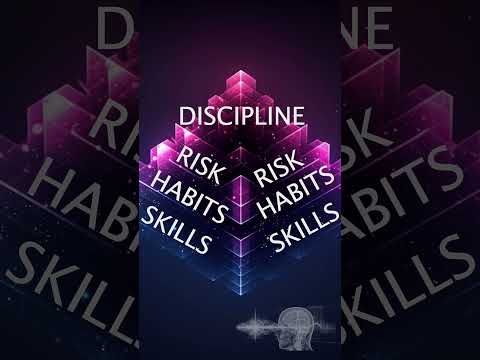
To fight this, you need doctrine, not emotion. Doctrine is process: pre-set entry zones, risk caps, exit protocols, and contingency reserves. You train when markets are calm so that when volatility explodes, you execute automatically. Surovov trained his troops to fight without orders, to improvise under pressure, to advance in confusion. The disciplined investor mirrors this: adapt without hesitation, strike when clarity returns.
In 2008, when the index collapsed to extreme fear, Warren Buffett wrote, “Be fearful when others are greedy and greedy when others are fearful.” That aphorism wasn’t moral advice; it was operational doctrine. Contrarianism without structure is suicide. Contrarianism with structure is asymmetry—a small risk for a large potential return.
The Enemy Within
Your enemy is not volatility—it is your own biology. The amygdala fires faster than analysis. Fear short-circuits prefrontal reasoning. That is why market crashes feel sudden: they are biological events masquerading as economic ones.
Modern traders drown in data but starve for judgment. The constant pulse of screens amplifies every tick into a threat. The ancient traders had slower rhythms; they felt time differently. A delay between cause and effect gave them space to think. That latency was power.
To reclaim it, you must recreate distance within immediacy: pause before reacting, breathe before executing, re-evaluate before confirming. The half-beat response—delayed but deliberate—turns chaos into terrain. You can’t remove emotion, but you can delay its command.
Opportunity in Fear
In every panic, assets separate from their fundamentals. Correlations collapse, liquidity dries, and forced sellers dominate. That is when precision replaces courage.
When the index hits “Extreme Fear,” think in layers:
- Identify Value Dislocations. Look for assets trading below liquidation value or replacement cost.
- Activate Controlled Scaling. Enter incrementally, never all at once. Average down strategically, not emotionally.
- Exploit Option Premiums. Sell puts when volatility spikes; collect income while positioning for recovery.
- Reinvest Option Premiums. Use LEAPS or structured equity to capture asymmetrical upside with controlled risk.
This isn’t theory. It’s what disciplined operators did in March 2020. While retail traders fled, institutions sold volatility and bought distressed credit. Within months, they harvested 40–60% returns. Panic was their entry ticket.
The Doctrine of Strategic Detachment
Surovov’s genius wasn’t brute force—it was mobility. He struck where opponents were unprepared and retreated before they could counter. The same logic governs superior investing: don’t meet the market where it’s strongest—emotion. Engage where it’s weakest—valuation.
When the crowd buys narratives, you buy silence. When the crowd sells despair, you buy data. Detachment is not apathy; it’s clarity under duress. The fear-greed index helps you identify when the crowd is deaf to logic—precisely when logic pays best.
An investor operating with detachment doesn’t fight volatility; he uses it as camouflage. He acts while others calculate, holds while others panic, and exits when euphoria blinds the field. That rhythm—attack, hold, withdraw—is timeless.
Precision Over Prediction
Forecasts are fragile. Precision is enduring. The disciplined investor doesn’t predict; he calibrates. The fear-greed index is one calibration tool—one that measures emotional temperature rather than fundamental truth. Use it to gauge when emotion has overpowered reason.
When the index surges toward “Extreme Greed,” liquidity intoxicates the crowd. Margins expand, narratives mutate, and valuation discipline dies. That is when exits are prepared, not announced.
When it sinks toward “Extreme Fear,” liquidity collapses, sentiment evaporates, and opportunity concentrates. That is when cash is deployed quietly, strategically, without fanfare.
The most dangerous phase of any market cycle is not collapse, but complacency. Complacency builds slowly, with soft hands and smooth charts. The disciplined investor senses it by absence—the lack of fear, the illusion of safety. That is when he reloads, not relaxes.

Weaponising Sentiment — Turning Fear into a System of Advantage
Fear is not the enemy. Misuse of fear is.
Every great trader eventually learns this: markets do not reward bravery, they reward clarity. The crowd interprets volatility as danger. The master interprets it as dislocation—an imbalance between perception and truth. That is the exploitable field.
The stock market’s fear-greed index is a battlefield map. It reveals where emotion has outpaced logic, where the herd has overextended, and where opportunities hide beneath the noise. But a map is not enough. You must move like a strategist, not a spectator. You must think in campaigns, not trades.
The Architecture of Advantage
Every advantage begins with structure. Without it, you drown in chaos. Structure converts volatility into information.
- Sentiment Layer – The fear-greed index acts as the psychological compass. Read it weekly, not hourly. Treat its extremes as signal, its midrange as fog.
- Fundamental Layer – Identify which sectors are fundamentally sound yet emotionally abandoned. Energy in 2020, semiconductors in 2022, defence in 2024—each collapsed under panic, then surged when clarity returned.
- Technical Layer – Overlay the emotional extremes on long-term momentum structures. Divergences between sentiment and price reveal the fractures of crowd psychology.
- Execution Layer – Deploy tactics in sequence: scale in during panic, hedge during greed, rebalance during equilibrium.
This architecture outlasts regimes and technologies. Whether it is 1929, 2008, or 2030, human nature remains the same. Markets evolve; fear does not.
Algorithmic Panic and the New Front
Today’s volatility is not purely human. Machines amplify human weakness. When panic strikes, algorithms accelerate it, magnifying emotional errors into systemic tremors. Flash crashes are the new stampedes.
In 2022, volatility ETFs imploded within hours because algos mirrored panic orders in leverage loops. The fear-greed index spiked, but beneath it was a deeper pattern: automated herding. Machines imitate us, but faster, colder, and without shame.
To counter this, adapt your tactics.
- Use volatility spikes as liquidity traps—sell when spreads widen unnaturally.
- Watch options skew for real fear; it moves before the index does.
- Keep cash and collateral reserves to exploit forced liquidation events.
The ancient traders had caravans of goods; today’s warriors have liquidity. Both survive because they carry reserves when others carry dreams.
The Psychology of Delay
The most lethal advantage in modern markets is patience. Not passive waiting—strategic delay. When others chase immediacy, you create latency.
In every panic, there’s a microsecond gap between emotion and execution. Most fill it with reaction. The master fills it with awareness. That half-beat pause—the deliberate inaction amid chaos—creates asymmetry.
Surovov’s troops were trained to move diagonally, never directly into the enemy’s line. In markets, diagonal motion means entering through indirect exposure: ETFs, sector baskets, or staggered positions that dilute timing risk. While the crowd attacks head-on with all capital at once, you manoeuvre through volatility, absorbing impact, striking only when momentum breaks.
The Mechanics of Fear Arbitrage
Fear has value. It can be sold, bought, or transformed. The fear-greed index quantifies this value indirectly, but you monetise it directly through instruments that capture the pricing of emotion.
- Volatility Selling: When fear spikes, implied volatility exceeds realised volatility. Selling it through put spreads or short-term options transforms panic into premium income.
- Credit Spreads: Fear widens spreads. When the index screams “Extreme Fear,” high-quality bonds trade as if bankruptcy looms. Accumulate, hold through normalisation.
- Defensive Equity Rotation: During panic, staples and utilities overperform. Rotate capital there early, then pivot to cyclicals as the index rises.
Each of these moves requires calm execution. The crowd sells fear; you collect it. The crowd buys hope; you sell it back, marked up.
Building Cognitive Immunity
No framework endures without mental discipline. The true battle is internal—against overconfidence in euphoria, despair in panic, and distraction in between.
To train immunity:
- Pre-commit to strategy. Write it down. During panic, written doctrine replaces fragile memory.
- Simulate stress—Backtest worst-case scenarios. Expect drawdowns. They inoculate your nerve system.
- Detach from information flow. During crises, data inflates faster than truth. Consume selectively, verify ruthlessly.
- Audit emotion post-trade. Note what triggered fear or greed. The record becomes your mirror, sharper than any chart.
In 2008, Ray Dalio’s Bridgewater didn’t survive by luck—it survived through pre-programmed logic. Each rule was tested under simulated collapse. When the real collapse came, execution was automatic. You need not be a billionaire to emulate that. You need discipline before disaster.
Adaptive Strategy: 2025 and Beyond
The landscape ahead is more complex—AI-driven liquidity, geopolitical fractures, synthetic assets, digital currencies. Fear will spread faster, wider, and deeper. Yet the core remains the same: mass psychology seeking safety in the wrong direction.
The index will increasingly reflect not just human emotion but machine-emulated sentiment. In 2025, analysts will already integrate AI-sourced data from retail sentiment platforms into derivative pricing models. By 2030, the fear-greed index may blend human emotion and algorithmic mimicry—a hybrid barometer of organic and synthetic fear.
This demands adaptive intelligence:
- Combine macro analytics (credit spreads, liquidity data) with behavioural signals (social sentiment, volatility surfaces).
- Cross-check index extremes against algorithmic flow data; if machines amplify panic, human opportunity expands.
- Treat every extreme as information density: when everyone reacts, truth compresses.
Detachment, Discipline, and Design
The highest form of market mastery is emotional design—the deliberate construction of psychological architecture that cannot be shaken by noise. You don’t fight the market; you choreograph your motion within it.
Discipline is not rigidity; it is adaptive repetition. Every crisis has its own texture, but the emotional geometry is identical. Fear rises vertically; recovery slopes diagonally. You must align your rhythm with that geometry.
When the fear-greed index hits its lowest readings, remember this: the crowd has surrendered its imagination. That is when value hides in plain sight. When the index hits peak greed, remember this: the crowd has surrendered its memory. That is when danger hides beneath euphoria.
The Final Movement: Rational Defiance
Every investor faces the same storm, but not all are shipwrecked. Those who survive don’t merely resist emotion—they weaponise it. They see fear as raw material, shape it into structure, and use it to fund future advantage.
Rational defiance is the art of staying human while acting beyond human instinct. It’s the refusal to mirror the crowd’s panic or greed. It’s the quiet confidence of knowing that no market—no matter how frenzied—can alter the mathematics of value or the logic of discipline.
When the next wave hits—and it will—remember: the market’s roar is only frightening when you mistake it for truth. The fear-greed index is your interpreter. When it screams, you listen. When it whispers, you prepare.
The trader who survives decades, not seasons, treats every panic as rehearsal and every rebound as proof. His edge is not prediction—it is posture. Fear bends others; it sharpens him.
Epilogue: The Doctrine of the Cold Mind
When all around you loses clarity, your calm becomes currency.
When the market convulses, your patience becomes a weapon.
When the fear-greed index blinks red, you don’t tremble—you take aim.
That is the enduring code of the market warrior:
Move when they freeze. Wait when they rush. Strike when they forget.